
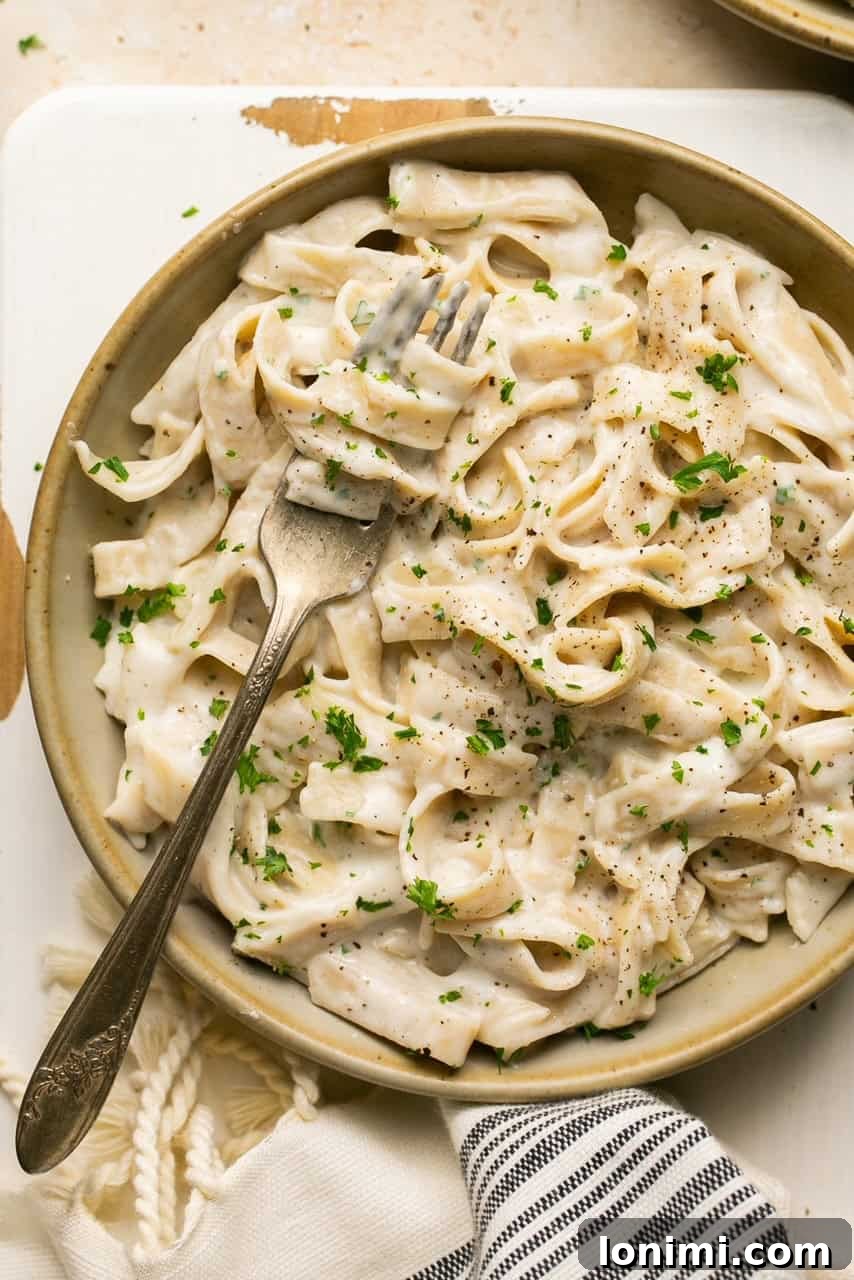
Say goodbye to heavy, calorie-laden pasta dishes! This High-Protein Cottage Cheese Alfredo Sauce is a game-changer, whipping up in just 5 minutes right in your blender. It’s an incredibly creamy, undeniably cheesy, and powerfully protein-packed sauce, perfectly crafted to elevate any pasta or vegetable dish. The best part? You won’t find a drop of heavy cream or butter here, making it a guilt-free pleasure!
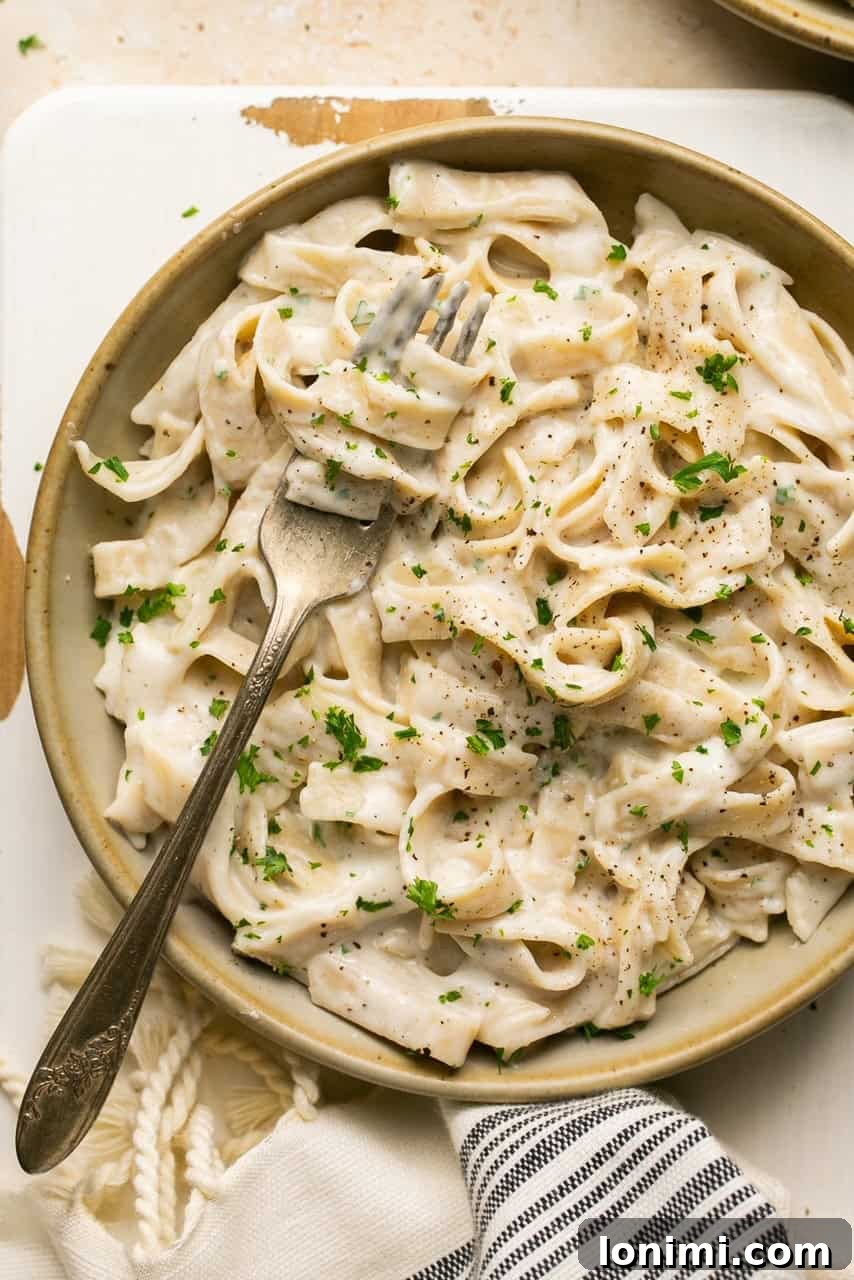
Why This High-Protein Alfredo is a Must-Try
Growing up, few dishes captured my heart quite like fettuccine alfredo. The rich, velvety sauce coating every strand of pasta was pure comfort. However, the indulgence often came with a price: that heavy, bloated feeling thanks to copious amounts of heavy cream and butter. Plus, traditional Alfredo often uses flour, making it off-limits for those on a gluten-free diet. This High-Protein Cottage Cheese Alfredo Sauce is designed to bring back all the deliciousness without the drawbacks, offering a lighter, healthier, and equally satisfying alternative.
This recipe is more than just a substitute; it’s a culinary revelation. By cleverly using cottage cheese as its base, we achieve a sauce that’s not only incredibly creamy and cheesy but also significantly boosted in protein. It’s the ultimate comfort food that feels good for your body. The magic happens in your blender, transforming humble ingredients into a smooth, luxurious sauce in mere minutes. Prepare to fall in love with a healthy alfredo sauce that’s versatile enough for any meal, and so delicious, it will quickly become a family favorite.
Recipe Highlights: Guilt-Free Indulgence
- Gluten-Free: Enjoy classic Alfredo flavor without any gluten.
- Effortlessly Easy: Minimal prep and cook time, ideal for busy weeknights.
- Blender Magic: Achieve a perfectly smooth and creamy sauce in just 5 minutes.
- Incredibly Versatile: Pairs beautifully with any type of pasta, veggie noodles, or as a sauce for proteins.
- Simple, Wholesome Ingredients: Made with everyday items you likely already have.
- Protein-Packed: Cottage cheese makes this a satisfying and nutritious meal, helping you stay full longer.
- Family-Friendly: A delicious and healthy option that even picky eaters will adore.
- Perfect with Proteins: Transforms chicken, shrimp, or even vegetables into a gourmet meal.
Ingredient Notes for the Perfect Sauce
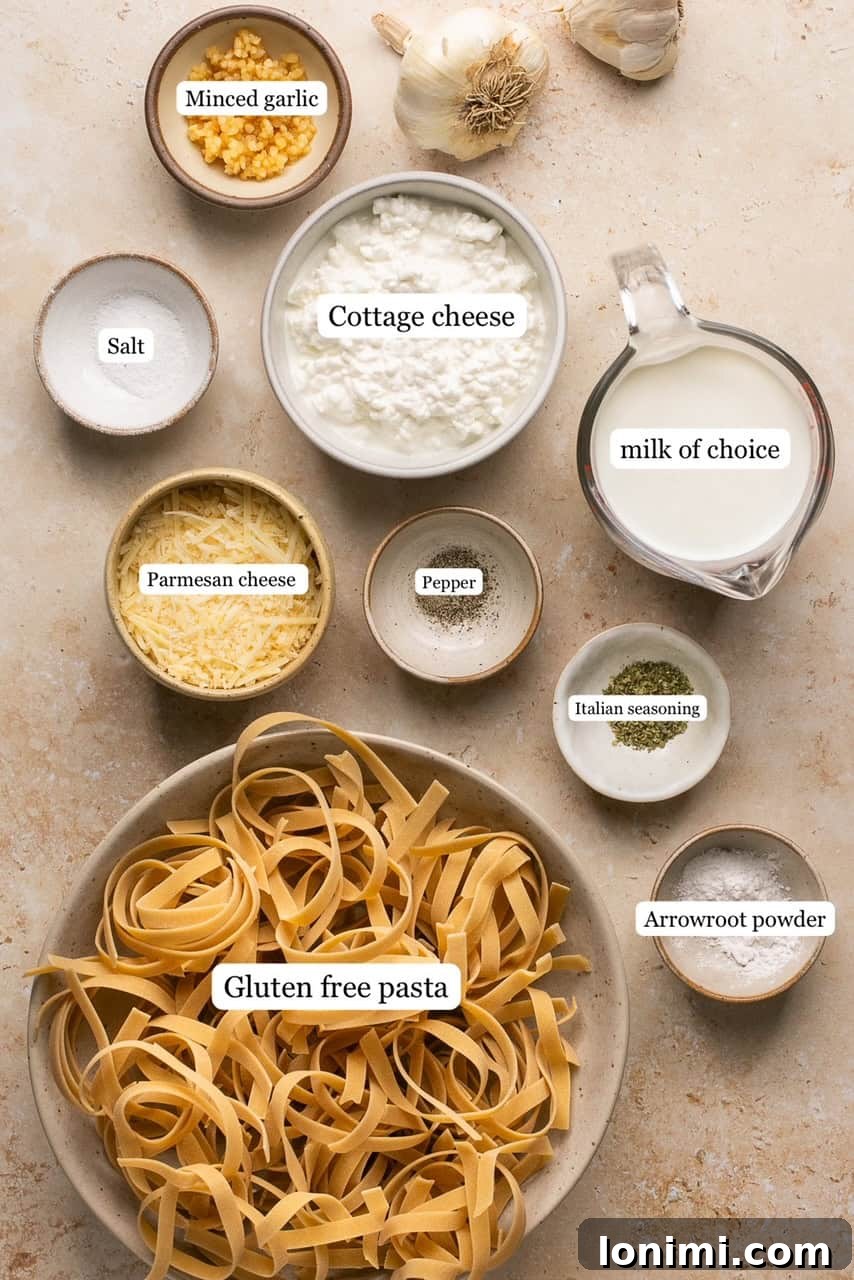
Every great recipe starts with quality ingredients. Here’s a closer look at what makes our cottage cheese alfredo so exceptional:
Cottage Cheese: The Unexpected Star: This might sound unconventional, but cottage cheese is the secret weapon behind this creamy Alfredo. Even if you’re not a fan of its curded texture, trust us on this one – once blended, the curds disappear completely, leaving behind a luxuriously smooth, rich sauce. It contributes a wonderful tang and, most importantly, a significant protein boost without the need for heavy cream. I personally recommend a good quality brand like Good Culture for its excellent texture and clean ingredients, but any cottage cheese will work. You can opt for 2% milk fat for a balanced creaminess, or full-fat for an even richer result.
Milk: Your Choice for Customization: The milk helps achieve the perfect consistency. You have a lot of flexibility here! I often use Fairlife milk because it’s ultra-filtered and offers extra protein, further boosting the nutritional value of this dish. However, feel free to use your preferred milk. Almond milk or oat milk are fantastic dairy-free alternatives that lend a subtle nutty or creamy note, respectively. Regular cow’s milk also works perfectly for a more traditional taste profile. Experiment to find what you like best!
Parmesan Cheese: The Flavor Foundation: Freshly grated Parmesan cheese is crucial for that authentic, salty, umami depth. Pre-grated varieties often contain anti-caking agents that can affect both flavor and how smoothly it melts. For the best texture and flavor integration into the sauce, I highly recommend grating your own block of Parmesan. It melts effortlessly into the sauce, creating that classic cheesy richness we all crave in an Alfredo.
Arrowroot Powder: The Natural Thickener: This unsung hero is a natural, gluten-free thickener, similar in function to cornstarch. It helps bind the sauce ingredients together and gives it that silky, clingy texture characteristic of a great Alfredo. It’s a fantastic alternative to flour, ensuring this recipe remains naturally gluten-free without compromising on consistency.
Gluten-Free Pasta: Your Canvas: While this sauce pairs well with any pasta, choosing a quality gluten-free option ensures the entire dish is GF. Jovial Foods tagliatelle is a personal favorite for its excellent texture and authentic feel. For those looking to reduce carbs, consider vegetable-based noodles like zucchini noodles, spaghetti squash, or hearts of palm pasta. Chickpea or lentil pasta are also excellent choices, adding even more plant-based protein and fiber to your meal.
Garlic: The Aromatic Essential: Fresh minced garlic is non-negotiable for that irresistible aroma and savory depth. It’s one of the foundational flavors of any good Alfredo sauce.
Italian Seasoning: An Optional Flavor Boost: A dash of Italian seasoning adds a wonderful aromatic complexity, complementing the cheesy and garlicky notes. It’s optional, but highly recommended for an extra layer of herbaceous flavor. Feel free to adjust to your taste, or even add a pinch of nutmeg for a more classic Alfredo twist.
How To Make 5-Minute Cottage Cheese Alfredo
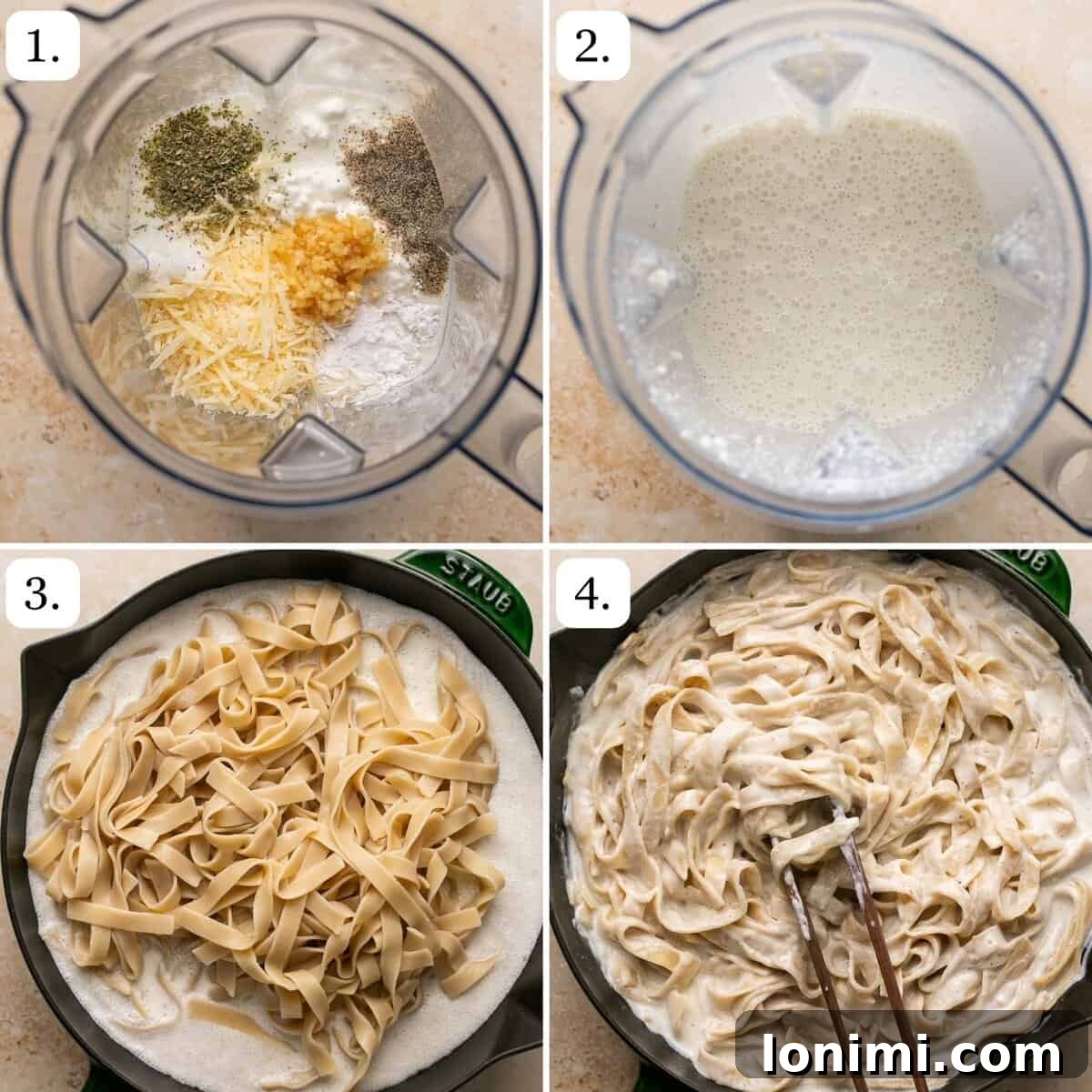
Get ready for the easiest Alfredo sauce you’ve ever made. It’s truly as simple as blend and toss!
Step 1: Prepare Your Pasta and Blend the Sauce Ingredients
Begin by cooking your chosen pasta according to the package directions until it’s al dente. Drain it thoroughly and set it aside. While the pasta cooks, gather all your sauce ingredients – the cottage cheese, milk, minced garlic, Parmesan cheese, arrowroot powder, Italian seasoning, salt, and pepper – and add them directly into a high-speed blender. Ensure all ingredients are at room temperature for the smoothest blend.
Step 2: Blend Until Smooth and Creamy
Secure the lid on your blender and blend on high speed for about 30 to 60 seconds. You’re looking for a completely smooth, velvety consistency with no visible curds from the cottage cheese. If you don’t have a high-speed blender, a food processor can also achieve a good result, though it might take a minute or two longer to ensure ultimate smoothness. Occasionally, you might need to stop and scrape down the sides of the blender to ensure everything is fully incorporated.
Step 3: Combine Sauce and Pasta
Pour your freshly blended cottage cheese Alfredo sauce into a large skillet. This method ensures optimal texture. Once the sauce is in the skillet, add your cooked and drained pasta directly on top of the cold sauce. It’s important to add the pasta to the cold sauce before heating, which helps prevent any potential curdling.
Step 4: Warm and Thicken to Perfection
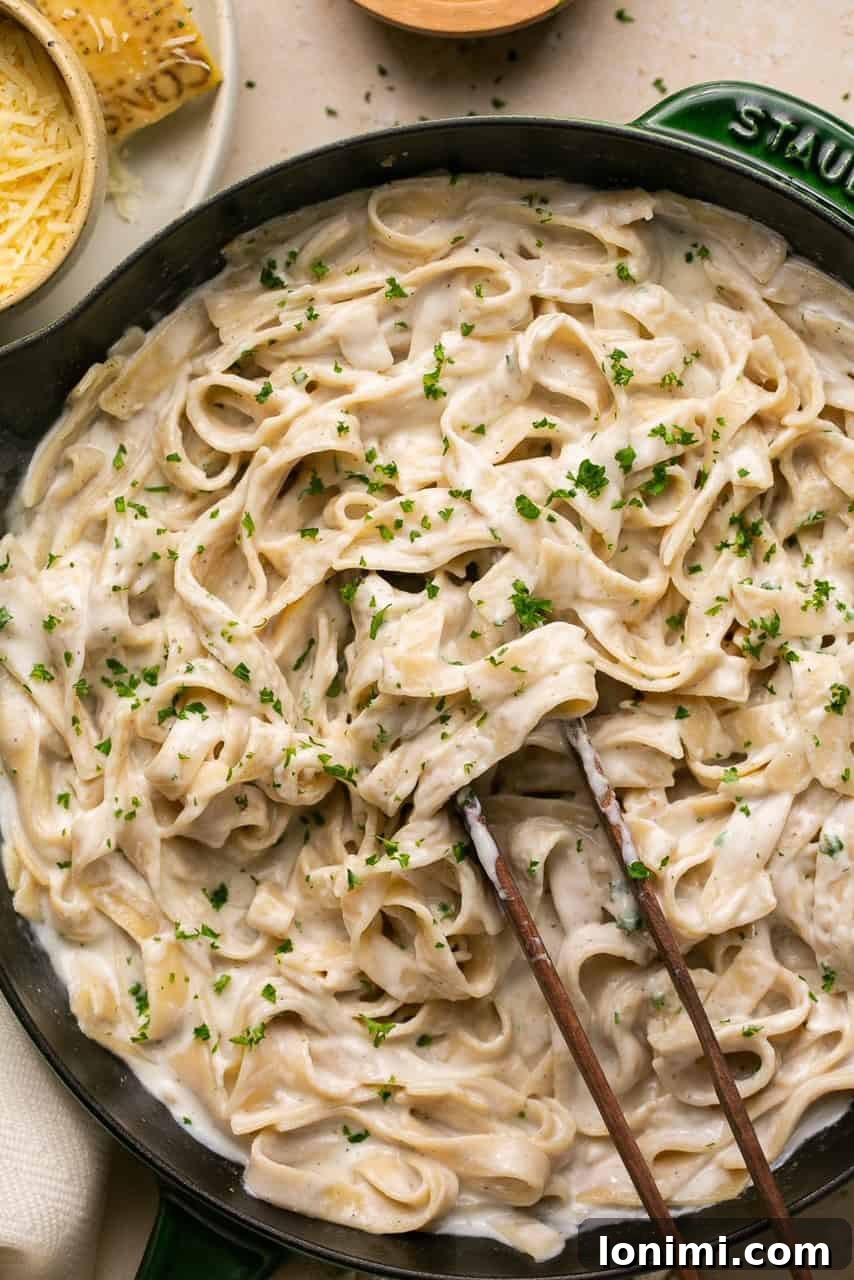
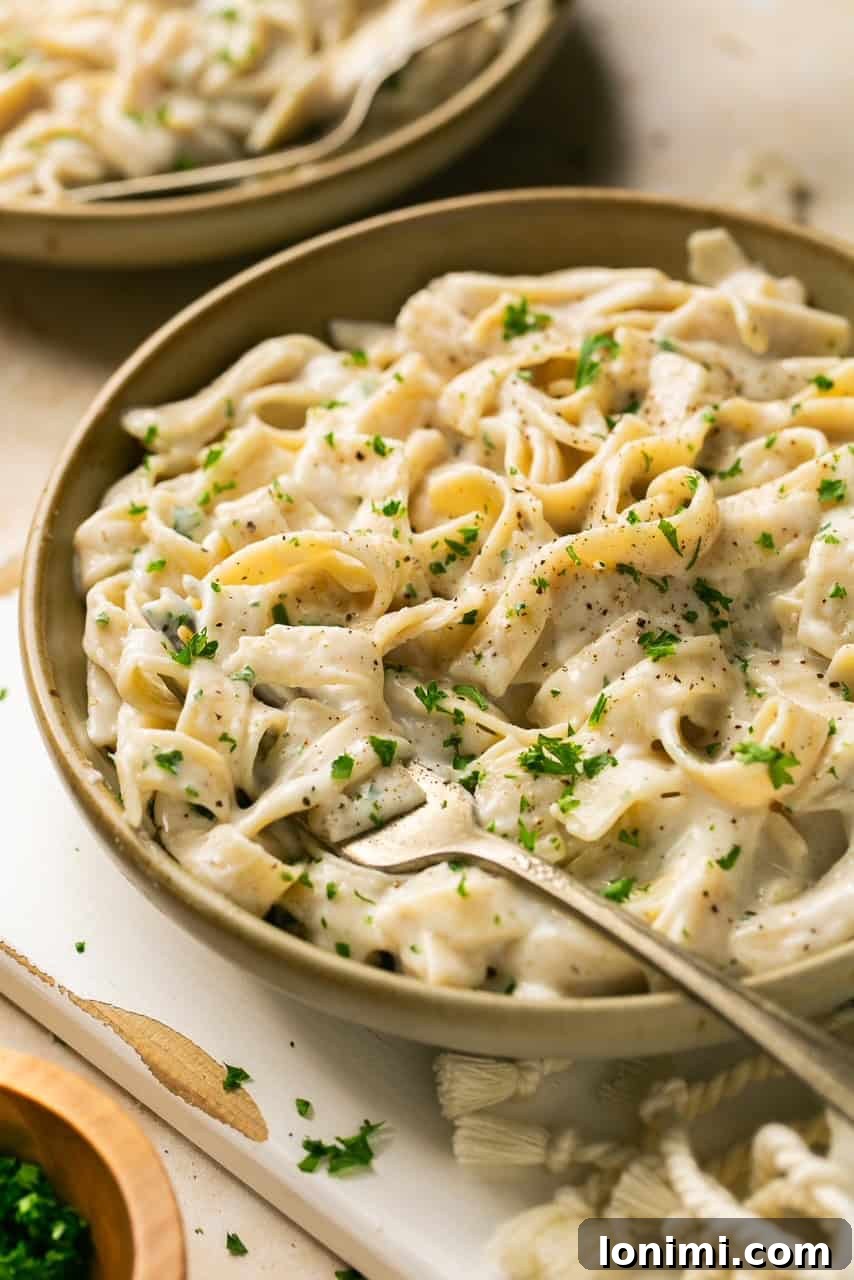
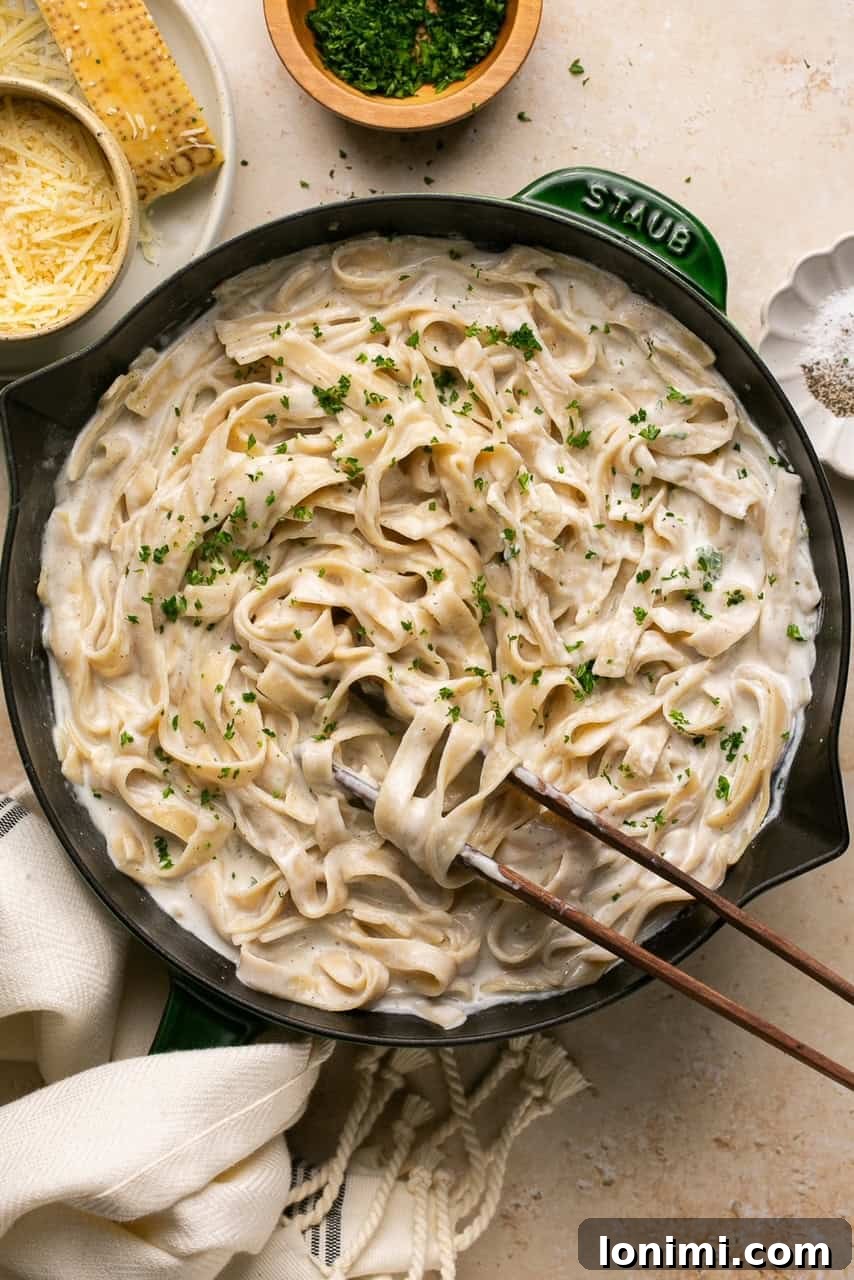
Place the skillet on the stove and turn the heat to medium-low. Using tongs or a pasta spoon, gently toss the pasta with the sauce. Continue to toss for 2-3 minutes. As the sauce warms up, it will gradually thicken and cling beautifully to the pasta. This gentle warming process ensures a perfect, creamy consistency without breaking the sauce. Serve immediately, garnished with fresh chopped parsley and a sprinkle of extra Parmesan cheese for an irresistible finish. Enjoy the delightful creaminess!
Expert Tips, Tricks & Delicious Variations
Enhance your Cottage Cheese Alfredo experience with these valuable insights and creative ideas:
Storage and Reheating: Keeping Your Alfredo Fresh
Storage: For the best quality, I do not recommend preparing the sauce on its own and storing it separately. The texture can change significantly upon reheating, potentially leading to a less desirable consistency. For optimal results, always toss the sauce with the pasta as it warms up. Leftover cottage cheese Alfredo pasta, thoroughly mixed with the sauce, can be stored in an airtight container in the refrigerator for up to 4 days. When reheating, a splash of milk or water can help loosen the sauce back to its creamy state.
Freezing: Unfortunately, this creamy Alfredo sauce does not fare well in the freezer. Dairy-based sauces, especially those with cottage cheese, tend to separate and become grainy once thawed and reheated. It’s best enjoyed fresh or from the refrigerator within a few days.
Sauce Texture Perfection: The key to a smooth, uncurdled sauce is in the heating method. Always add the cooked pasta on top of the cold, blended sauce in the skillet, then gently warm them together over medium-low heat. This gradual heating allows the sauce to thicken beautifully as you toss it with the pasta. If you absolutely need to heat the sauce on its own, do so very gently over low heat, whisking constantly, and avoid bringing it to a boil to prevent curdling.
Flavor Boosters & Meal Enhancements
Add a Kick of Spice: If you enjoy a little heat, incorporate 1 teaspoon of red pepper flakes into the sauce mixture before blending. This adds a subtle warmth that beautifully complements the rich, cheesy flavors.
Transform into Chicken or Shrimp Alfredo: For a heartier meal, easily turn this into a protein-packed dish. Cook your chicken or shrimp separately (sautéed or baked work wonderfully) and then toss it with the pasta and sauce in the final step. You can also follow the method for making chicken and broccoli in a traditional Alfredo recipe and simply substitute this cottage cheese sauce. Adding a handful of fresh spinach or sun-dried tomatoes to the skillet during the final tossing stage is also a fantastic way to incorporate more vegetables and flavor.
Boost the Greens: Fresh baby spinach or chopped kale can be added to the skillet during the last minute of warming the pasta and sauce. The residual heat will gently wilt the greens, adding a healthy and colorful touch to your dish.
A Hint of Brightness: A squeeze of fresh lemon juice or a pinch of lemon zest at the very end can brighten the entire dish, cutting through the richness and adding a refreshing note.
Alternative Dietary Options
Dairy-Free / Vegan Alternatives: While this recipe is built around cottage cheese, you could explore dairy-free cream cheese alternatives like Kite Hill cream cheese in place of cottage cheese for a vegan version. For a cheesy flavor without Parmesan, nutritional yeast can be a good substitute. Please note, I haven’t personally tested these specific substitutions, so the taste and texture may vary from the original recipe.
Recipe FAQs: Your Questions Answered
This recipe is specifically formulated to leverage the unique properties of cottage cheese for its protein content and creamy texture. While I haven’t extensively tested other dairy options, some users have experimented with cream cheese or dairy-free cream cheese alternatives like Kite Hill. These might yield a different flavor profile and consistency, so experiment with caution.
Achieving a truly vegan version of this specific recipe would require a few key substitutions. You would need to replace cottage cheese with a high-quality vegan cream cheese (such as Kite Hill) and use a dairy-free milk alternative (like almond or oat milk), along with nutritional yeast instead of Parmesan. While this approach can create a creamy pasta sauce, it might not perfectly replicate the nuanced taste and texture of the original cottage cheese-based version.
Yes, absolutely! I commonly use 2% milk fat cottage cheese in this recipe, and it works wonderfully. Lower fat or non-fat cottage cheese varieties should also work, though they might result in a slightly less rich or thick sauce. For the creamiest and most luxurious texture, full-fat cottage cheese is always recommended, but feel free to use what you have on hand or what best fits your dietary preferences.
While the sauce blends in minutes, for the best texture and to avoid potential curdling, it’s highly recommended to prepare the sauce just before serving and combine it with the pasta as it warms. If you must prepare it slightly in advance, keep it chilled and stir well before gently warming with the cooked pasta over low heat.
A high-speed blender is ideal for achieving the smoothest, most homogenous sauce. Brands like Vitamix or Blendtec will make quick work of it. However, a standard blender or even a food processor can also be used; you might just need to blend for a slightly longer duration and scrape down the sides a few times to ensure there are no curds remaining.
More Delicious Gluten-Free Pasta Recipes
If you loved this High-Protein Cottage Cheese Alfredo, be sure to explore more of our fantastic gluten-free pasta creations:
- Sausage and Fennel Pasta
- Penne Alla Vodka with Chicken
- Instant Pot Taco Pasta
- Tik Tok French Onion Pasta
- Pesto Tuna Pasta
Love this recipe and want to see more? Please consider leaving a 5-star rating in the recipe card below and share your thoughts in the comment section! Don’t forget to follow me on Facebook, Pinterest, or Instagram for daily inspiration and new recipes.
Rating: 5 out of 5 stars (from 20 votes)
High Protein Cottage Cheese Alfredo Sauce Recipe
Equipment
-
Blender
-
Large Skillet
Ingredients
- 1 cup cottage cheese, I recommend Good Culture 2%
- 1 cup milk, Fairlife for added protein, or almond, oat, or regular milk
- 2 cloves minced garlic
- ½ cup Parmesan cheese, freshly grated for best results
- 1 tsp arrowroot powder
- ½ tsp Italian seasoning
- ½ tsp salt, or to taste
- ¼ tsp pepper, freshly ground
- 12 oz gluten-free pasta, such as Jovial Foods Tagliatelle or your favorite GF option
- Fresh parsley, for garnish (optional)
Instructions
-
Cook your chosen pasta according to the package directions until it is al dente. Drain thoroughly and set aside. Meanwhile, combine all the sauce ingredients (cottage cheese, milk, minced garlic, Parmesan cheese, arrowroot powder, Italian seasoning, salt, and pepper) in a high-speed blender.
-
Blend on high speed for 30-60 seconds, or until the sauce is completely smooth and creamy with no visible curds. Scrape down the sides if necessary to ensure even blending.
-
Pour the blended cottage cheese Alfredo sauce into a large skillet. Add the cooked pasta directly on top of the cold sauce.
-
Turn the stove to medium-low heat. Using tongs or a pasta spoon, toss the pasta with the sauce for 2-3 minutes. The sauce will gradually thicken as it warms up and beautifully coat the pasta. Serve immediately, garnished with fresh chopped parsley and a sprinkle of additional Parmesan cheese if desired. Enjoy your deliciously healthy Alfredo!
Notes
Nutrition (Estimated per serving – sauce only)
Carbohydrates: 6g |
Protein: 14g |
Fat: 6g |
Saturated Fat: 4g |
Polyunsaturated Fat: 0.2g |
Monounsaturated Fat: 2g |
Cholesterol: 18mg |
Sodium: 744mg |
Potassium: 163mg |
Fiber: 0.2g |
Sugar: 5g |
Vitamin A: 225IU |
Vitamin C: 0.5mg |
Calcium: 265mg |
Iron: 0.3mg
All nutrition facts are estimates and automatically calculated. While I fact check them using reliable sources, please note that they may not always be 100% accurate and depend on the specific ingredients and brands used. For the most precise nutritional information, it is recommended to weigh your total recipe and divide by the number of servings.
Did you make this?
Rate & comment below, and tag me on Instagram @maryswholelife