
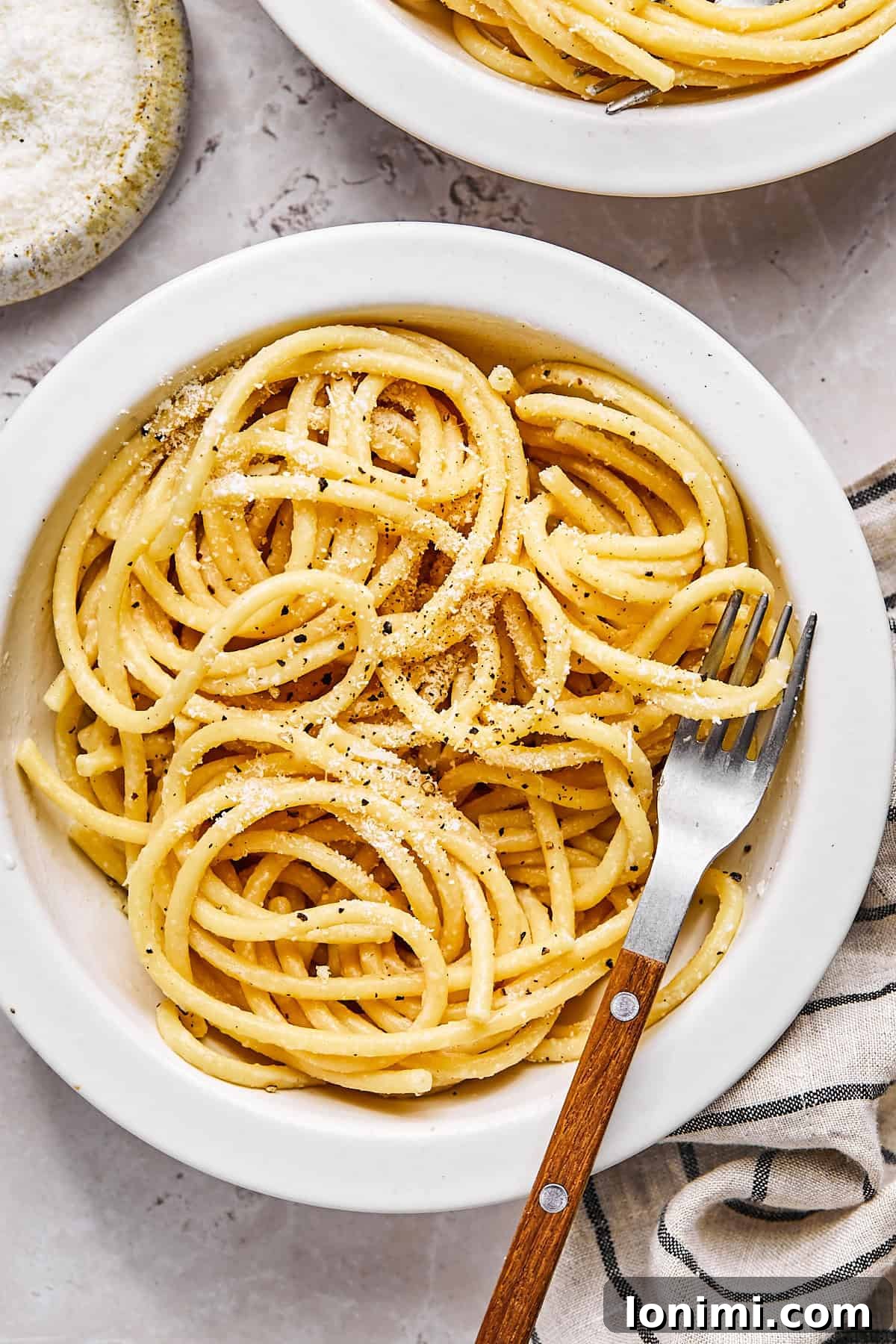
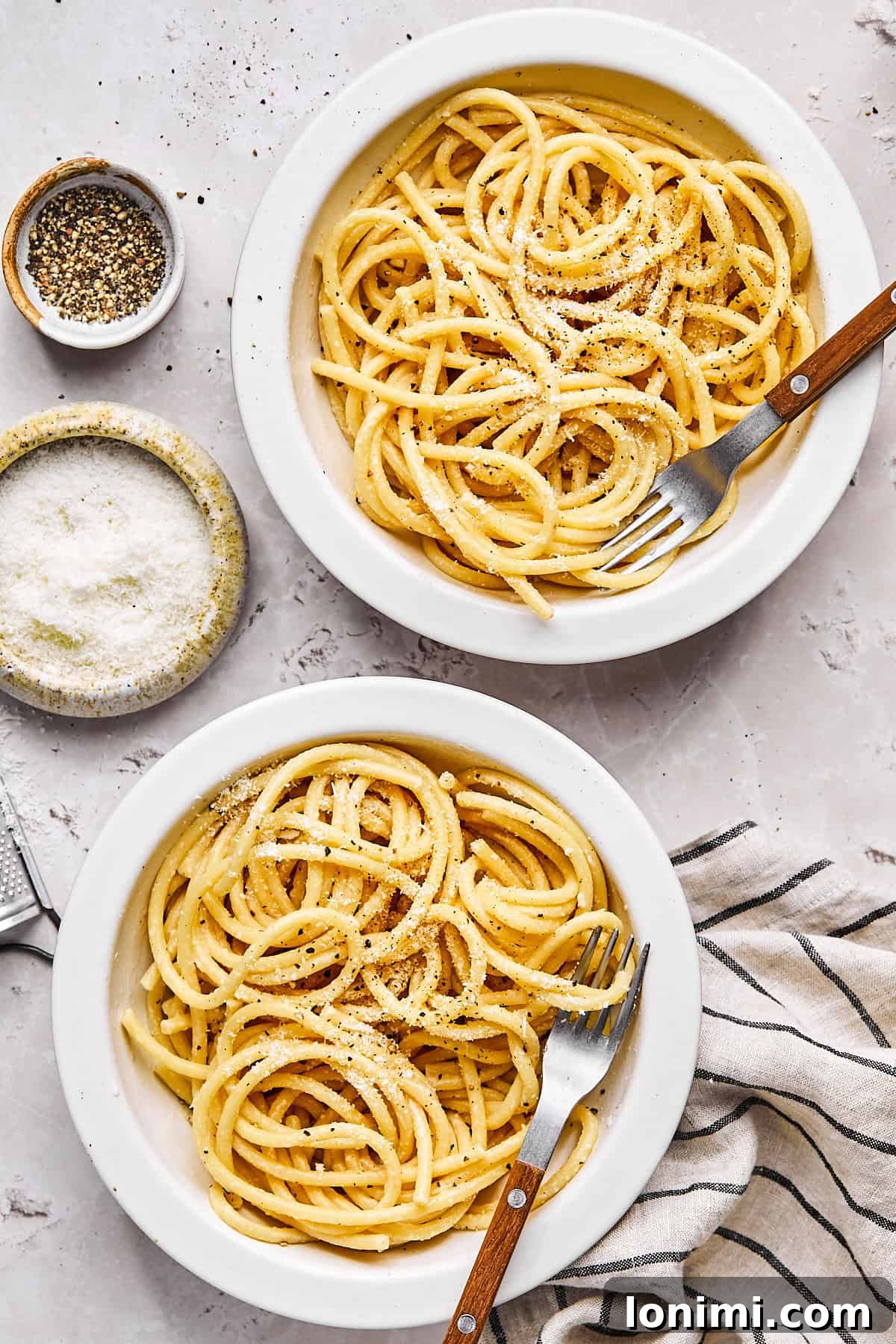
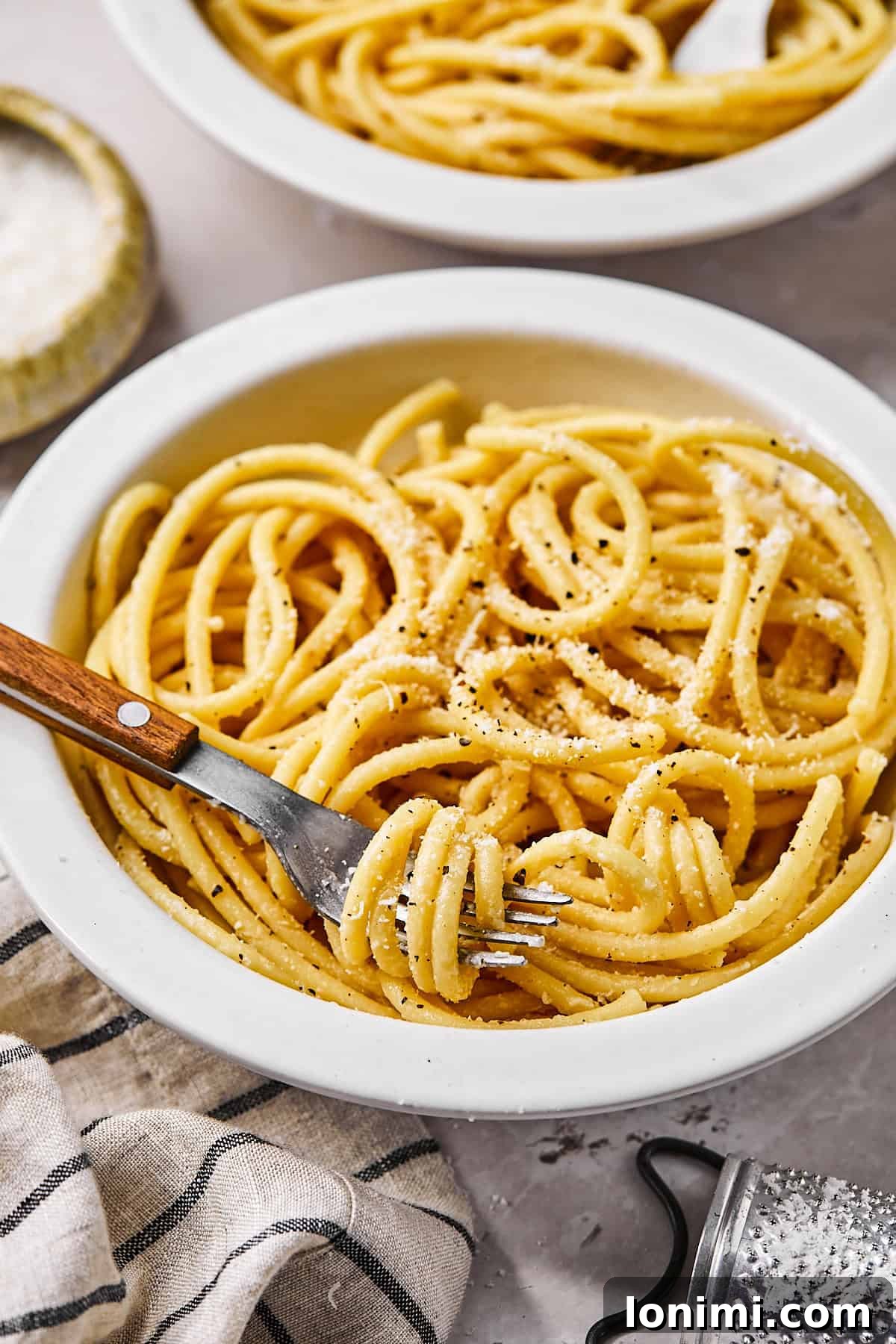
Bucatini Cacio e Pepe is more than just a dish; it’s a testament to the unparalleled magic of Roman cuisine, where a handful of humble ingredients transform into an extraordinary, soul-warming masterpiece. This iconic creamy pasta, whose name simply translates to “cheese and pepper,” captivates with its deceptive simplicity and profound depth of flavor. Traditionally crafted with bucatini noodles, finely grated Pecorino Romano cheese, a generous hand of freshly cracked black pepper, and the essential starchy pasta water, it delivers a velvety, emulsified sauce that coats every strand of pasta with rich, savory goodness. For those navigating a gluten-free lifestyle, this version offers a delightful twist using dedicated gluten-free bucatini, ensuring everyone can savor this timeless classic. We specifically highlight Jovial bucatini for its excellent texture and ability to mimic the traditional experience, making this a comforting and accessible recipe for all.
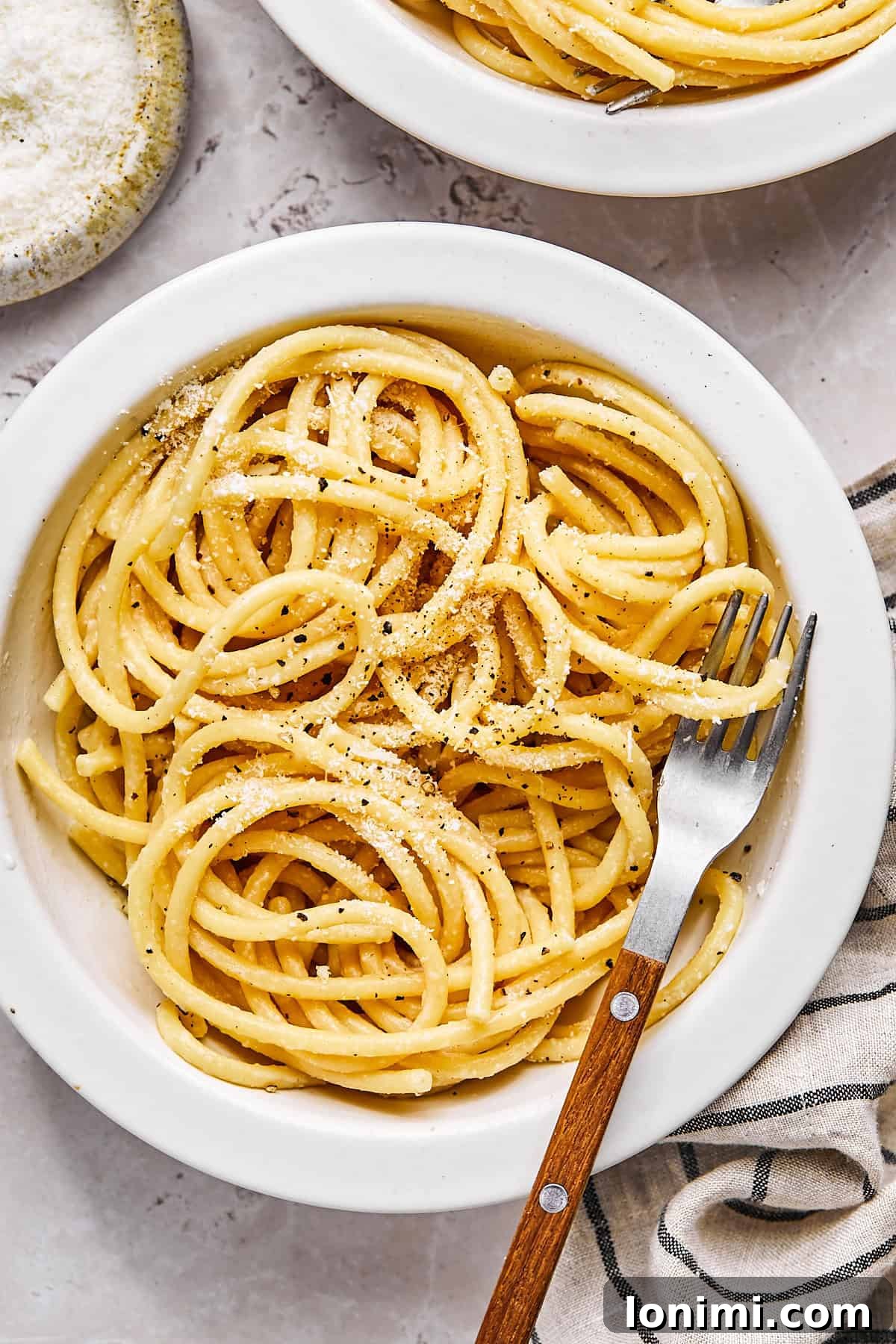
If you’ve yet to experience the sublime pleasure of Bucatini Cacio e Pepe, prepare yourself for something truly special. This dish, with its minimal ingredient list, becomes a symphony of taste and texture when each component is treated with respect and technique. The result is an intensely creamy, gloriously cheesy, and boldly peppery pasta that you’ll want to twirl onto your fork again and again.
Why You’ll Fall in Love with This Recipe
This Bucatini Cacio e Pepe recipe isn’t just about food; it’s about comfort, tradition, and the joy of creating something truly remarkable from very little. It’s a dish that feels both incredibly cozy and undeniably sophisticated, yet remains surprisingly approachable for home cooks of all skill levels, even if you’re attempting Cacio e Pepe for the very first time. The magic lies in the masterful combination of salty Pecorino Romano cheese, the pungent kick of freshly cracked black peppercorns, and the natural thickening power of starchy pasta water. Together, these elements orchestrate a silky, restaurant-quality sauce that requires absolutely no cream, relying instead on a brilliant emulsion technique.
Our featured gluten-free adaptation utilizes Jovial bucatini, a brand renowned for its dedication to producing high-quality gluten-free pasta that performs beautifully. You’ll find the texture every bit as satisfying as its traditional wheat counterpart. The thick, hollow bucatini noodles are ideal for Cacio e Pepe; their unique shape allows them to expertly capture and hold the rich, emulsified sauce, ensuring every bite is bursting with flavor. The pasta maintains its integrity throughout the tossing process, preventing breakage and creating a truly cohesive dish. For optimal results, a crucial tip is to always grate your Pecorino Romano cheese fresh. Pre-grated cheeses often contain anti-caking agents that can interfere with melting, leading to a clumpy, rather than smooth, sauce. The effort of grating fresh cheese is a small step that yields monumental returns in the final dish’s texture and creaminess.
If you’re a fan of comforting, carb-centric meals like our Easy Marry Me Chicken Pasta or Sausage Broccolini Pasta, this Cacio e Pepe offers that same profound sense of satisfaction but with fewer ingredients and a distinctly sharper, saltier, and more peppery flavor profile. It’s a wonderful addition to your weeknight repertoire or a special occasion when you want to impress with minimal fuss.
The Essential Ingredients You’ll Need
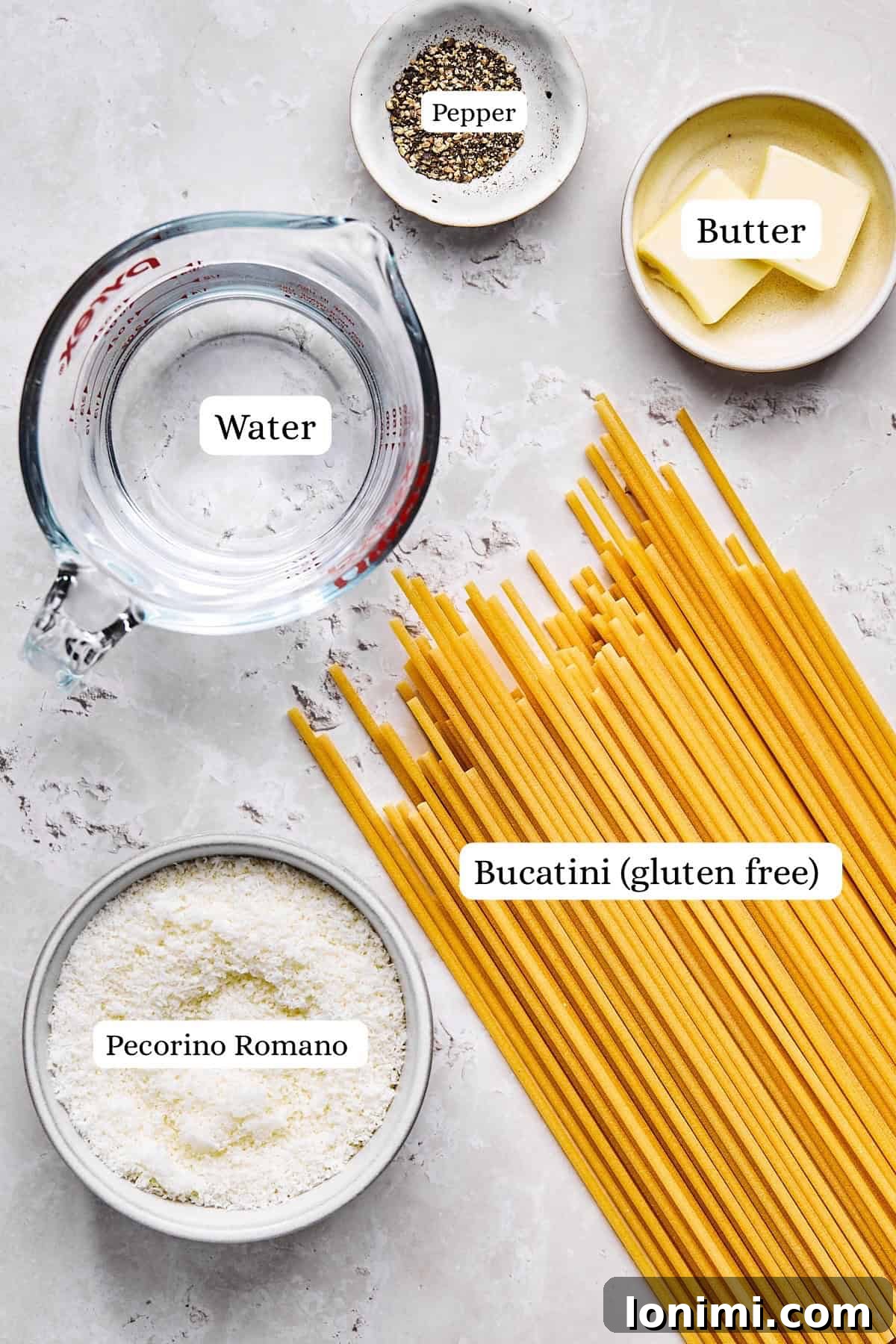
This deceptively simple Roman classic relies on just a few key ingredients, each playing a critical role in developing the dish’s signature flavor and luxurious texture. Here’s a closer look at what goes into this masterpiece:
- Bucatini Pasta: The star noodle of this dish. Bucatini translates to “little holes” in Italian, referring to its unique hollow center. This thicker, spaghetti-like pasta is exceptional at soaking up and carrying the rich sauce. For this gluten-free recipe, we highly recommend Jovial bucatini, which holds its shape and texture remarkably well. To enhance the starch content crucial for the sauce, consider cooking your bucatini in slightly less water than usual. This concentrates the natural starches released from the pasta, providing that extra “velvety hug” for your sauce.
- Pecorino Romano Cheese: This is a non-negotiable ingredient for authentic Cacio e Pepe. Pecorino Romano is a hard, salty Italian cheese made from sheep’s milk, offering a much sharper, tangier, and more pungent flavor profile than Parmesan. The quality and preparation of your cheese are paramount. Always use freshly grated Pecorino Romano. A Microplane grater is your best friend here, as it transforms the cheese into a fluffy, fine snow that melts smoothly and evenly. Before introducing it to the pan, whisk the finely grated cheese with a splash of hot (but not boiling) pasta water. This initial emulsion helps prevent the cheese from clumping and kick-starts the glossy, creamy sauce you’re aiming for.
- Butter: While traditional Cacio e Pepe recipes might not always include butter, a tablespoon or two stirred in with the black pepper in the skillet plays a vital role. It helps to tame the immediate heat of the pan, preventing the cheese from seizing, and adds a subtle, silky richness to the sauce. This small addition is a secret weapon for achieving a truly shiny and luxurious sauce that remains emulsified and beautiful until the very last forkful. For a dairy-free version, a plant-based butter substitute can work wonderfully.
- Freshly Cracked Black Pepper: “Pepe” is half the name of the dish, and it truly is a star ingredient. For the most vibrant and aromatic flavor, use whole black peppercorns and crack them fresh, ideally with a mortar and pestle or a sturdy pepper mill. If you want to elevate the flavor even further, briefly toast the peppercorns in your dry skillet over medium-low heat for about 30 seconds before grinding. They will become fragrant, releasing a more complex, almost citrusy aroma and a delightful warmth that permeates the entire dish.
- Reserved Starchy Pasta Water: This is the ultimate “secret ingredient” for creating Cacio e Pepe’s signature glossy, cheesy sauce without a drop of cream. As pasta cooks, it releases starches into the water. This starchy liquid acts as a natural emulsifier, binding the cheese, butter, and pepper into a cohesive, unctuous sauce. Always scoop out at least a mugful of this precious liquid just before you drain the pasta – this is when the water is at its peak starchiness. Allow it to cool slightly off the boil for a few seconds before using, as water that’s too hot can cause the cheese to clump or split. This warm, starchy liquid is essential for marrying the cheese and pasta into a harmonious emulsion.
How to Master Bucatini Cacio e Pepe: A Step-by-Step Guide
Creating the perfect Bucatini Cacio e Pepe is all about technique and timing. Follow these steps carefully to achieve that coveted creamy, peppery perfection.
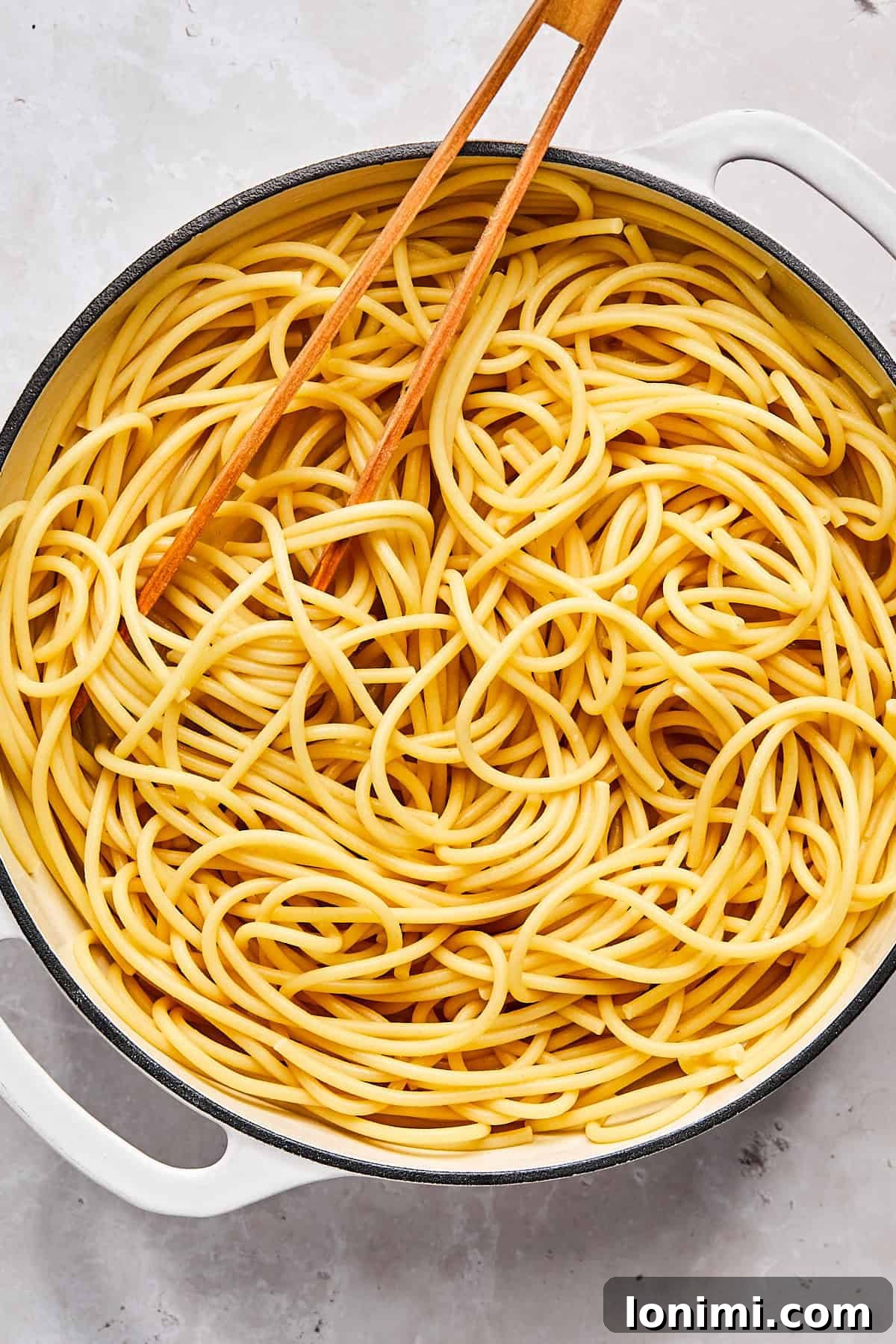
Step 1: Cook the Bucatini to Perfection. Bring a large pot of generously salted water to a rolling boil. Add your bucatini pasta and cook until it’s slightly al dente. For Jovial’s gluten-free bucatini, this typically means about 5 minutes, but cooking times may vary for other brands, so always refer to package instructions and taste test. The pasta should still have a slight bite to it, as it will continue to cook in the sauce. Before draining, make sure to reserve at least 1 cup of the starchy pasta water. This liquid gold is vital for your sauce!
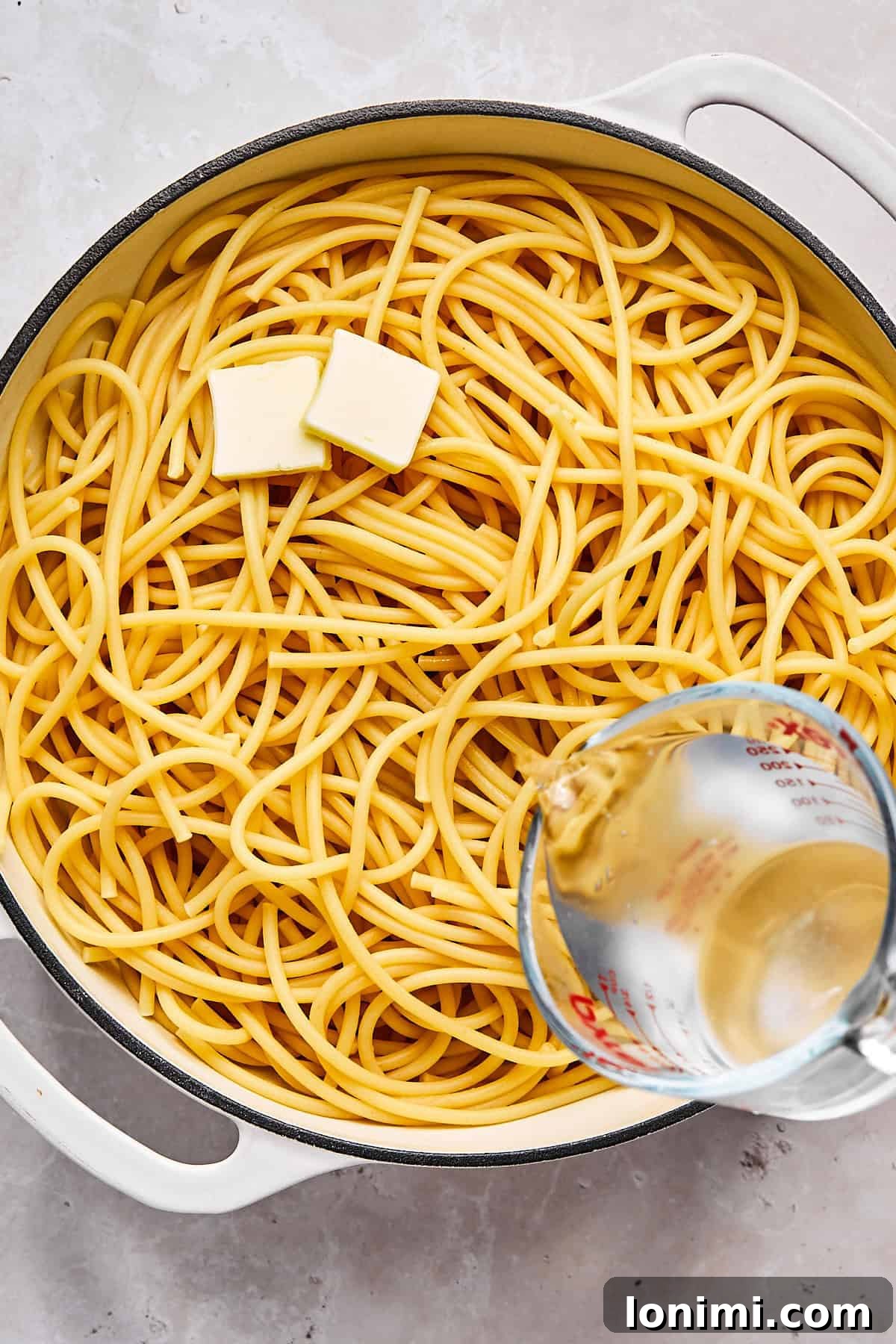
Step 2: Prepare the Base in the Skillet. In a large, wide skillet (preferably non-stick or well-seasoned cast iron), combine the cooked bucatini, butter, and about half of your reserved pasta water over medium-low heat. Toss constantly with tongs until the butter has completely melted and the pasta is thoroughly coated. The goal here is to warm the pasta and create a moist, buttery base for the cheese emulsion. Don’t let it get too hot, as extreme heat can make the cheese seize.
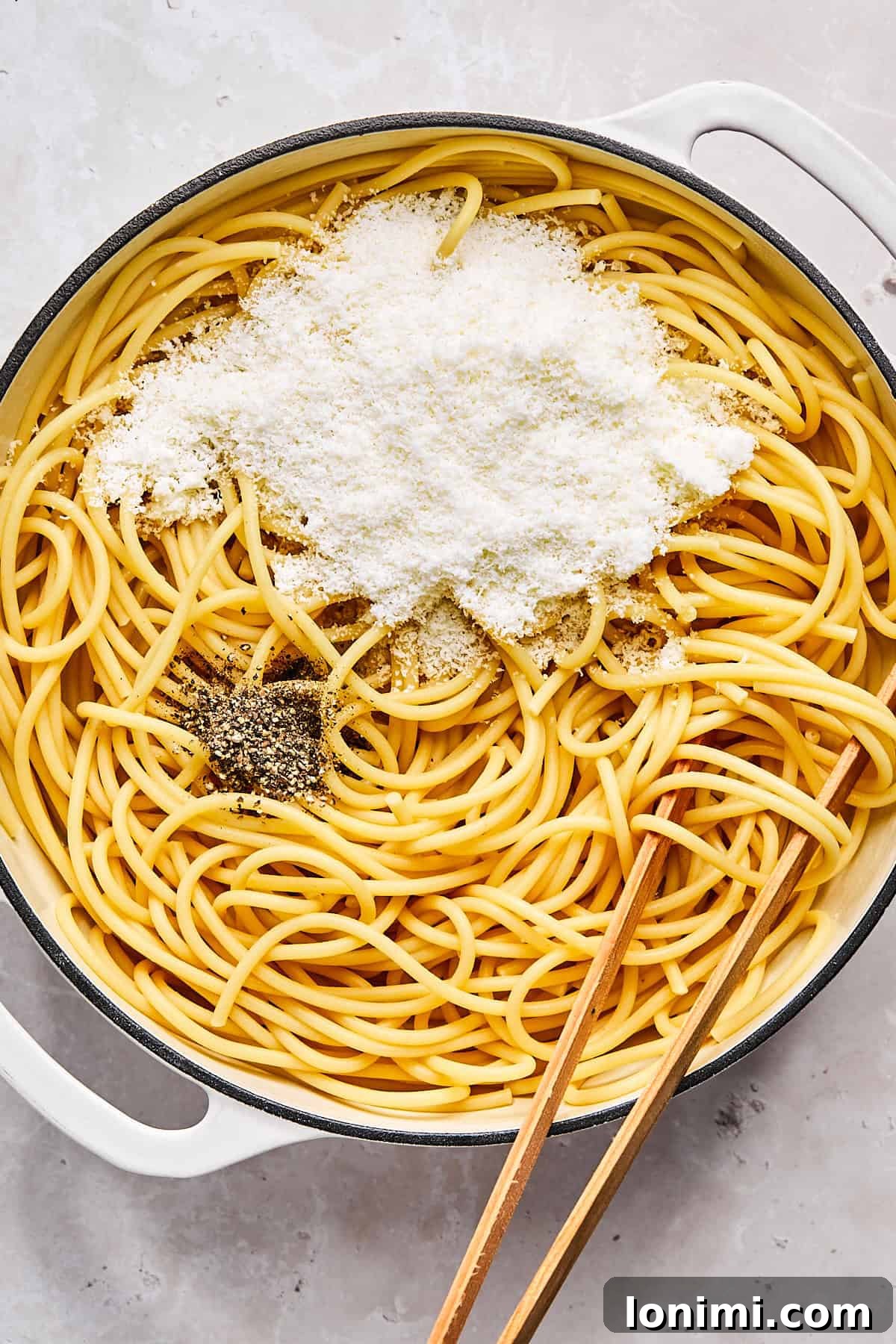
Step 3: Emulsify the Cheese and Pepper. This is the most critical step for a silky sauce. Turn off the heat under the skillet. Immediately add the freshly cracked black pepper and the finely grated Pecorino Romano cheese. Working quickly and constantly, toss the pasta vigorously with tongs. The residual heat from the pasta and the skillet, combined with the starchy water and the constant agitation, will melt the cheese and emulsify it into a smooth, glossy sauce. Keep tossing until no clumps remain and the sauce clings beautifully to every strand.
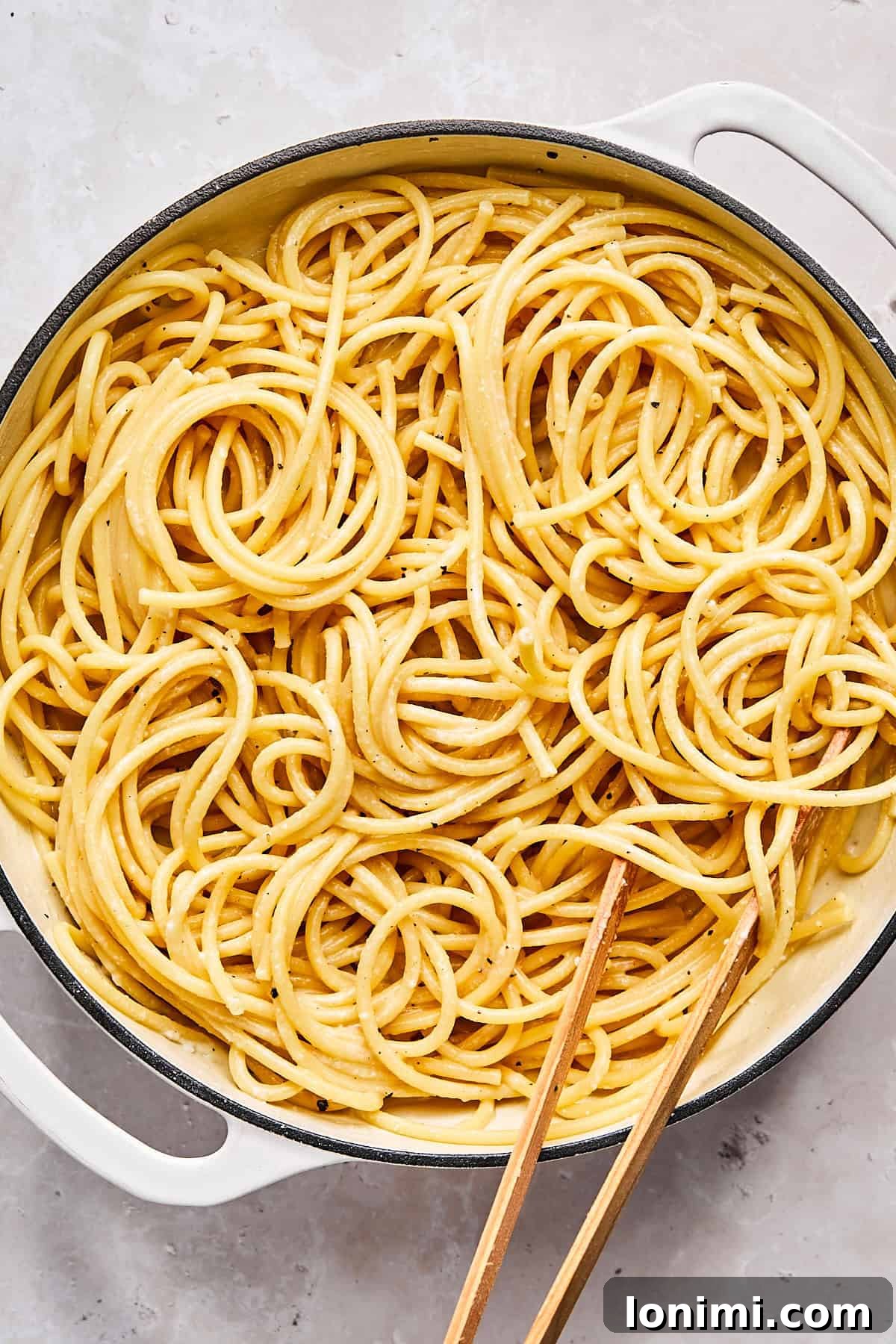
Step 4: Adjust Consistency and Serve. If your sauce appears too thick or a bit clumpy, don’t panic. Turn the heat back on to a very low setting and add a small splash of the reserved pasta water, tossing continuously until the sauce loosens and reaches your desired creamy consistency. Serve your Bucatini Cacio e Pepe immediately. The sauce is at its best when hot and freshly made. Garnish each serving with an extra sprinkle of Pecorino Romano and more freshly cracked black pepper for an added flourish of flavor.
For more incredibly creamy and satisfying pasta options, be sure to explore our Gluten-Free TikTok Spaghetti Alfredo or the indulgent Chicken and Broccoli Alfredo (No Cream). These recipes offer delicious dinner ideas that are sure to be a hit with the entire family.
Expert Tips for the Creamiest, Most Flavorful Sauce
Achieving the perfect Cacio e Pepe requires attention to detail. Here are our top tips for a consistently smooth, rich, and utterly delicious outcome:
- Always Opt for Freshly Grated Cheese: This is arguably the most crucial tip. Pre-grated cheeses, while convenient, often contain cellulose or other anti-caking agents that prevent them from melting smoothly. These additives can lead to a gritty or clumpy sauce. Invest in a block of Pecorino Romano and grate it finely yourself, preferably using a Microplane, for the best texture and melting consistency.
- Manage the Heat: Cheese is sensitive to high heat. Adding it directly to a scorching pan can cause it to seize and clump. The key is to turn off the heat just before adding the cheese and rely on the residual warmth of the pasta and skillet, combined with the hot pasta water, to create the emulsion. If the pan gets too cool and the cheese isn’t melting, you can turn the heat back on to very low, but be cautious.
- Start with Less Water: When building your sauce, it’s always better to start with less reserved pasta water than you think you’ll need. You can easily add more splashes incrementally if your sauce is too thick. Removing excess water, however, is impossible once it’s incorporated, which can lead to a watery, thin sauce that won’t cling to the pasta.
- Handle Gluten-Free Pasta with Care: Gluten-free pasta, particularly bucatini, can be more delicate than its wheat counterpart. To prevent it from breaking or becoming mushy, toss gently and avoid overcooking. Aim for a firm al dente, especially if you’re using a brand like Jovial which has a great bite but can be sensitive to over-agitation.
- Toast Your Peppercorns: For an intensely aromatic and nuanced flavor, take an extra minute to lightly toast whole black peppercorns in a dry skillet before grinding them. This simple step unlocks their essential oils and deepens their flavor profile, making the “pepe” truly sing.
- Toss Vigorously and Continuously: The emulsion requires constant movement. Tossing the pasta rapidly with tongs after adding the cheese and pepper ensures the ingredients are well combined and the cheese melts into a cohesive, creamy sauce.
Make It Your Own: Delicious Variations
While Bucatini Cacio e Pepe shines in its classic form, its simple foundation makes it surprisingly versatile. Feel free to get creative and adapt this recipe to your preferences, whether you want to boost the protein, add some extra nutrients, or explore different flavor profiles. Here are a few easy ideas to inspire you:
- Incorporate Fresh Vegetables: To add color, texture, and additional nutrients, consider tossing in some sautéed mushrooms, tender roasted garlic cloves, sweet green peas, or blanched asparagus tips during the final stages of cooking. These additions can complement the rich sauce without overpowering it.
- Boost the Protein Content: For a heartier meal, top your Cacio e Pepe with your favorite protein. Sliced grilled chicken breast, pan-seseared shrimp, crispy pancetta, or even a perfectly fried egg can elevate the dish into a more complete and satisfying dinner.
- Explore Dairy-Free Options: If you’re dairy-free, you can still enjoy a version of this classic. Substitute traditional butter with a high-quality plant-based butter and use a dairy-free Parmesan-style cheese alternative. Keep in mind that dairy-free cheeses often melt differently, so it’s best to go low and slow with the heat, adding small amounts of pasta water gradually to achieve the desired emulsion.
- Experiment with Herbs: A touch of fresh parsley or chives, finely chopped and stirred in at the very end, can add a hint of freshness and brightness to balance the richness of the cheese and pepper.
- Add a Spicy Kick: For those who love a bit of heat, a pinch of red pepper flakes toasted with the black peppercorns can add a delightful fiery dimension to the dish.
Remember, the beauty of this recipe lies in its simplicity, but don’t hesitate to personalize it while respecting its core elements. The best results often come from slight adjustments that suit your taste.
Perfect Serving Suggestions
Bucatini Cacio e Pepe is a rich and flavorful dish on its own, but it truly shines when paired with complementary sides. To create a balanced and complete Italian-inspired meal, consider these serving ideas:
- Light Green Salad: A crisp, refreshing side salad dressed with a simple vinaigrette (lemon, olive oil, salt, pepper) cuts through the richness of the pasta beautifully, offering a refreshing contrast.
- Crusty Gluten-Free Bread: Perfect for soaking up any leftover sauce on your plate. A warm, crusty baguette or artisanal loaf, especially a good quality gluten-free option, is always a welcome addition.
- Roasted Vegetables: Roasted broccoli, asparagus, or cherry tomatoes can add a touch of sweetness and earthiness. Simply toss them with olive oil, salt, and pepper and roast until tender-crisp.
- Grilled Chicken or Fish: If you’ve opted not to add protein directly to the pasta, serving it alongside simply grilled chicken breasts or a delicate white fish can create a more substantial meal without overwhelming the pasta’s flavor.
- Wine Pairing: A crisp, dry white wine like a Pinot Grigio or Vermentino can complement the salty, peppery notes of the Cacio e Pepe. For red wine lovers, a light-bodied Sangiovese or a young Chianti can also be a good match.
Storage and Reheating Tips
Bucatini Cacio e Pepe is truly at its best when served fresh, allowing you to enjoy the sauce at its peak creaminess and temperature. However, if you find yourself with irresistible leftovers, here’s how to properly store and reheat them for the most enjoyable experience:
- Storing Leftovers: Allow the pasta to cool completely to room temperature before transferring it to an airtight container. Refrigerate promptly, and consume within 3 days for the best quality and safety.
- Reheating for Best Results: To bring the sauce back to life, the key is gentle, even heating with a touch of moisture. Add a splash of water or a small knob of butter to a large skillet. Place the leftover pasta in the skillet and warm gently over medium-low heat, tossing constantly with tongs. This motion, combined with the added liquid and fat, helps to re-emulsify the sauce, preventing it from separating or becoming dry. Continue tossing until the pasta is heated through and the sauce has regained its creamy consistency.
- Avoid the Microwave: While convenient, the microwave is generally not recommended for reheating Cacio e Pepe. The uneven and rapid heating can cause the delicate cheese sauce to separate and become oily, and the pasta noodles can quickly dry out or become rubbery.
Pro Tip: If your sauce appears to “break” during reheating (meaning the cheese and fat separate), a little extra starchy pasta water (if you saved some) or a small amount of warm water, along with gentle but constant stirring, will usually help bring it back together into a smooth emulsion.
Recipe FAQs
While you can use Parmesan (Parmigiano-Reggiano) in a pinch, the flavor profile of your Cacio e Pepe will be significantly different and less authentic. Parmesan is milder, nuttier, and less salty than Pecorino Romano. If you do opt for Parmesan, you might need to adjust by adding a little extra salt and a more generous amount of black pepper to compensate for the difference in pungency and saltiness.
Sauce clumping or becoming greasy is a common issue and usually occurs for a few reasons. The most frequent culprits are using pre-grated cheese (which contains anti-caking agents), adding cheese to an overly hot pan (causing it to seize), or not grating the cheese finely enough. Ensure your cheese is freshly and finely grated, add it off the heat, and toss constantly to encourage a smooth emulsion.
Traditionally, Cacio e Pepe is not gluten-free as it’s made with wheat-based pasta. However, this specific version is entirely gluten-free-friendly because it calls for certified gluten-free bucatini pasta, such as the recommended Jovial brand. All other ingredients (Pecorino Romano, butter, black pepper, pasta water) are naturally gluten-free.
It can reheat quite well with the right technique! While the texture might not be as perfectly silky as when freshly made, the flavor remains fantastic. The key is to reheat gently in a skillet with a splash of water or a knob of butter, tossing constantly to help the sauce re-emulsify. Avoid the microwave, as it tends to separate the sauce.
If your sauce ends up too thin, it likely means you added too much pasta water or the pasta wasn’t starchy enough. You can try turning the heat back to low and continuing to toss the pasta for another minute or two, allowing some of the water to evaporate and the sauce to thicken. Alternatively, you can add a very small amount of extra finely grated Pecorino Romano, tossing continuously, to help thicken it further.
This Bucatini Cacio e Pepe recipe is a wonderful demonstration that you don’t need an extensive list of fancy ingredients or overly complicated techniques to create a dish that is truly crave-worthy. Whether you’re preparing a quick and comforting meal for yourself, a delightful dinner for your family, or planning an intimate Italian-themed evening at home, this deceptively simple recipe delivers bold, authentic Roman flavors with minimal fuss and maximum satisfaction.
Craving more delicious and easy-to-make gluten-free comfort food? Don’t miss our Easy Marry Me Chicken Pasta – it’s guaranteed to be a new family favorite!
Discover More Gluten-Free Pasta Recipes
If you’ve enjoyed this Bucatini Cacio e Pepe, you’re in for a treat! Our collection of gluten-free pasta recipes is designed to bring joy and deliciousness to your table, proving that you don’t have to compromise on flavor or texture. Explore these other fantastic options:
- Easy Marry Me Chicken Pasta: A creamy, flavorful dish that’s perfect for weeknights.
- Boursin Chicken Pasta: Indulgent and quick, featuring the beloved Boursin cheese.
- Sausage Broccolini Pasta: A hearty and savory option with tender broccolini.
- TikTok Viral French Onion Pasta: A unique and utterly delicious twist on a classic soup.
Love this recipe? We’d be thrilled if you could leave a 5-star 🌟🌟🌟🌟🌟 rating in the recipe card below and a review in the comment section. You can also follow us on Facebook, Pinterest, or Instagram for more delicious inspiration!
Bucatini Cacio e Pepe (5 Ingredients & Gluten Free)
By: Mary Smith
- Prep Time: 5 mins
- Cook Time: 10 mins
- Total Time: 15 mins
- Yield: 4 servings
A simple, comforting gluten-free Roman pasta featuring bucatini noodles, Pecorino Romano cheese, starchy pasta water, butter, and freshly cracked black pepper for a creamy, satisfying meal.
Equipment
- Large skillet
- Cheese grater (Microplane recommended)
Ingredients
- 12 oz gluten-free bucatini (Jovial Foods brand recommended)
- 1 cup freshly grated Pecorino Romano cheese
- 1 cup reserved starchy pasta water
- 2 tbsp butter
- 1 tsp freshly cracked black pepper (plus more for serving)
Instructions
- Cook bucatini according to package directions until slightly al dente. For Jovial gluten-free bucatini, approximately 5 minutes. Before draining, reserve 1 cup of the starchy pasta water.
- In a large skillet over medium-low heat, combine the cooked bucatini, butter, and about half of the reserved pasta water. Toss gently until the butter is fully melted and the pasta is coated. Turn off the heat.
- Immediately add the freshly cracked black pepper and the finely grated Pecorino Romano cheese to the skillet. Toss quickly and continuously with tongs until the cheese melts and a smooth, creamy sauce forms, clinging to the pasta. If the sauce is too thick, add small splashes of the remaining reserved pasta water, tossing until the desired consistency is reached.
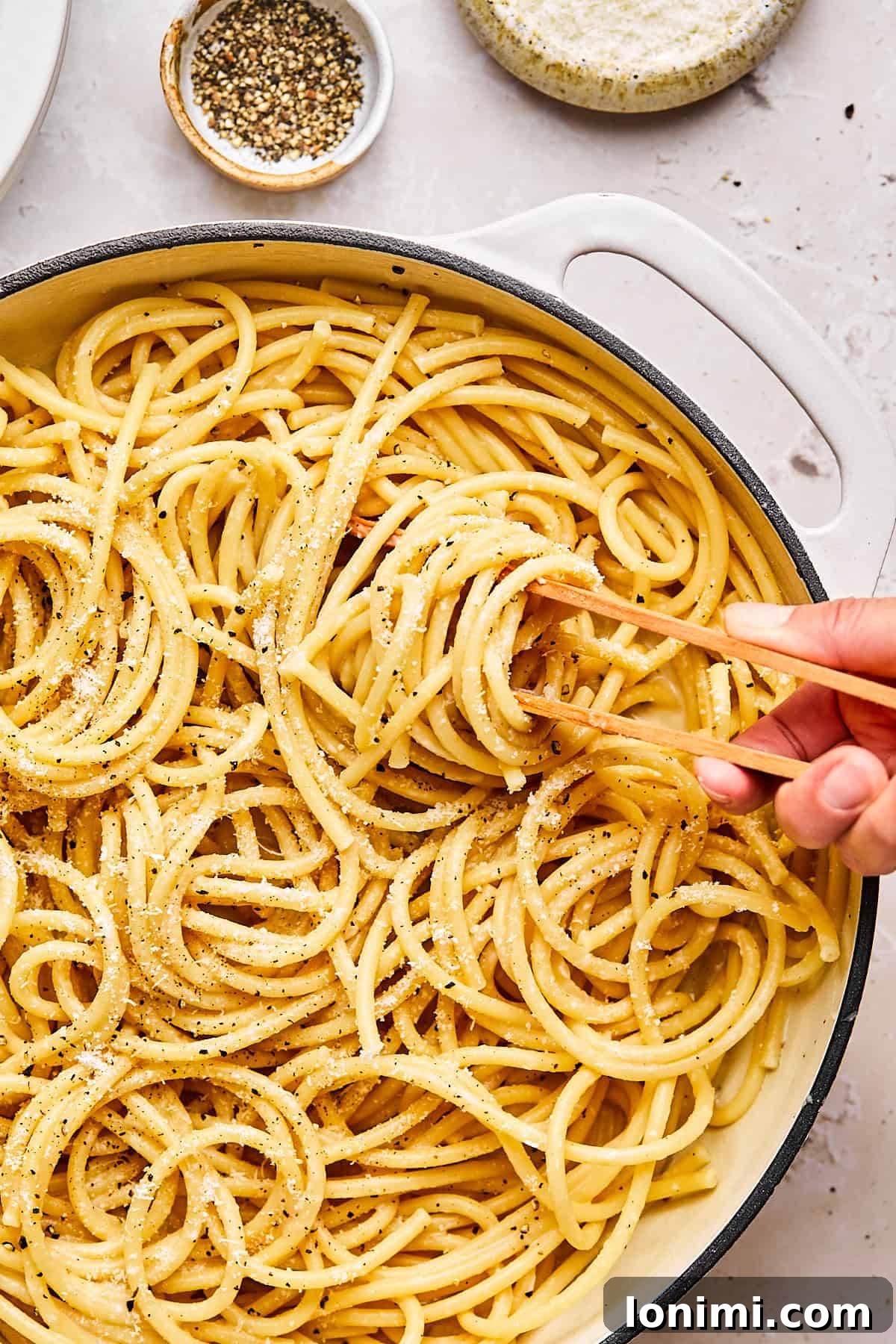
- Serve immediately with an additional sprinkle of fresh Pecorino Romano cheese and more freshly cracked black pepper. Enjoy!
Notes
- For the creamiest sauce, always use freshly grated Pecorino Romano and avoid pre-grated varieties.
- Manage your heat: add cheese off the heat to prevent clumping and encourage a smooth emulsion.
- Start with less pasta water; you can always add more to thin the sauce if needed.
- When using gluten-free pasta, toss gently and be careful not to overcook to maintain optimal texture.
Nutrition (Estimated per serving)
Calories: 281kcal | Carbohydrates: 27g | Protein: 13g | Fat: 13g | Saturated Fat: 8g | Polyunsaturated Fat: 1g | Monounsaturated Fat: 4g | Trans Fat: 0.2g | Cholesterol: 41mg | Sodium: 346mg | Potassium: 61mg | Fiber: 2g | Sugar: 1g | Vitamin A: 279IU | Calcium: 274mg | Iron: 1mg
All nutrition facts are an estimate and automatically calculated. While we fact-check them using trusted resources, please note that they may not always be 100% accurate and depend on the specific ingredients used. For the most precise grams per serving size, we recommend weighing your total dish and dividing by the number of servings.
Did you make this?
Rate & comment below, and tag us on Instagram @maryswholelife