
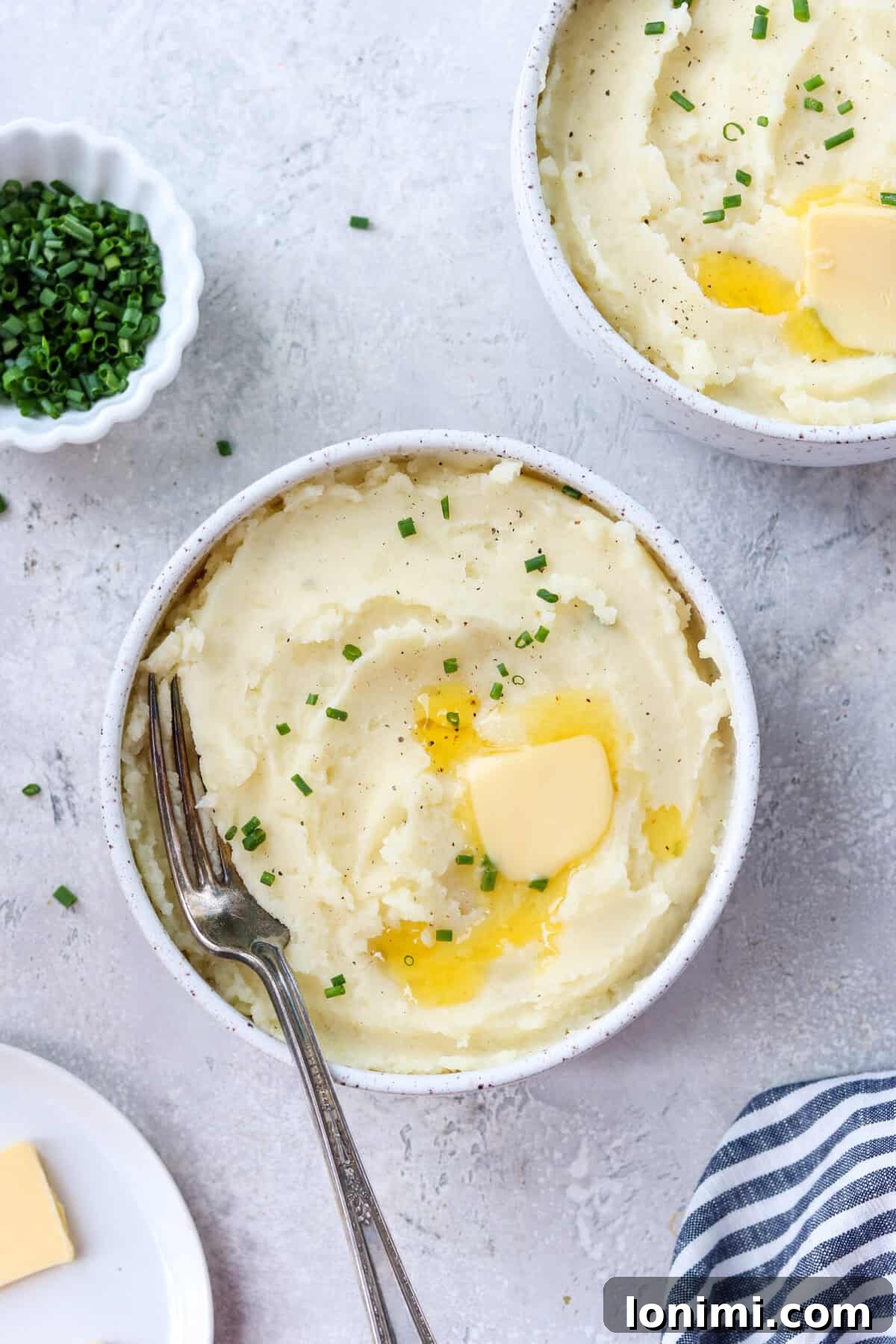
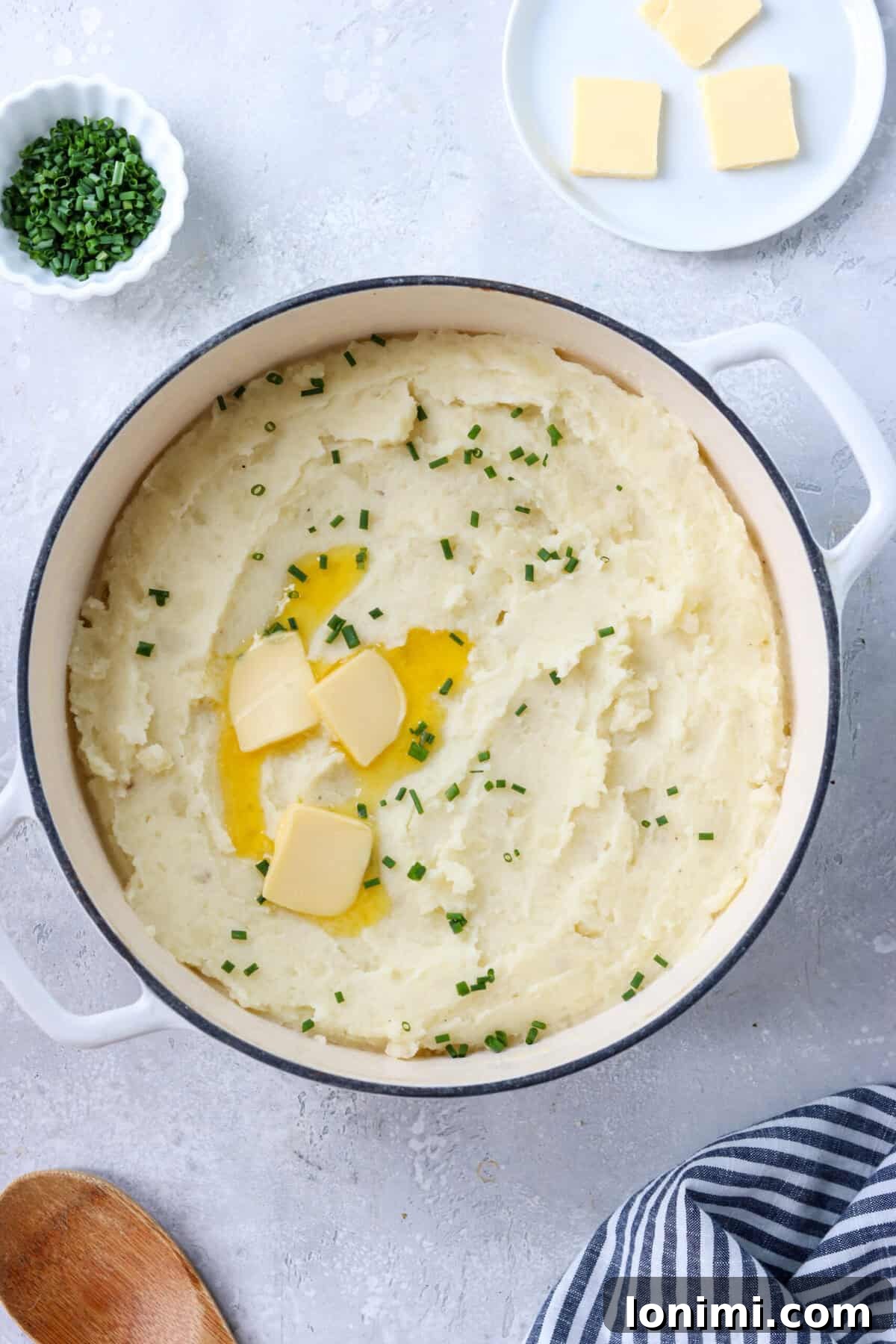
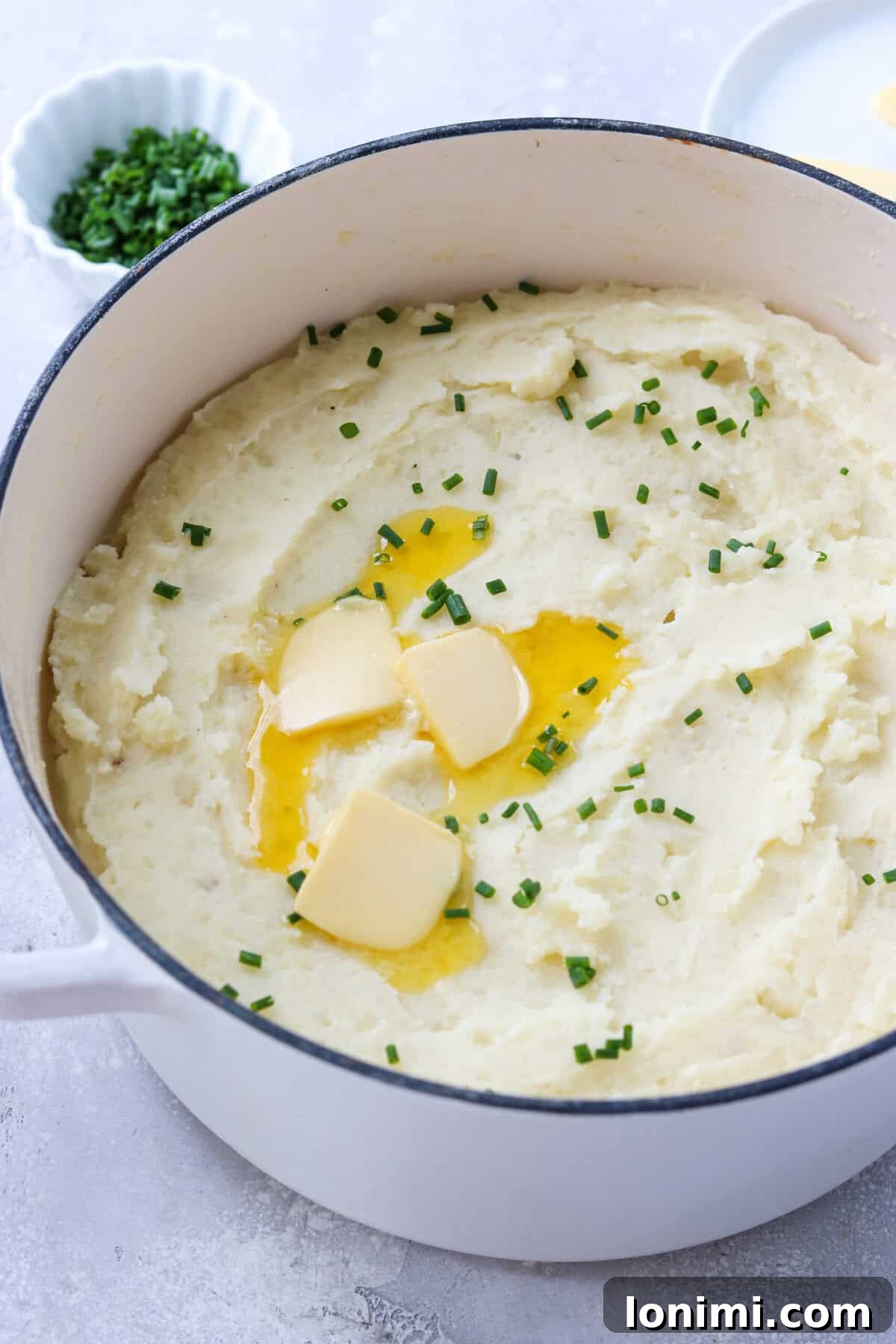
Welcome to the only recipe for the most delicious, creamy, and fluffy gluten-free mashed potatoes you’ll ever need! This easy-to-follow guide ensures a crowd-pleasing side dish every single time. Prepare to elevate your meals with these irresistibly smooth and flavorful mashed potatoes.
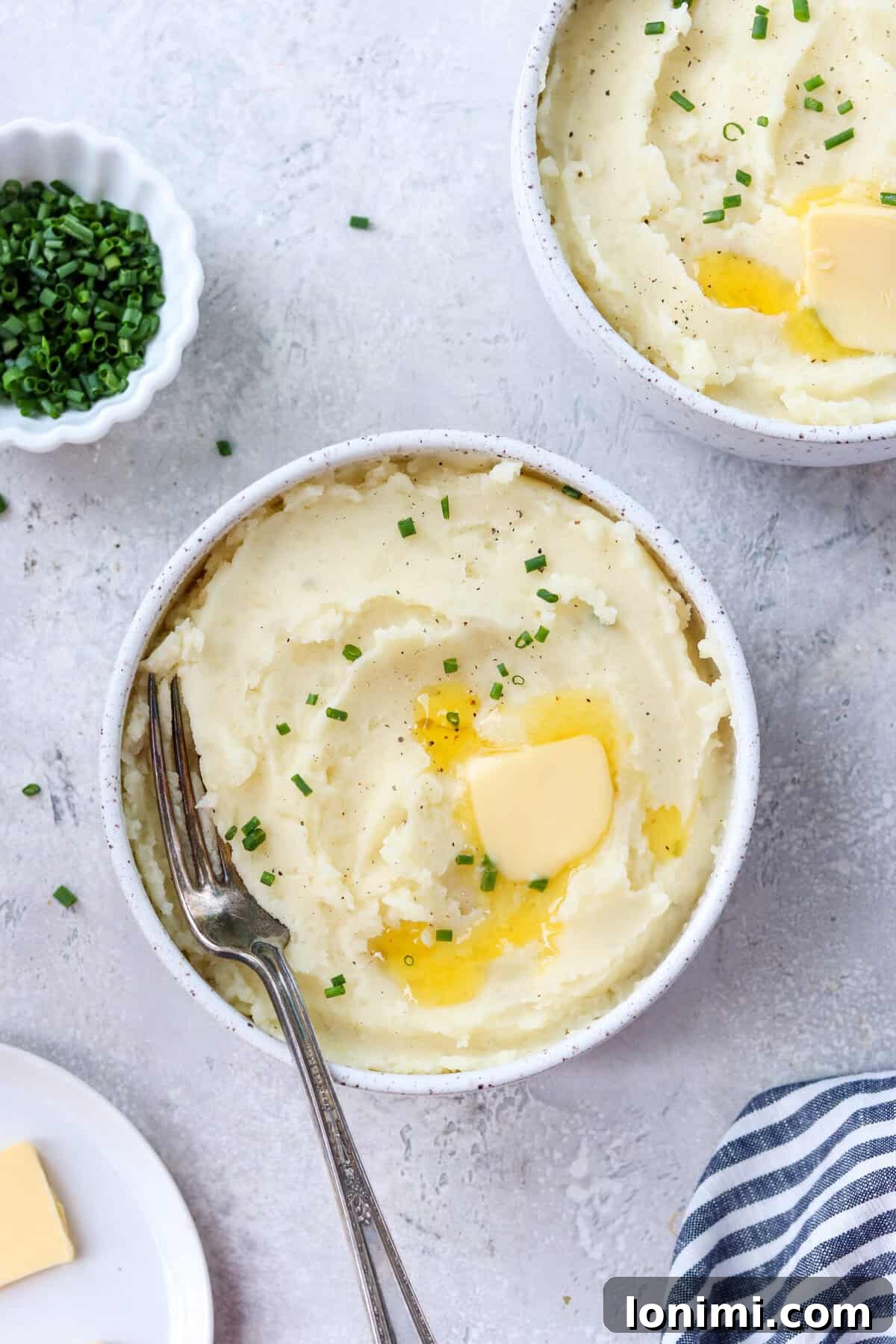
Why These Gluten-Free Mashed Potatoes Are an Absolute Must-Make
Mashed potatoes hold a special place in the hearts of many, and for good reason. They are the quintessential comfort food, a versatile side dish that complements almost any meal, from holiday feasts to weeknight dinners. This particular recipe for gluten-free mashed potatoes stands out from the rest. It’s not just about being gluten-free; it’s about achieving that perfect balance of creamy texture and rich flavor that evokes nostalgic memories of childhood favorites, like the famous Bob Evans mashed potatoes.
Whether you’re pairing them with a savory meatloaf, serving them alongside a succulent Thanksgiving turkey, or creating a delicious “gravy volcano” with the best gluten-free gravy, these mashed potatoes are truly exceptional. They require just a handful of simple ingredients and minimal effort, making them an ideal choice for both novice cooks and seasoned chefs alike. Plus, knowing they are naturally gluten-free means everyone at your table can enjoy them without worry.
Unveiling the Recipe Highlights: What Makes Them Special
This recipe isn’t just another mashed potato recipe; it’s a game-changer. Here’s why these creamy, fluffy gluten-free mashed potatoes will become your new go-to:
- Effortlessly Easy: With straightforward steps and common ingredients, preparing these mashed potatoes is a breeze, perfect for busy schedules.
- Minimal Ingredients, Maximum Flavor: You don’t need a long list of exotic items. A few high-quality staples are all it takes to create incredible depth of flavor.
- Unforgettable Leftovers: Unlike some dishes that lose their charm, these mashed potatoes are just as delightful (if not more so!) the next day. They reheat beautifully, making meal prep a dream.
- Naturally Gluten-Free: Potatoes are inherently gluten-free, and this recipe ensures every other ingredient adheres to that standard, making it safe for those with Celiac disease or gluten sensitivities.
- Budget-Friendly: Made with affordable, everyday ingredients, this recipe offers incredible taste without breaking the bank.
- Freezer-Friendly: Batch cook and freeze for future convenience! These mashed potatoes freeze and thaw wonderfully, ready for your next meal.
- Perfect for Any Occasion: From casual family dinners to elaborate holiday gatherings, these mashed potatoes are a welcome addition to any table.
Mastering Your Ingredients: A Deeper Dive
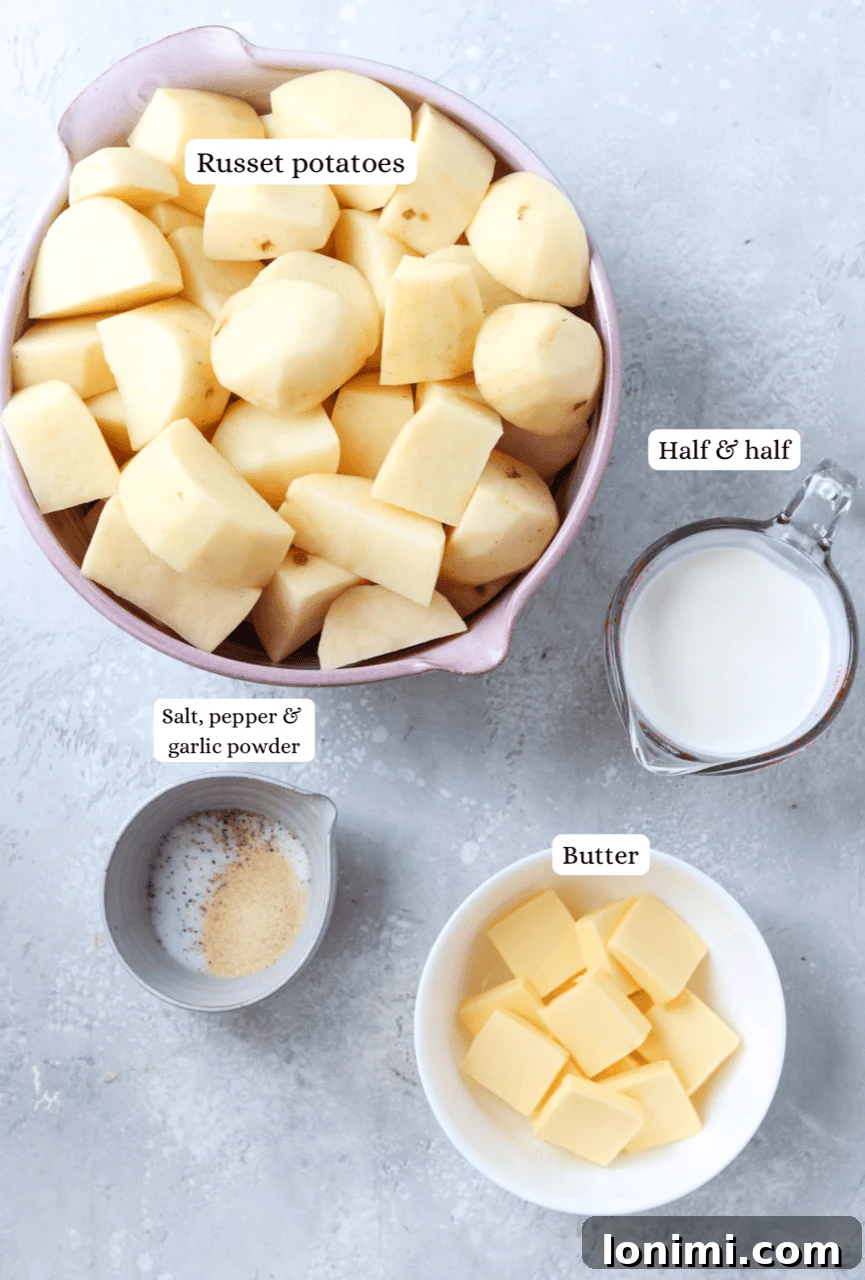
Choosing the right ingredients can make all the difference in achieving truly exceptional mashed potatoes. Here’s a detailed look at what you’ll need and why:
Potatoes: For the ultimate creamy and fluffy texture in your gluten-free mashed potatoes, I highly recommend using Russet potatoes. Their high starch content makes them ideal for mashing, as they break down easily and absorb butter and cream beautifully, resulting in a light, airy consistency. While Russets are my top choice, you can experiment with other starchy or all-purpose varieties like Yukon Golds for a slightly richer, buttery flavor, or even red potatoes for a more rustic, skin-on mash.
Regarding preparation, I usually remove the skins for a smoother mash. However, for a more wholesome and textured result, feel free to leave the skins on – just ensure they are thoroughly scrubbed clean. When cutting your potatoes, aim for uniform chunks rather than small pieces. Larger, evenly sized chunks cook more consistently and absorb less water, preventing a watery mash.
Half & Half: This ingredient is key to the luxurious richness of these mashed potatoes. Half & half offers a perfect balance of creaminess without being overly heavy. If you don’t have half & half on hand, whole milk is a perfectly acceptable substitute and will still yield a delicious result. For those seeking a dairy-free alternative, I have a fantastic recipe for Dairy-Free Mashed Potatoes which uses almond milk or other plant-based milks effectively. Just ensure your chosen dairy-free milk is unsweetened and unflavored. Heavy cream can also be used for an even more decadent experience.
Butter: A generous amount of good quality butter is non-negotiable for the best mashed potatoes. I highly recommend using salted butter in this recipe. The salt content in the butter adds an essential layer of flavor that complements the potatoes beautifully. If you only have unsalted butter, simply increase the amount of added sea salt to taste. For a dairy-free option, good quality vegan butter substitutes work wonderfully.
Spices: Sometimes, simplicity is key. For these mashed potatoes, a classic trio of salt, pepper, and garlic powder is all you need to create a wonderfully savory profile. The garlic powder provides a subtle aromatic kick without the harshness of raw garlic. My best advice here is to season with salt and pepper as you go, tasting and adjusting until you reach your preferred level of seasoning. Don’t be shy – properly seasoned mashed potatoes are incredibly satisfying! For an extra layer of flavor, consider adding a pinch of onion powder or a dash of fresh chives at the end.
Step-by-Step Guide: Crafting the Perfect Gluten-Free Mashed Potatoes
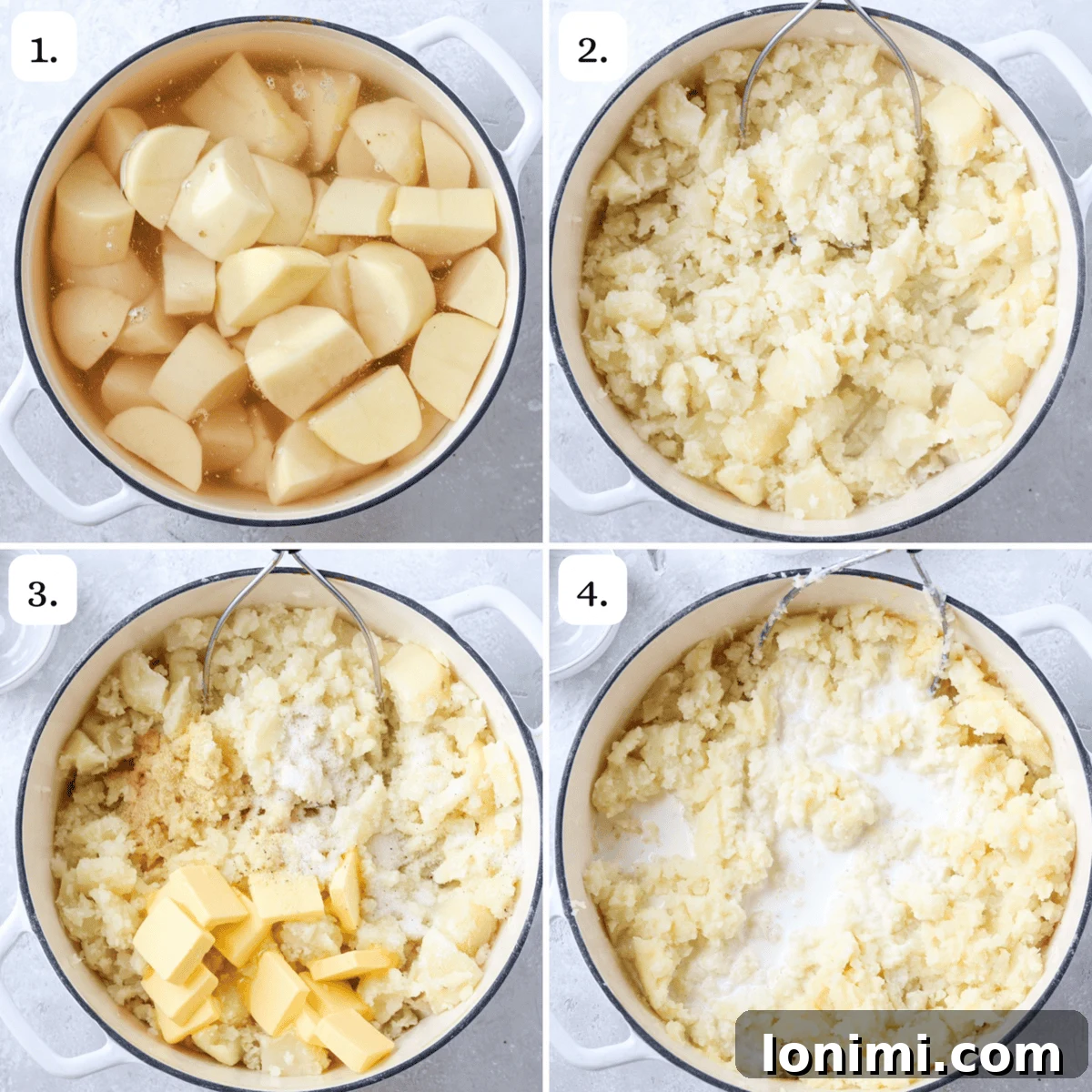
Achieving perfectly creamy and fluffy mashed potatoes is simpler than you might think. Follow these steps carefully for consistently excellent results:
- Boil the Potatoes to Perfection: Begin by placing your peeled and uniformly chunked potatoes into a large pot. Fill the pot with cold water, ensuring the potatoes are fully submerged by about an inch. Add a generous pinch of salt to the water – this seasons the potatoes from the inside out as they cook. Bring the water to a rolling boil over high heat, then reduce the heat slightly to maintain a steady simmer. Cook the potatoes for approximately 15-18 minutes, or until they are completely fork-tender. You should be able to easily pierce a potato chunk with a fork without resistance. Once cooked, immediately drain the potatoes thoroughly in a colander and return them to the empty, hot pot. The residual heat in the pot will help evaporate any remaining surface moisture, which is crucial for a non-watery mash.
- Initial Mash: With the hot, drained potatoes back in the pot, use a sturdy potato masher to begin mashing them. Don’t aim for complete smoothness at this stage; a partial mash is perfect. This initial mashing helps to break down the larger pieces and create a good foundation for incorporating the other ingredients.
- Infuse with Flavor: Now, it’s time to add the flavor powerhouses. Add your sliced butter, sea salt, garlic powder, and black pepper directly to the partially mashed potatoes. Continue mashing, allowing the residual heat from the potatoes to melt the butter. As you mash, the butter will distribute evenly, coating the potato starch and beginning to create that rich, creamy texture. Keep mashing until the butter is fully incorporated and the spices are well distributed.
- Achieve Creaminess (The Secret Step): Gradually pour in the half & half (or whole milk) a little at a time, continuing to mash gently until everything is just combined and you’ve reached your desired creamy consistency. This is a critical step: DO NOT OVERMIX! Overmixing develops the starch in the potatoes, leading to a gummy, gluey texture rather than a light and fluffy one. Mash just until the liquid is absorbed and the potatoes are smooth. A few small lumps are perfectly acceptable and can even add character to homemade mashed potatoes.
- Final Touches: Taste your mashed potatoes and adjust the seasoning with additional salt and pepper as needed. Sometimes, they need a bit more salt to truly shine. For a beautiful presentation and a burst of fresh flavor, garnish with freshly chopped chives, if desired. Serve immediately and enjoy the warm, comforting goodness!
Expert Tips for Unbeatable Mashed Potatoes
Achieving perfect mashed potatoes every time is an art, but these simple tips and tricks will help you master it:
Don’t Overmix for Gummy-Free Goodness: This is perhaps the most crucial tip. Potatoes contain starch. When starches are agitated excessively, especially when cool, they release too much gluey amylopectin, resulting in a gummy, pasty, and unappetizing texture. Mash only until the ingredients are just combined and the potatoes reach your desired smoothness. A few small lumps add character and prove they’re homemade!
Season Generously and Taste as You Go: Salt is your best friend when it comes to mashed potatoes. Potatoes love salt, and undersalting can leave them tasting bland. Add a good amount of salt to the cooking water, and then season the mashed potatoes with salt, pepper, and garlic powder, tasting frequently. Adjust until the flavor truly pops. Remember, you can always add more, but you can’t take it away!
Keep Them Warm: Mashing potatoes while they are hot is essential. Hot potatoes absorb butter and cream much more effectively, leading to a smoother, creamier, and more consistent texture. If they cool down too much, they become more resistant to mashing and can develop that undesirable gummy consistency.
Warm Your Dairy: For the creamiest results, gently warm your half & half (or milk/cream) before adding it to the potatoes. Cold dairy will cool down your potatoes, making them harder to mash evenly and potentially leading to a stiffer texture. A quick zap in the microwave or warming in a small saucepan until just warm (not hot) is sufficient.
Enhance Flavor with Roasted Garlic: For an extra layer of gourmet flavor, consider roasting a head of garlic until soft and caramelized. Squeeze the sweet, mellow cloves into your mashed potatoes instead of or in addition to garlic powder. It adds incredible depth.
Add a Touch of Tang: A tablespoon or two of cream cheese, sour cream, or even plain Greek yogurt can add a lovely tang and extra richness to your mashed potatoes, making them even more irresistible.
Recipe FAQ’s: Your Mashed Potato Questions Answered
Yes, absolutely! Potatoes in their natural, unprocessed state are 100% naturally gluten-free. They are a staple vegetable that can be enjoyed by individuals with Celiac disease or gluten sensitivity without any concerns.
In the context of this recipe, yes, these homemade mashed potatoes are specifically designed to be gluten-free. However, if you are ordering mashed potatoes from a restaurant, it is always crucial to ask your server or the chef about their preparation. Some establishments might use flour, roux, or other gluten-containing thickening agents, especially in gravies or sauces added to the potatoes, which would make them unsafe for gluten-free diets.
No, pure butter is naturally gluten-free. It is made solely from churned cream and does not contain any gluten-containing grains. Always double-check labels for flavored or compound butters, but plain butter is safe for a gluten-free diet.
On average, one cup of mashed potatoes typically contains approximately 35-42 grams of carbohydrates. This can vary slightly depending on the type of potato used, the cooking method, and any added ingredients like milk or butter. Our recipe provides an estimated 42g of carbohydrates per serving.
The possibilities are endless! Mashed potatoes are an incredibly versatile side dish. They are a classic pairing with rich gravy, but also shine alongside gluten-free chicken cutlets, comforting roasted chicken, tender Mississippi Chicken, or a perfectly cooked air fryer filet mignon. For a fun twist, try making loaded mashed potatoes with our classic slow cooker turkey chili recipe!
Yes, you absolutely can! Mashed potatoes are an excellent make-ahead dish, perfect for holidays or busy weeknights. Prepare them up to 2-3 days in advance and store them in an airtight container in the refrigerator. Reheat gently on the stovetop over low heat, stirring occasionally and adding a splash more milk or butter to restore their creamy consistency. Alternatively, you can reheat them in the oven as described in our “Freezing & Reheating” section below.
Unfortunately, once potatoes become gummy from overmixing, it’s very difficult to completely reverse the texture. The best approach is prevention – avoid overmixing. However, if you find yourself with slightly gummy potatoes, you can try to salvage them by adding more fat (like butter or cream cheese) to help coat the starches and make them a bit less sticky. Gently folding in some whipped cream cheese or sour cream can also help lighten the texture. Sometimes, incorporating a little more warm liquid and very gently stirring might help, but avoid aggressive mixing.
Explore More Delicious Gluten-Free Side Dishes
Looking to complete your meal with more wholesome and delicious sides? Here are some other fantastic gluten-free options that pair beautifully with any main course:
Maple Brussels Sprouts with Bacon & Pecans
Sautéed Delicata Squash
Roasted Sweet Potatoes
Dairy-Free Broccoli Casserole
Gluten-Free Green Bean Casserole
Dairy-Free Creamy Spinach Casserole
Love this recipe? Please consider leaving a 5-star rating in the recipe card below and sharing your thoughts in the comment section. You can also connect with us on Facebook, Pinterest, or Instagram for more delicious inspiration!
Gluten-Free Mashed Potatoes
These gluten-free mashed potatoes are the ONLY recipe you’ll ever need for the most delicious, creamy, and fluffy mashed potatoes. They are easy to make and always a crowd-pleaser!
Equipment
- Large Pot
- Potato Masher
Ingredients
- 4 lbs Russet potatoes (about 8 medium potatoes, peeled and cut into chunks)
- ½ cup butter (1 stick, cut into ½ inch thick slices)
- 2 tsp sea salt (+ more to taste)
- 1 tsp garlic powder
- ½ tsp pepper
- ¾ cup half & half (or whole milk)
Instructions
- Bring a large pot of water to a boil. Add the potatoes and cook for about 15-18 minutes, until fork-tender. Drain the potatoes thoroughly and return them to the pot.
- Mash the potatoes using a potato masher until partially broken down.
- Add the butter, salt, garlic powder, and pepper. Continue mashing as the butter melts and incorporates.
- Slowly pour in the warm half & half (or whole milk) and continue mashing until just combined and creamy. Do not overmix them, or the potatoes will become gummy!
- Season with additional salt and pepper to taste and garnish with fresh chives, if desired. Serve immediately and enjoy!
Notes
Mash while hot: For the best results and a truly creamy texture, mash the potatoes while they are still hot. This ensures the butter melts perfectly and all ingredients combine smoothly.
Potato varieties: While Russet potatoes are recommended for their ideal texture, you can use other starchy potatoes like Yukon Golds for a slightly richer flavor.
Skin on vs. off: For added texture and nutrients, feel free to leave the skins on your potatoes. Just be sure to scrub them very well before cooking.
Seasoning adjustments: The recommended 2 tsp of salt is a guideline. Always taste your mashed potatoes as you go and adjust the salt and pepper to your personal preference.
Freezing Mashed Potatoes: Mashed potatoes can be frozen for up to 1 month. Store them in a freezer-safe, tightly wrapped container to prevent ice crystal formation. For best texture, use within a few weeks.
Reheating Mashed Potatoes: To reheat frozen mashed potatoes, place them in a 350°F (175°C) oven for 30-45 minutes, stirring every 5-10 minutes until heated through. Alternatively, thaw them overnight in the refrigerator and then reheat gently on the stovetop with a splash of milk or butter.
Nutrition (Estimated)
All nutrition facts are an estimate and automatically calculated. While we aim for accuracy, please note that they may not always be 100% precise and depend on the specific ingredients used. For the most accurate grams per serving size, we recommend weighing your total and dividing by the number of servings.
Did you make this recipe? We’d love to hear from you! Rate and comment below, and don’t forget to tag us on Instagram @maryswholelife so we can see your delicious creations!