
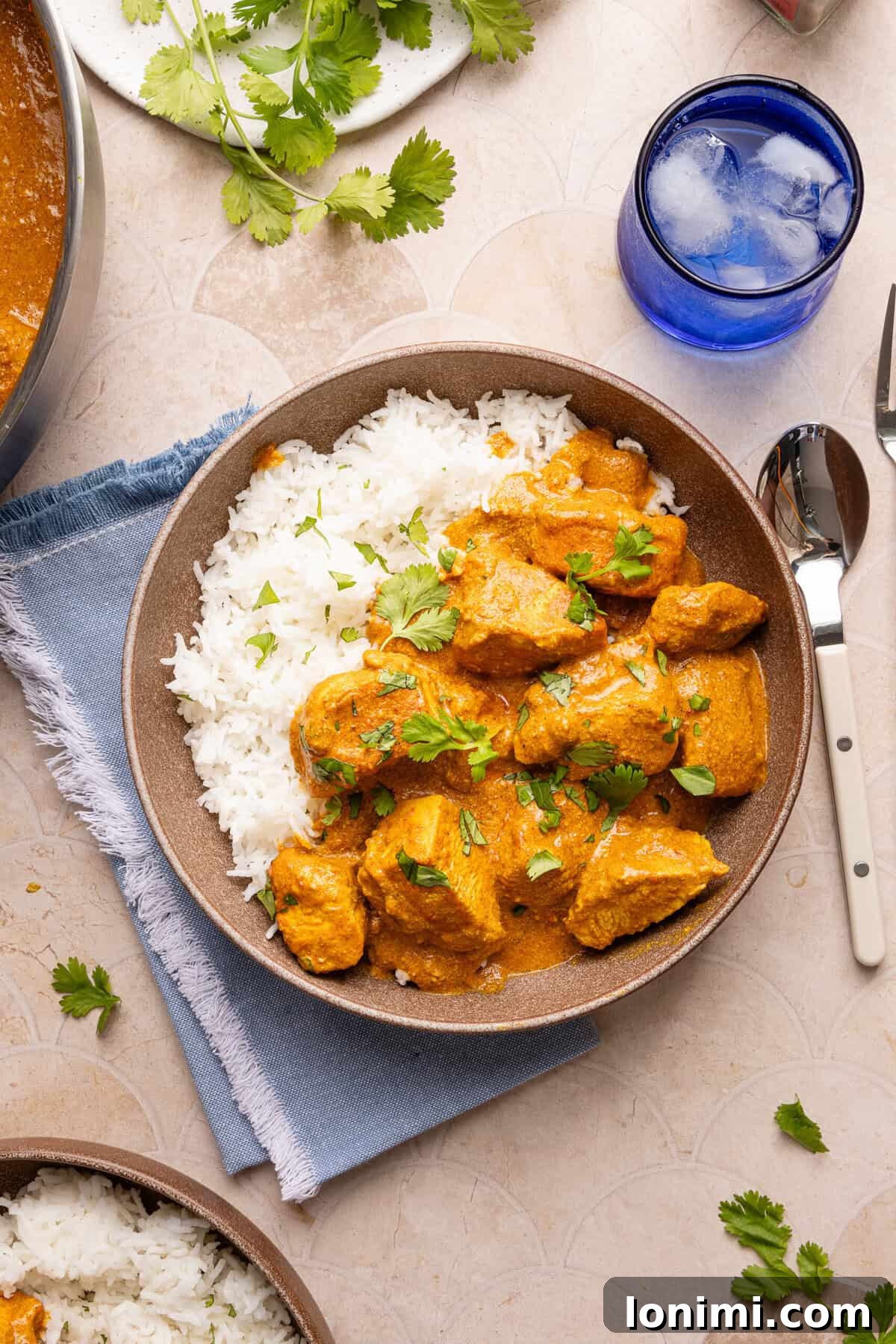
Irresistible Gluten-Free Butter Chicken: Your New Favorite Weeknight Meal
Discover the ultimate **gluten-free butter chicken** recipe, featuring succulent, perfectly marinated chicken tenderly simmered in a rich, creamy tomato-based sauce. Infused with aromatic spices like garam masala, cumin, turmeric, and paprika, this dish delivers an authentic butter chicken flavor experience that’s surprisingly easy to achieve. Designed for busy weeknights, this one-skillet method ensures a comforting, flavorful meal without the fuss. Our secret? A quick yogurt marinade that guarantees incredibly tender chicken, alongside versatile dairy-free options for those with dietary needs. Serve this delectable curry over fluffy basmati rice, garnished with fresh cilantro, for a truly satisfying and effortlessly elegant dinner.
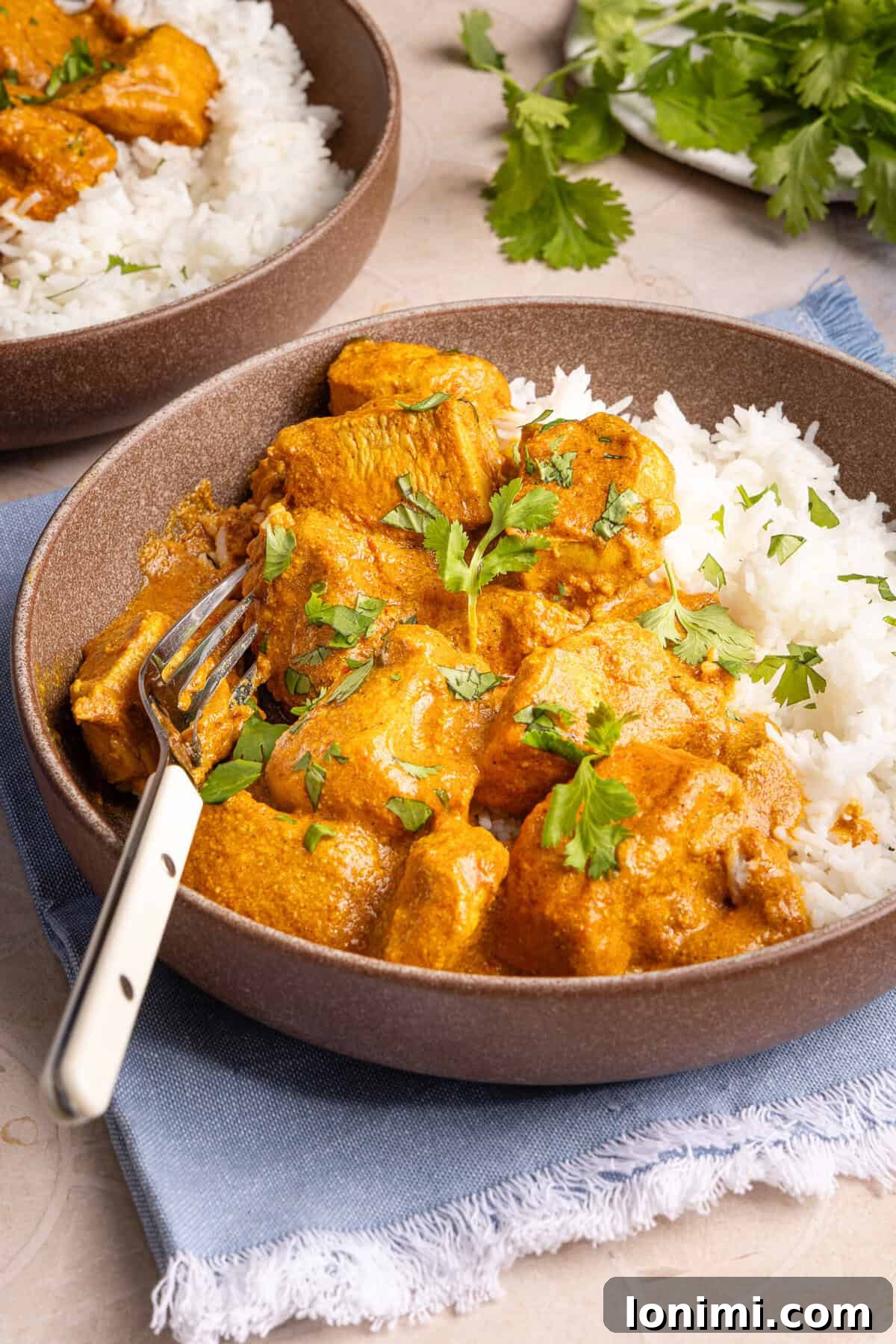
Quick Glance: Your Easy Gluten-Free Butter Chicken Recipe
- ⏱️ Prep Time: 10 minutes + 10-minute minimum marinating.
- 🍳 Cook Time: 20 minutes
- 🕒 Total Time: Approximately 40 minutes
- 👥 Servings: 4 generous servings
- 📊 Calories: ~387 kcal per serving (estimated)
- 🔥 Cook Method: Stovetop, one-skillet for minimal cleanup
- 👩🍳 Flavor Profile: Classic, rich Indian butter chicken with adaptable dairy-free options
- ⭐ Difficulty: Effortlessly easy, perfect for any weeknight
Plan ahead or cook on the fly – this recipe adapts to your schedule!
Why You’ll Adore This Easy Gluten-Free Butter Chicken Recipe
This isn’t just another dinner recipe; it’s a culinary journey to the heart of Indian flavors, simplified for your kitchen. Our butter chicken stands out for several compelling reasons, making it an instant family favorite and a go-to for healthy, delicious meals.
- Effortlessly Simple Stovetop Method: Forget complicated processes and multiple pans. This recipe is designed for maximum flavor with minimal effort, coming together beautifully in just one skillet. It’s the ideal solution for those hectic weeknights when you crave something extraordinary without spending hours in the kitchen.
- Authentic Flavor, Simplified: We’ve distilled the essence of traditional Indian butter chicken into a recipe that’s approachable for home cooks. The result is a velvety, rich tomato sauce that perfectly coats the chicken, delivering that signature creamy, mildly spiced taste without being overly heavy. The subtle warmth from a hint of cayenne ensures a balanced flavor profile that even the pickiest eaters, including children, will enjoy – a definite win in any household!
- Naturally Gluten-Free & Allergy-Friendly: For anyone navigating celiac disease or gluten sensitivity, finding truly delicious and safe recipes can be a challenge. This butter chicken is inherently gluten-free, providing peace of mind and incredible taste. We always recommend double-checking labels on packaged ingredients like garam masala to ensure they meet your dietary requirements, but the core recipe is straightforward and safe.
- Flexible Dairy-Free Options: We understand that dietary needs vary. This recipe is incredibly versatile, offering simple dairy-free swaps that don’t compromise on taste or texture. You can easily adapt it to suit your preferences or those of your guests, making it a truly inclusive meal.
- Comfort Food at Its Best: There’s something undeniably comforting about a warm, aromatic curry. This butter chicken recipe offers a perfect blend of savory, creamy, and mildly spicy notes, creating a dish that soothes the soul and delights the palate. It’s the kind of meal that brings everyone to the table, eager for a second helping.
- Quick Marinating for Maximum Tenderness: A short yogurt marinade works wonders, tenderizing the chicken and infusing it with flavor from the inside out. Even a 10-minute marinade makes a significant difference, but if you have more time, marinating overnight takes the tenderness to an unparalleled level.
If you’re already a fan of butter chicken flavors and looking for more easy, gluten-free dinner inspiration, be sure to explore our baked butter chicken meatballs next. They offer a delightful twist on these beloved flavors in a convenient, healthy format!
Essential Ingredients for Your Gluten-Free Butter Chicken
Crafting this flavorful butter chicken requires a blend of common kitchen staples and vibrant Indian spices. Each ingredient plays a crucial role in building the layers of taste that make this dish so special.
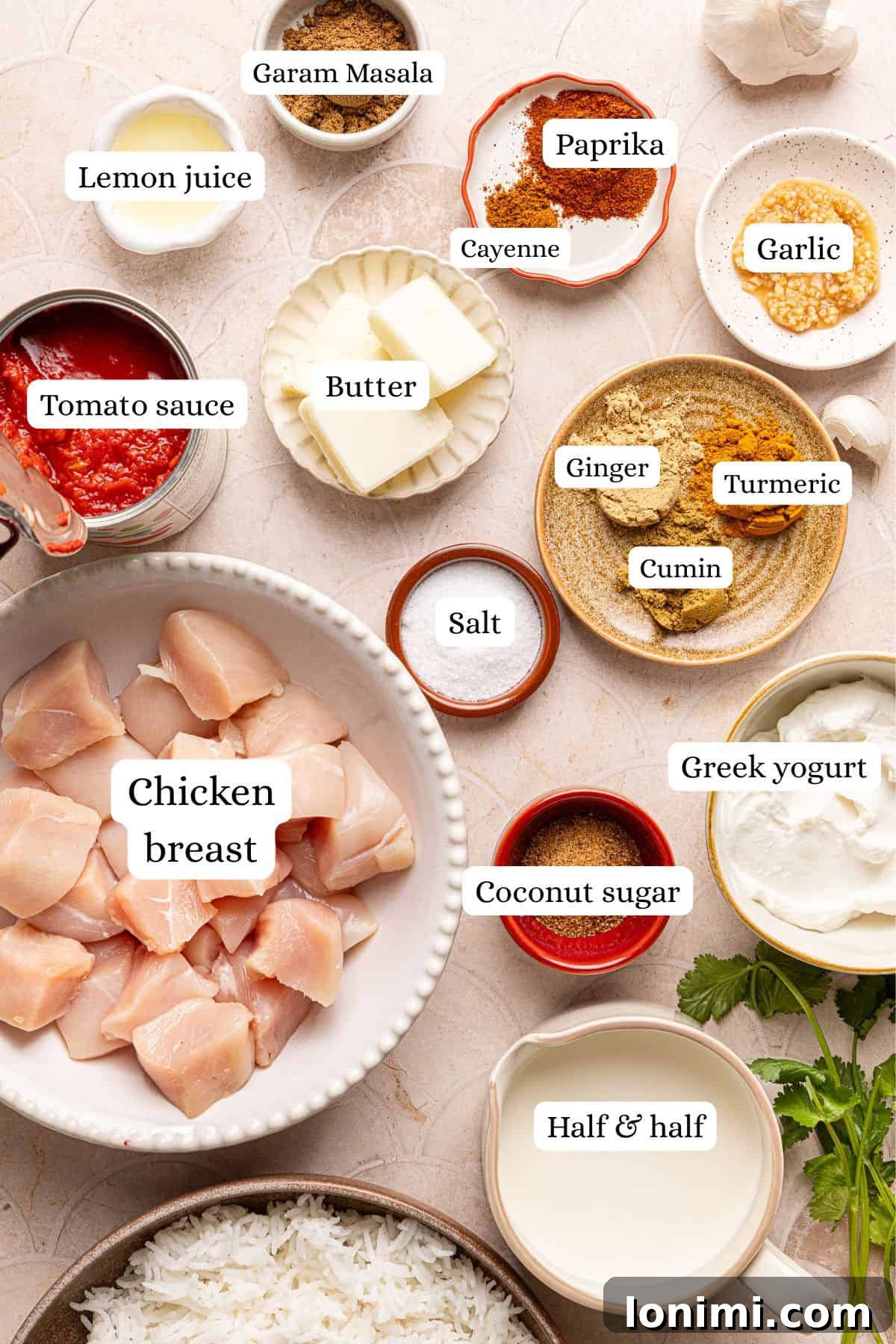
For the Flavor-Infused Marinade:
- Plain Non-Fat Greek Yogurt: This forms the essential base of our marinade. Beyond its creamy texture, Greek yogurt works as a tenderizer, breaking down chicken fibers for a melt-in-your-mouth experience while providing an excellent surface for spices to adhere to and deeply penetrate the meat.
- Minced Garlic: We use garlic generously in both the marinade and the sauce to build a robust, consistent flavor profile throughout the dish, ensuring no bite is ever bland.
- Turmeric: More than just a vibrant colorant, turmeric offers earthy, slightly bitter notes and its well-known anti-inflammatory properties. It gives the marinated chicken its signature golden hue.
- Garam Masala: This warm, aromatic blend of ground spices is the heart and soul of butter chicken, providing its distinctive, comforting Indian flavor. For those with celiac disease or gluten sensitivity, always check the label to confirm your garam masala blend is certified gluten-free.
- Cumin: Adding a deep, earthy warmth, cumin prevents the sauce from tasting one-dimensional, contributing complexity and a subtle nuttiness.
- Powdered Ginger: A convenient way to impart a warm, spicy zing to the marinade without the need for fresh ginger, though fresh grated ginger can certainly be used if preferred.
- Fresh Lemon Juice: A splash of lemon juice brightens the marinade, cuts through richness, and helps balance the deep, creamy flavors of the final sauce. It also aids in tenderizing the chicken.
- Chicken Breast: For quick and even cooking, cut your chicken breast into uniform 1-1.5 inch cubes. Boneless, skinless chicken thighs are an excellent alternative, offering even more juiciness and a richer flavor, especially if you plan on reheating leftovers.
For the Irresistibly Creamy Sauce:
- Butter: The foundation of the rich sauce, butter contributes unparalleled depth and the characteristic “buttery” flavor. For a dairy-free rendition, high-quality vegan butter works perfectly without compromising taste.
- Minced Garlic (Second Addition): A fresh addition of garlic at this stage intensifies the savory base of the sauce, adding another layer of aromatic goodness.
- Canned Tomato Sauce or Crushed Tomatoes: Choose tomato sauce for a smoother, silkier finished curry. If you prefer a slightly more rustic texture and thicker sauce, crushed tomatoes are an excellent choice.
- Half & Half: This is key to achieving that luxurious, creamy consistency without making the sauce excessively heavy. For dairy-free versions, full-fat coconut milk provides the closest texture and richness, while original Nutpods also offer a great alternative.
- Coconut Sugar: Just a small amount of coconut sugar is added to mellow out the natural acidity of the tomatoes, creating a perfectly balanced sweet and savory profile.
- Paprika: Contributes a gentle warmth and a beautiful red hue to the sauce, enhancing both flavor and visual appeal.
- Garam Masala (Second Addition): A second layer of garam masala added to the sauce ensures the signature spice profile remains vibrant and isn’t diluted by the other ingredients.
- Cayenne Pepper: Provides a subtle kick of heat that complements the creamy sauce beautifully. The amount can be adjusted to your personal preference for spice.
- Salt: Crucial for seasoning and bringing all the individual flavors into harmonious focus. Remember to taste and adjust before serving, as the sauce often needs a final salt boost, especially when served with bland rice.
For Serving & Garnish:
- Basmati Rice: The quintessential accompaniment, basmati rice is light, fragrant, and perfectly absorbs the rich butter chicken sauce without becoming too heavy.
- Chopped Fresh Cilantro: A vibrant garnish that adds a burst of freshness and brightens the entire dish with its herbaceous notes.
Clever Substitutions & Creative Variations
This gluten-free butter chicken recipe is wonderfully adaptable, allowing you to tailor it to your dietary needs and taste preferences. Here are some smart swaps and creative additions to make it uniquely yours:
- Dairy-Free Adaptation: If you need to make this recipe completely dairy-free, simply substitute regular butter with an equal amount of high-quality vegan butter. For the half and half, opt for full-fat canned coconut milk or original Nutpods. Full-fat coconut milk will yield the richest and creamiest result, closely mimicking the texture of traditional butter chicken. Nutpods provide a lighter, yet still creamy, option.
- Tomato Texture Preference: While canned tomato sauce creates a beautifully smooth and velvety curry, you can absolutely use crushed tomatoes if that’s what you have on hand or if you prefer a slightly more textured sauce. The flavor will remain excellent, just expect a bit less silkiness in the final dish.
- Chicken Cut Options: Boneless, skinless chicken thighs are a fantastic alternative to chicken breast. They are inherently juicier and more forgiving, especially if you tend to overcook chicken or plan on reheating leftovers, as they retain moisture better. Cut them into similar 1-1.5 inch cubes for even cooking.
- Spice Level Adjustment: The recipe calls for a modest amount of cayenne pepper, providing a gentle warmth that’s family-friendly. If you love a bolder kick, feel free to increase the cayenne to ½ teaspoon or even ¾ teaspoon. For a milder version, you can reduce it or omit it entirely.
- Add Vegetables: To boost the nutritional content and add more texture, consider stirring in some vegetables during the last 5-10 minutes of simmering. Great options include spinach (which wilts quickly), diced bell peppers, green peas, or even finely chopped cauliflower florets.
- Sweetness Balance: The coconut sugar balances the acidity of the tomatoes. If your tomatoes are very sweet or you prefer a less sweet curry, you can reduce the amount of coconut sugar. Conversely, if you find the sauce too tart, a pinch more sugar can work wonders.
- Herb Alternatives: While fresh cilantro is traditional and highly recommended for its bright finish, if you’re not a fan, you can try fresh parsley or simply omit the fresh herbs.
Step-by-Step Guide: Crafting Your Perfect Gluten-Free Butter Chicken
Follow these simple steps to create a restaurant-quality butter chicken right in your own kitchen. Each stage is designed to build maximum flavor and ensure a tender, delicious result.
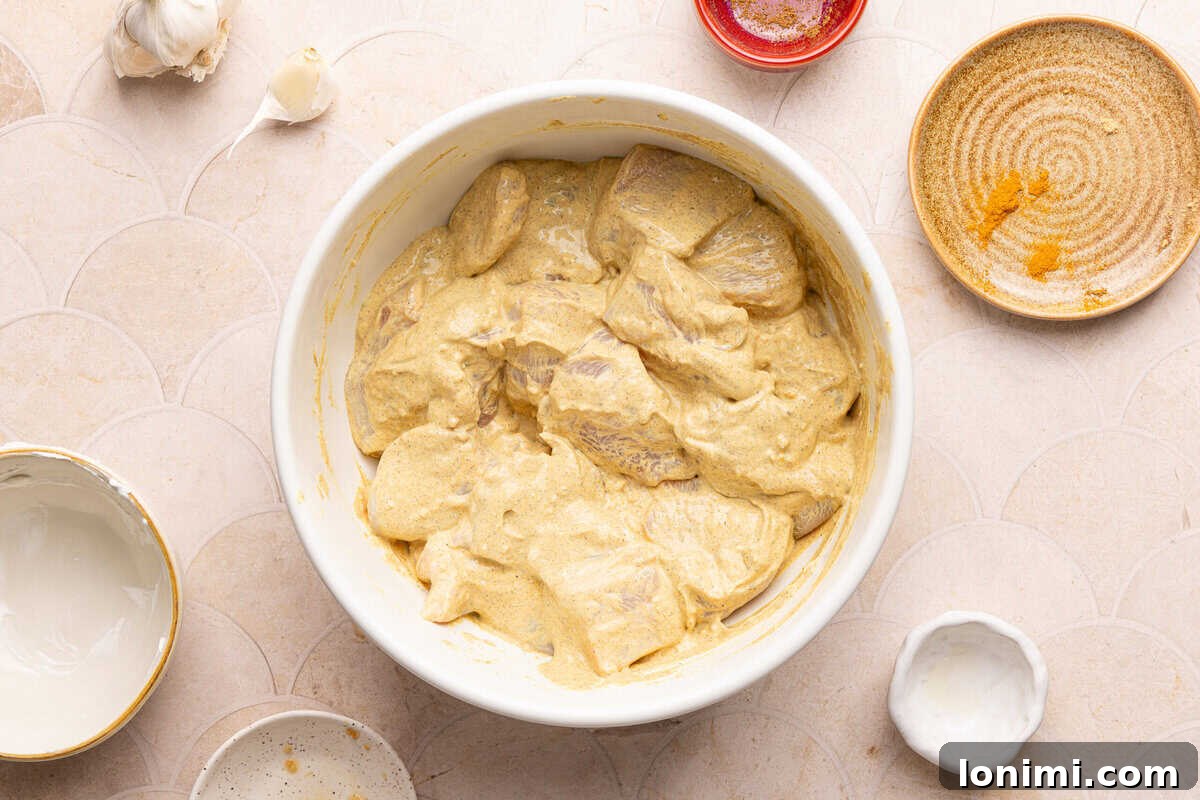
Step 1: Prepare the Flavorful Marinade. In a medium-sized bowl, combine the plain non-fat Greek yogurt, minced garlic, turmeric, garam masala, cumin, powdered ginger, and lemon juice. Whisk all these ingredients together thoroughly until you have a smooth, well-combined mixture. Add your cubed chicken pieces to the bowl and toss them gently to ensure each piece is evenly coated with the thick, creamy marinade. Let the chicken marinate for at least 10 minutes at room temperature, or for an even more profound flavor and tenderness, cover the bowl and refrigerate it overnight (up to 12-24 hours). The marinade should be noticeably thick and creamy, not watery – this indicates a good coating for the chicken.
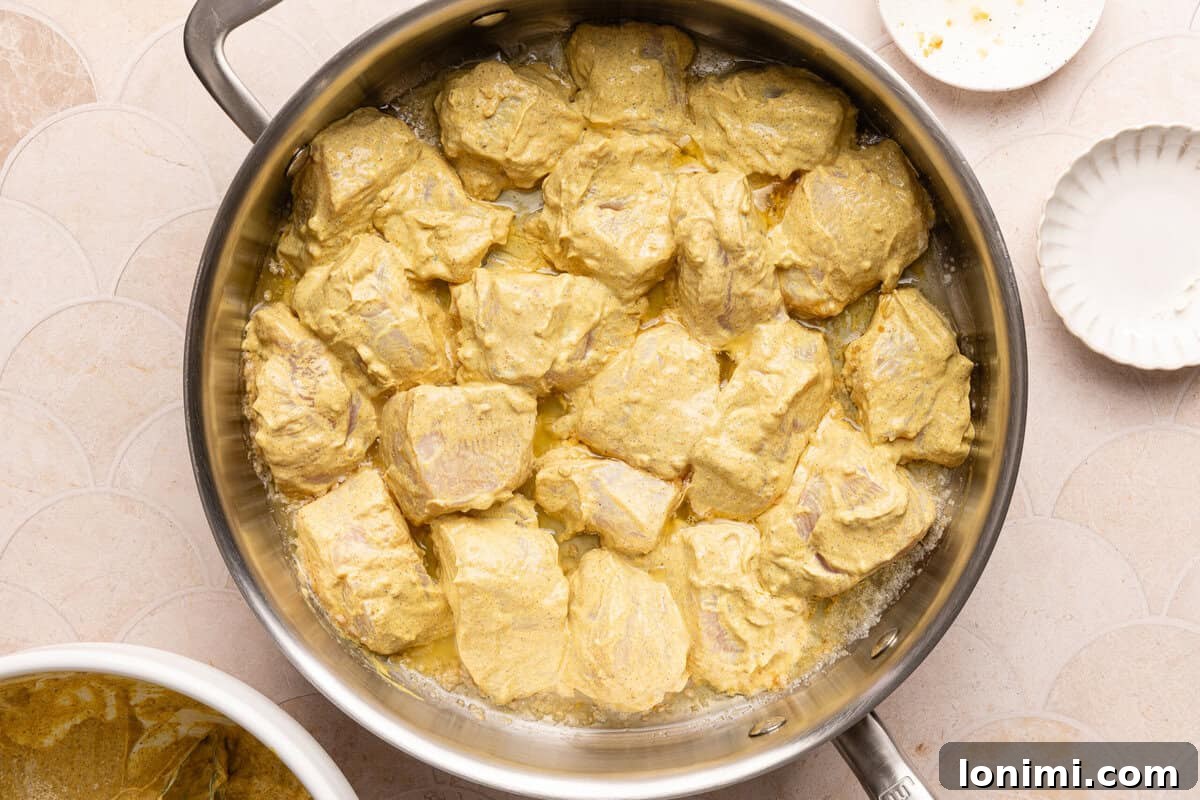
Step 2: Sear the Chicken. Heat the butter (or vegan butter) in a large, heavy-bottomed skillet or Dutch oven over medium-high heat. Once the butter is melted and slightly shimmering, add the minced garlic and sauté for about 30 seconds, stirring constantly, until it becomes fragrant but not browned. Using tongs, carefully lift each piece of marinated chicken out of the bowl, allowing any excess marinade to drip off, and place it into the hot skillet in a single layer. Reserve any remaining marinade left in the bowl – we’ll add this to the sauce later to maximize flavor and minimize waste.
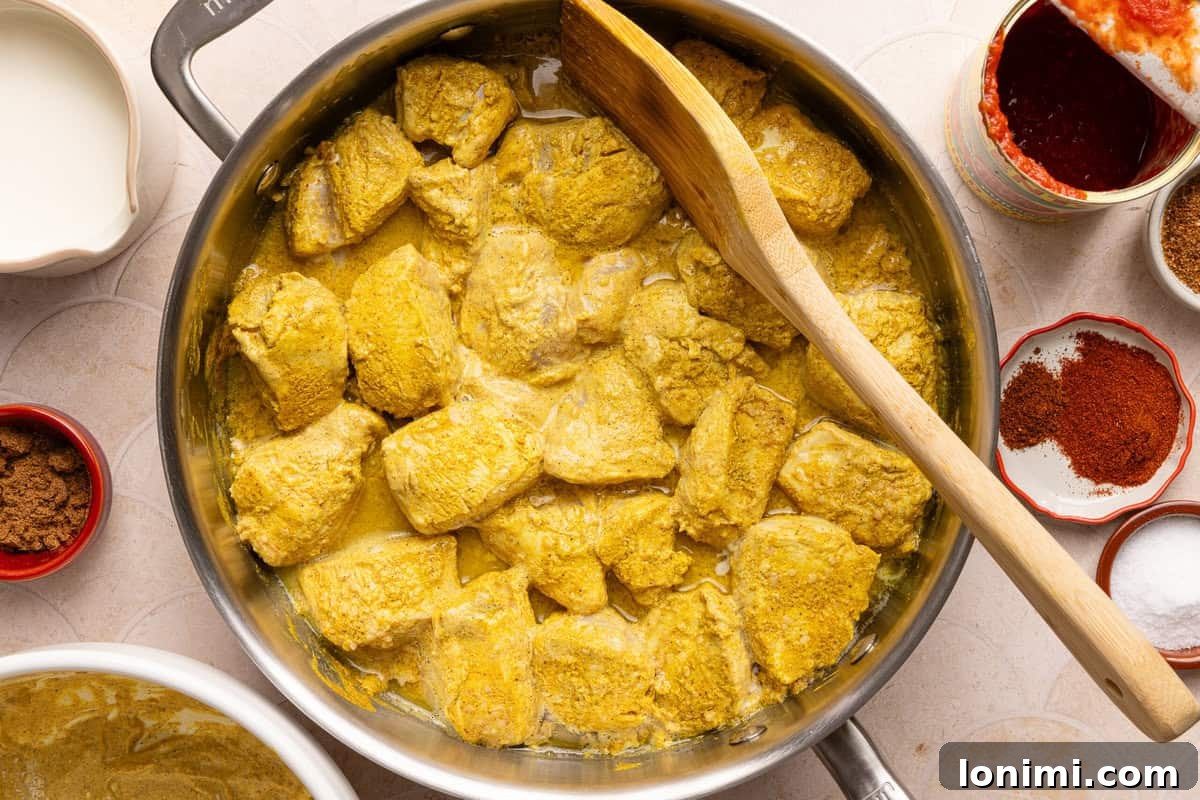
Step 3: Develop a Searing Crust. Allow the chicken to sear undisturbed in a single layer for 1 to 2 minutes. This crucial step helps develop a beautiful golden-brown crust and locks in moisture. Then, flip the chicken pieces and continue cooking and stirring for another 2 minutes, ensuring all sides get a light sear. The chicken doesn’t need to be cooked through at this point; we’re just building flavor and texture on the exterior.
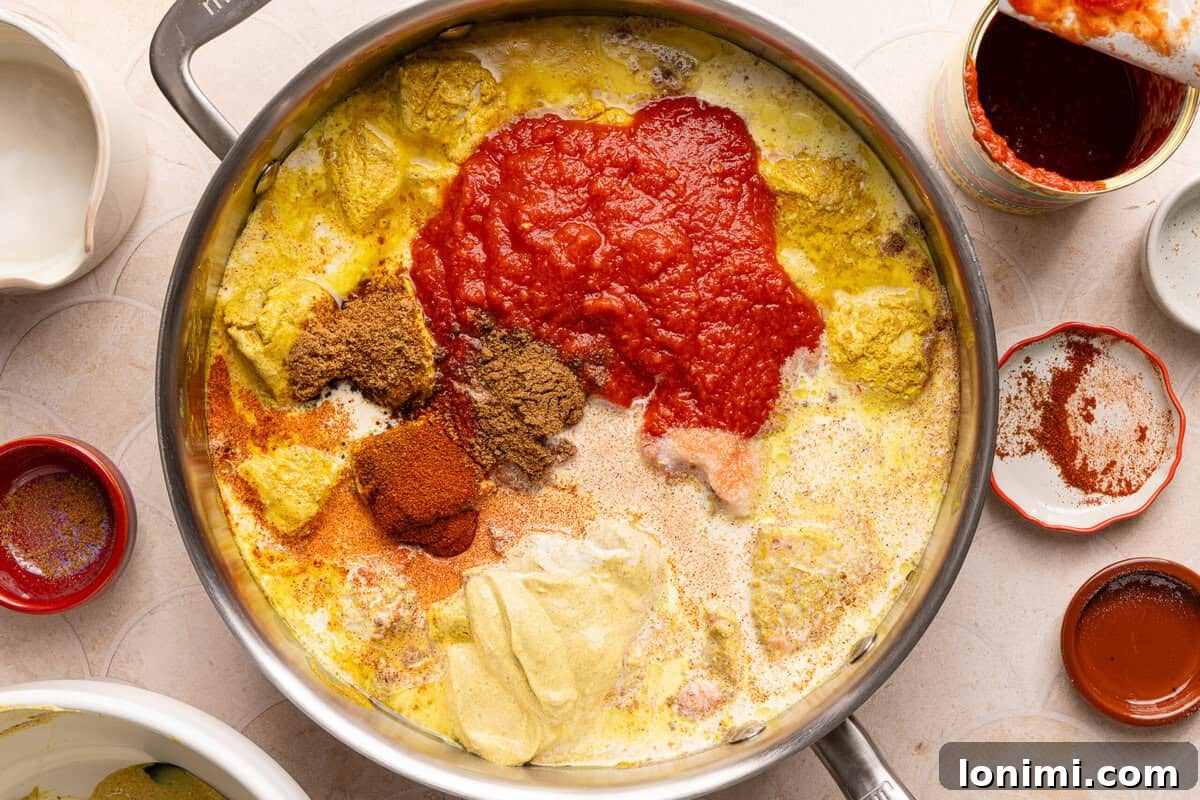
Step 4: Craft the Creamy Sauce. Reduce the heat to low-medium. Now, add the canned tomato sauce (or crushed tomatoes), half and half (or your dairy-free alternative), coconut sugar, paprika, the second portion of garam masala, and salt to the skillet. Importantly, also scrape in any remaining marinade from the bowl into the pan. Stir all the ingredients together thoroughly with the chicken until everything is well combined and the sauce begins to come together. The reserved marinade adds an extra layer of flavor and ensures nothing goes to waste.
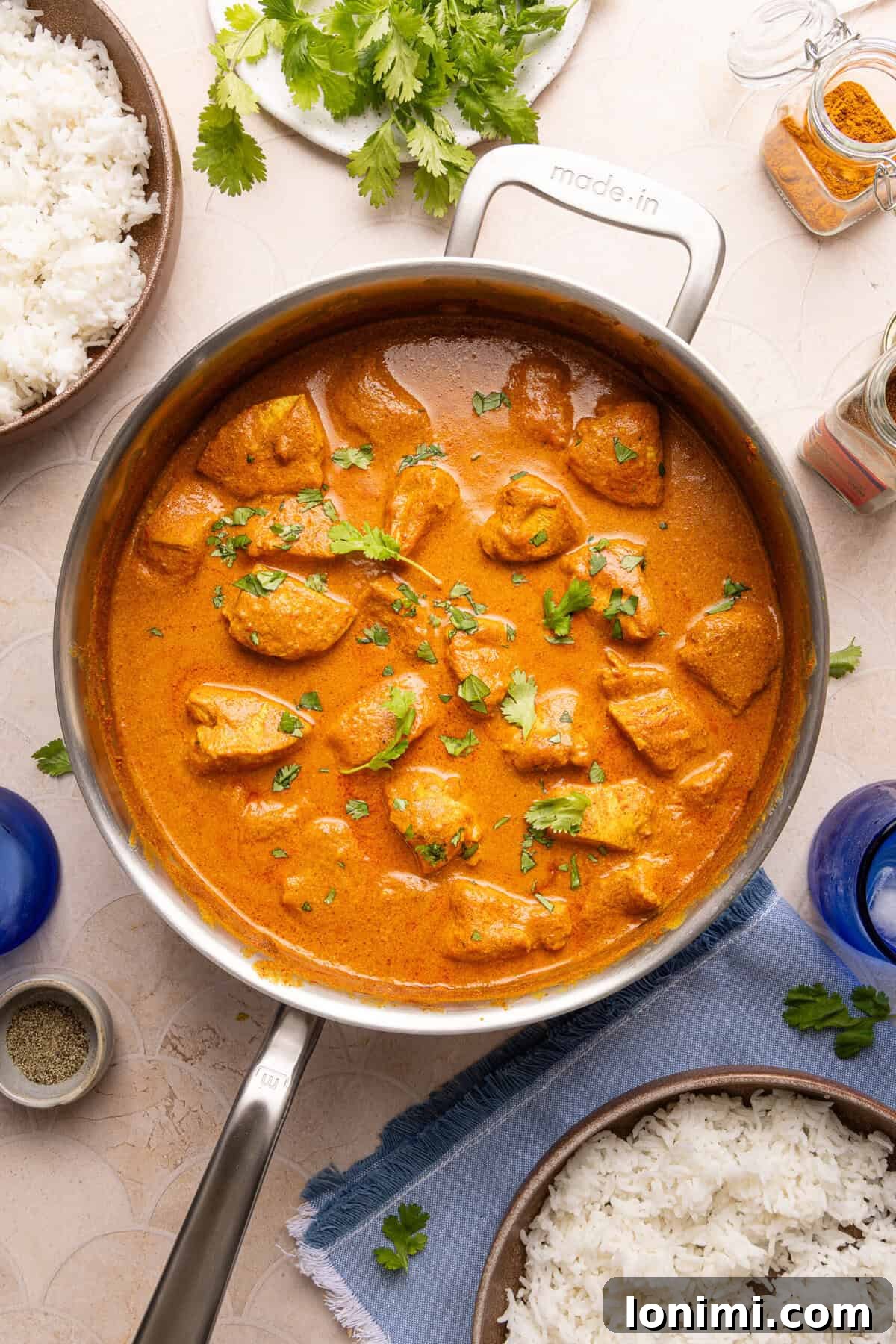
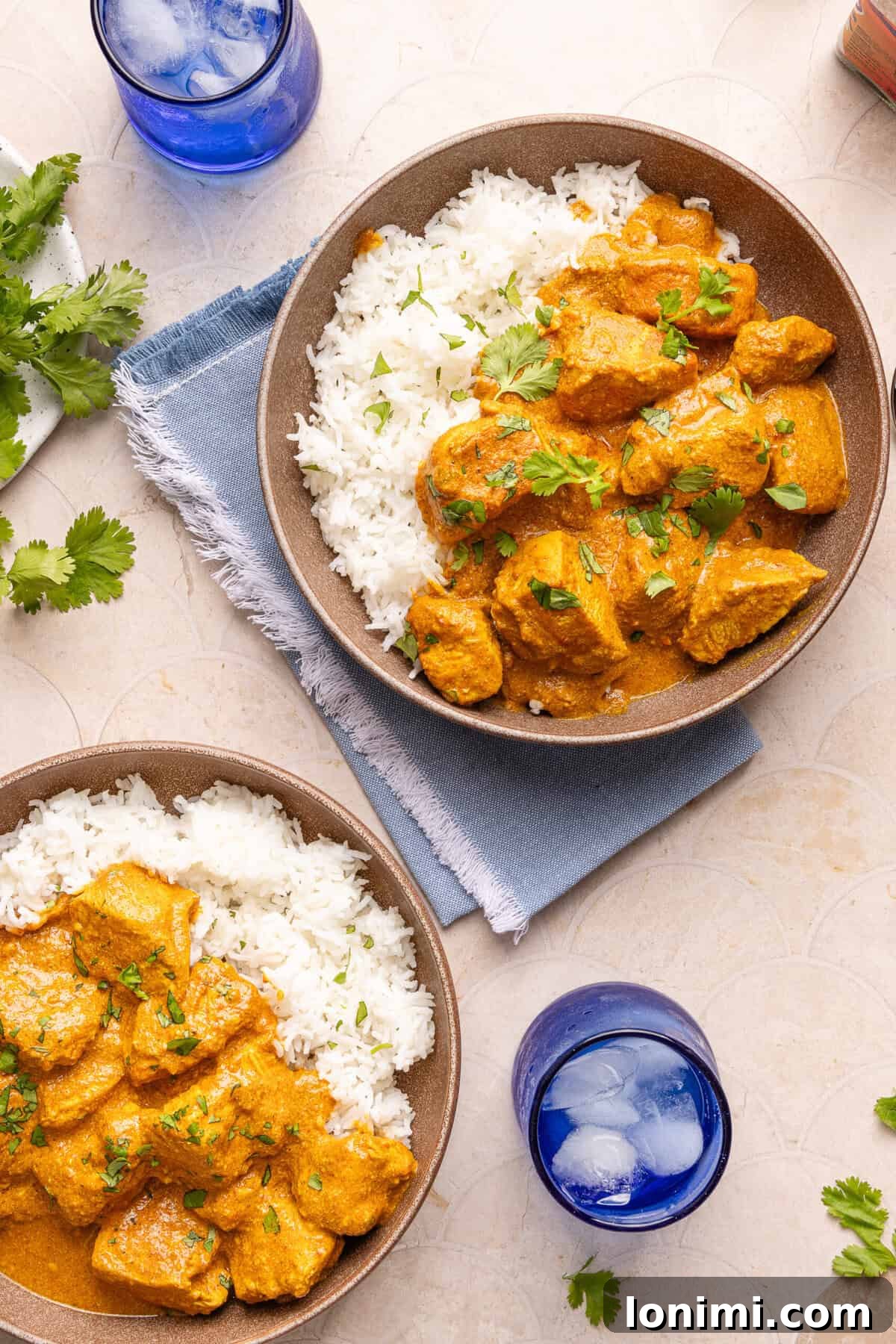
Step 5: Simmer to Perfection & Serve. Once all the sauce ingredients are incorporated, turn the heat down to a gentle low simmer. Allow the butter chicken to simmer uncovered for approximately 15 minutes, stirring occasionally. This simmering time allows the flavors to meld beautifully, the sauce to thicken slightly, and the chicken to finish cooking through, becoming incredibly tender. Before serving, taste the sauce and adjust the seasoning with additional salt and black pepper if needed. Serve your delicious gluten-free butter chicken piping hot over fluffy basmati rice, generously garnished with freshly chopped cilantro. For an even more authentic experience, pair it with a gluten-free naan bread alternative. Enjoy this comforting, aromatic meal!
Chef’s Secrets: Expert Tips for Perfect Butter Chicken
Achieving a truly outstanding butter chicken is easy with a few insider tricks. These tips will help you elevate your dish from good to unforgettable, ensuring every bite is bursting with flavor and perfect texture.
- Handle Chicken with Tongs: When transferring the marinated chicken to the skillet, always use tongs instead of pouring the entire contents of the bowl. This allows any excess liquid from the marinade to drain off, promoting a cleaner, more effective sear on the chicken pieces at the beginning of cooking. A good sear is key to developing deep flavor.
- Low and Slow Simmering is Key: Once you’ve added the sauce ingredients, reduce the heat to a gentle simmer. Avoid high heat, which can cause the sauce to separate or become grainy, and can dry out the chicken. A low, slow simmer allows the chicken to finish cooking gently, keeps it incredibly tender, and helps the sauce achieve that smooth, luxurious consistency we all love.
- Don’t Forget to Taste and Season: This is perhaps the most critical step for any great cook! Before serving, always taste the sauce. Butter chicken, especially when served over neutral basmati rice, can sometimes taste a little “flat” if it’s not seasoned correctly. Add more salt if needed, a pinch at a time, until the flavors truly pop and harmonize. A dash of black pepper can also enhance the overall profile.
- Mellow Out Tomato Acidity: If you find that your sauce tastes a bit too sharp or acidic from the tomatoes, don’t worry! Simply allow it to simmer for an extra 5 to 10 minutes on low heat. Extended simmering helps to mellow out the acidity of the tomatoes, creating a more rounded and balanced flavor. A tiny pinch more of coconut sugar can also help neutralize tartness.
- Marinate for Maximum Flavor: While 10 minutes is sufficient for tenderizing, marinating the chicken for a longer period (30 minutes to overnight in the refrigerator) will result in even more tender and deeply flavorful chicken. The yogurt and spices have more time to penetrate the meat.
- Toast Your Spices (Optional but Recommended): For an extra layer of depth, you can briefly toast the powdered spices (cumin, paprika, garam masala) in the hot butter after the garlic, before adding the tomatoes. This helps to release their essential oils and intensifies their aroma and flavor. Be careful not to burn them!
- Fresh Ingredients Make a Difference: While dried spices are essential, using fresh garlic and lemon juice will always yield the best results. The brightness of fresh lemon juice, in particular, lifts the entire dish.
Common Questions About Gluten-Free Butter Chicken
Here are answers to some frequently asked questions to help you master this delicious and versatile butter chicken recipe.
What is the main difference between butter chicken and chicken tikka masala?
While both are popular Indian-inspired chicken curries, butter chicken (Murgh Makhani) is typically known for its richer, milder, and sweeter profile, heavily featuring butter, cream, and tomatoes. Chicken tikka masala, on the other hand, usually has a stronger tomato and spice base, often with a more pronounced tangy and sometimes spicier flavor, and its chicken is traditionally grilled or roasted (tikka) before being added to the sauce. If you enjoy both, you might also like our Instant Pot Chicken Tikka Masala or Whole30 Shrimp Tikka Masala recipes!
Is this butter chicken recipe spicy?
This recipe is designed to be family-friendly, offering a very mild level of heat. The cayenne pepper adds just a hint of warmth without overpowering the rich, creamy sauce. The creaminess itself helps to balance any spice, making it enjoyable for most palates, including children. If you prefer more heat, you can easily increase the amount of cayenne pepper.
Can I substitute coconut cream for half & half or heavy cream in butter chicken?
Absolutely! Full-fat canned coconut milk (which has a thick layer of coconut cream at the top) is an excellent dairy-free alternative. It delivers a rich, creamy sauce with a subtle coconut flavor that complements the Indian spices beautifully. If using coconut cream specifically, you might want to thin it slightly with a splash of water or broth to achieve the desired sauce consistency.
Can I freeze butter chicken?
Yes, butter chicken freezes exceptionally well, making it a fantastic option for meal prepping. Allow the dish to cool completely to room temperature before transferring it to an airtight, freezer-safe container. It can be stored in the freezer for up to 2 to 3 months. For best results when reheating, thaw it overnight in the refrigerator, then gently warm it on the stovetop over low heat. If the sauce appears too thick after thawing and reheating, simply stir in a splash of water, coconut milk, or half and half to restore its smooth, creamy consistency.
What should I serve with gluten-free butter chicken?
Basmati rice is the classic accompaniment, as its light, fluffy texture and aromatic qualities perfectly complement the rich sauce. Beyond rice, you could serve it with cauliflower rice for a low-carb option, gluten-free naan bread for dipping, a simple green salad, or a side of steamed or roasted vegetables like green beans or broccoli. A dollop of plain Greek yogurt or a wedge of lime can also add a fresh counterpoint.
Why is my butter chicken sauce separating or looking grainy?
Sauce separation often occurs if the cream or yogurt is added to a very hot pan and then brought to a rolling boil too quickly. To prevent this, always add dairy or dairy-free alternatives (like coconut milk) when the heat is low, and then simmer gently, never allowing it to come to a hard boil. Stirring frequently can also help. Using full-fat dairy or coconut milk tends to create a more stable emulsion than lower-fat alternatives.
Storage & Make-Ahead Strategies for Convenience
This gluten-free butter chicken is fantastic as leftovers and can be partially prepared in advance, making it a perfect candidate for meal planning. Here’s how to store it and get a head start:
- Refrigerating Leftovers: Store any leftover butter chicken in an airtight container in the refrigerator for up to 4 days. It tastes even better the next day as the flavors deepen! It’s completely normal for the sauce to thicken considerably as it chills; this is due to the fats and starches solidifying.
- Gentle Reheating: When reheating, whether from the fridge or freezer (after thawing), do so gently on the stovetop over low heat, stirring frequently. Alternatively, you can reheat it in the microwave in short intervals, stirring well between each to ensure even heating and prevent scorching. If the sauce has thickened too much for your liking, simply add a splash of water, coconut milk, or half and half while reheating to loosen it up and restore its original creamy consistency.
- Freezing for Future Meals: As mentioned in the FAQs, butter chicken freezes beautifully. Allow it to cool completely before portioning into freezer-safe containers or bags. It will maintain its quality for 2-3 months. Thaw overnight in the fridge before reheating.
- Make-Ahead Chicken Marinade: To streamline your cooking process on a busy day, you can marinate the chicken a day in advance. Simply combine all the marinade ingredients and the chicken, toss to coat, then cover and refrigerate overnight. This allows you to quickly proceed with the searing and sauce-making steps on the day you plan to serve, significantly cutting down on active prep time.
- Prep Your Spices: Measure out all your dry spices (garam masala, cumin, turmeric, paprika, cayenne, salt, coconut sugar) into small bowls or a single container ahead of time. This “mise en place” approach makes the cooking process smoother and faster.
Explore More Easy Gluten-Free Chicken Recipes
Loved this butter chicken? Expand your weeknight dinner repertoire with these other incredibly simple and delicious chicken dishes, many of which are also naturally gluten-free or offer easy adaptations.
DODairy Free Option
The BEST Gluten-Free Chicken Broccoli Rice Casserole
Pesto Chicken Bake (Easy, Cheesy, High-Protein Dinner)
Easy Chicken & Broccoli Stir Fry
DODairy Free Option
Easy Street Corn Chicken and Rice Bowls
Love this easy gluten-free butter chicken recipe? We’d be thrilled if you could leave a 5-star 🌟🌟🌟🌟🌟 rating in the recipe card below & a review in the comment section. Your feedback helps us share delicious recipes with more people! Or, connect with us on Facebook, Pinterest, or Instagram today for daily inspiration!
Easy Gluten-Free Butter Chicken
Mary Smith
10 minutes
20 minutes
40 minutes
4
servings
Equipment
-
Large Skillet
Ingredients
Marinade
- ½ cup plain non-fat Greek yogurt
- 2 cloves minced garlic
- 1 tsp turmeric
- 2 tsp garam masala
- 1 tsp cumin
- 1 tsp powdered ginger
- 1 tbsp lemon juice
- 1.5 lbs chicken breast, cut into 1-1.5 inch cubes
Sauce:
- 3 tbsp butter, use vegan butter for dairy free
- 2 cloves minced garlic
- 1 ¼ cups canned tomato sauce, or crushed tomatoes
- ¾ cup half & half, sub coconut milk or original Nutpods for dairy free
- ½ tbsp coconut sugar
- 1 tsp paprika
- 2 tsp garam masala
- ¼ tsp cayenne
- 1.5 tsp salt, + more to taste
For serving:
- Basmati rice
- chopped fresh cilantro
Instructions
-
Combine the marinade ingredients (yogurt, minced garlic, turmeric, garam masala, cumin, powdered ginger, lemon juice) in a bowl and whisk until smooth. Add the chicken pieces and toss to coat thoroughly. Let them marinate for a minimum of 10 minutes, or for best results, refrigerate overnight.
-
Heat the butter in a large skillet over medium-high heat. Add the minced garlic and sauté for 30 seconds until fragrant. Using tongs, transfer the chicken pieces from the marinade into the skillet, placing each piece in a single layer. Set aside any remaining marinade in the bowl.
-
Allow the chicken to cook undisturbed for 1-2 minutes to develop a sear, then flip and continue cooking and stirring for another 2 minutes until lightly browned on all sides.
-
Reduce the heat to low. Add the tomato sauce, half & half (or dairy-free substitute), coconut sugar, paprika, the second portion of garam masala, and salt. Stir in any remaining marinade from the bowl. Mix everything thoroughly with the chicken. Simmer gently for 15 minutes, allowing the flavors to meld and the sauce to thicken. Taste and season with additional salt and pepper as needed. Serve hot over basmati rice with fresh chopped cilantro. Enjoy!
Notes
- Dairy-Free Option: To make this recipe dairy-free, use vegan butter and swap the half and half for full-fat coconut milk or original Nutpods. Full-fat coconut milk provides the closest texture and richness.
- Tomato Choice: Crushed tomatoes can be used instead of tomato sauce if preferred. The sauce will have a slightly more textured, less silky consistency but will still be delicious.
- Chicken Thighs Alternative: Boneless, skinless chicken thighs can be used in place of chicken breast. They remain juicier and are more forgiving, especially for reheating leftovers.
- Searing Tip: Use tongs to remove chicken from the marinade; this helps the chicken sear more cleanly at the start.
- Simmer Gently: Once the sauce is added, keep the heat low for a gentle simmer. This prevents the chicken from drying out and helps the sauce stay smooth.
- Season to Taste: Always taste the sauce before serving and add more salt if needed. Proper seasoning is crucial for the flavors to fully develop, especially when serving over rice.
- Balance Acidity: If the sauce tastes a bit too sharp, let it simmer a few extra minutes. This typically allows the tomatoes to mellow out and for the flavors to deepen.
Nutrition
Calories: 387kcal |
Carbohydrates: 11g |
Protein: 42g |
Fat: 19g |
Saturated Fat: 10g |
Polyunsaturated Fat: 1g |
Monounsaturated Fat: 5g |
Trans Fat: 0.4g |
Cholesterol: 149mg |
Sodium: 1543mg |
Potassium: 1004mg |
Fiber: 2g |
Sugar: 7g |
Vitamin A: 904IU |
Vitamin C: 12mg |
Calcium: 111mg |
Iron: 2mg
All nutrition facts are an estimate and automatically calculated. While I fact-check them using My Fitness Pal, please note that they may not always be 100% accurate and depend on the specific brands and ingredients used. For the most accurate grams per serving size, it’s recommended to weigh your total yield and divide by the number of servings.
Did you make this?
Rate & comment below, and tag me on Instagram @maryswholelife