
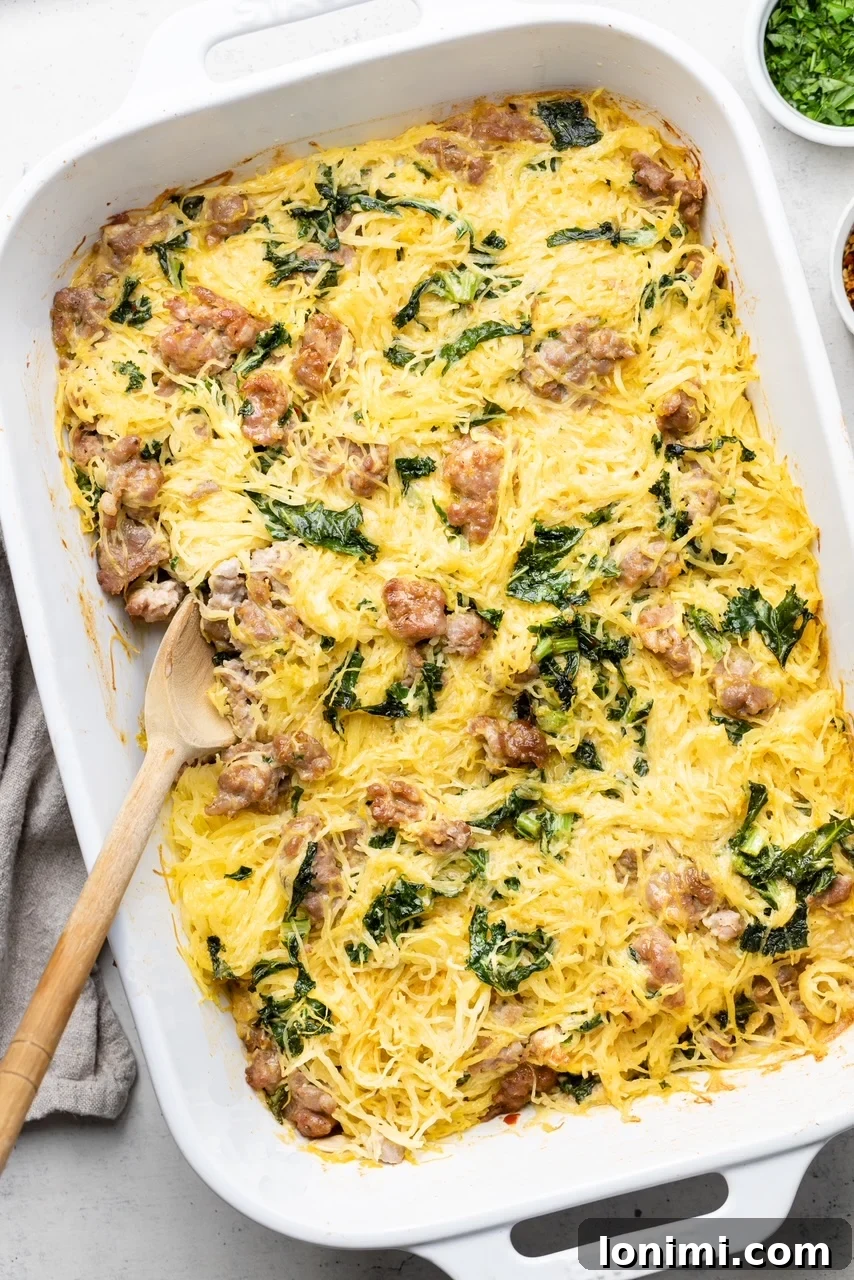
This Whole30 recipe is a Tuscan Spaghetti Squash Casserole the entire family will love! Roasted squash, kale, and tender ground sausage are smothered in a creamy, dairy-free garlic sauce and oven-baked to delicious perfection. This easy recipe is dairy-free, gluten-free, healthy comfort food at its finest!
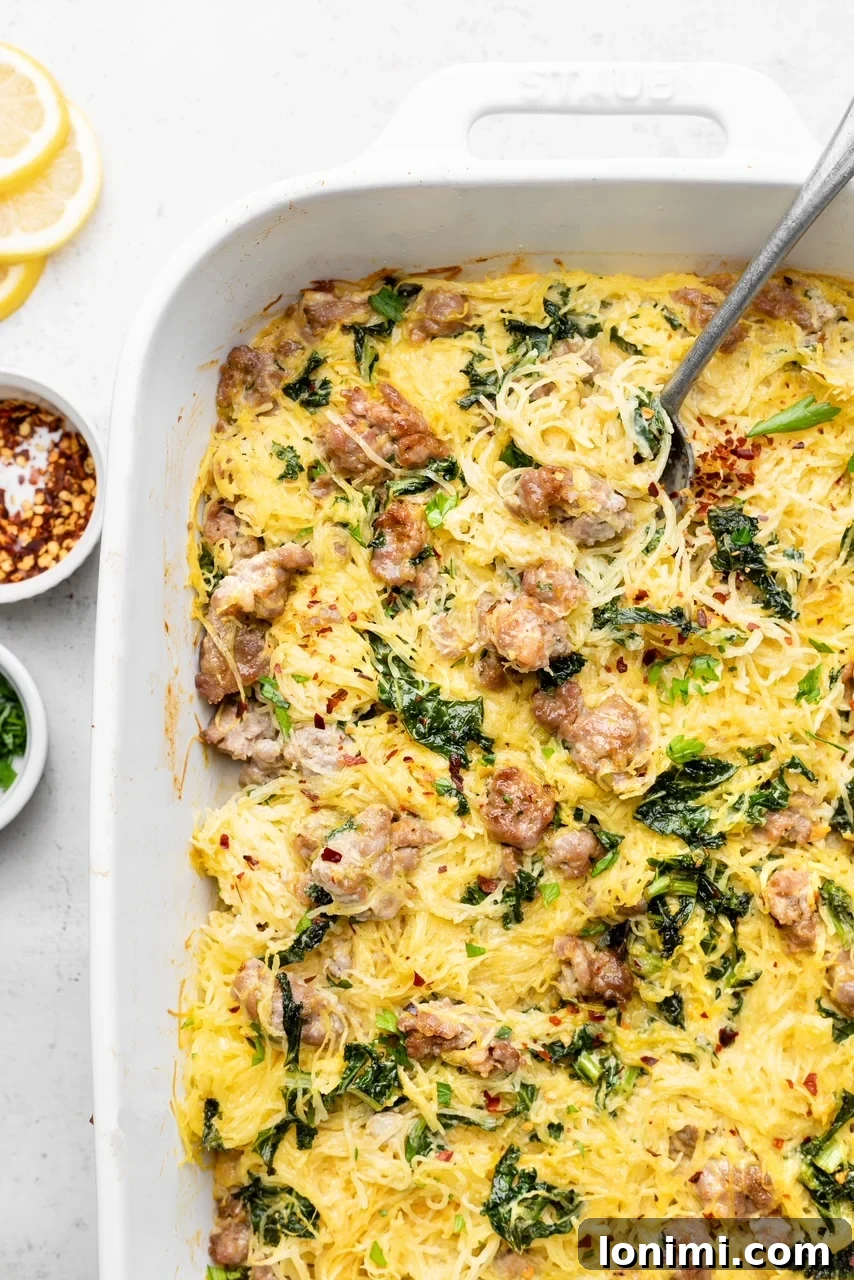
Whole30 Tuscan Spaghetti Squash Casserole: Healthy Comfort Food Elevated
Craving a hearty, satisfying meal that won’t derail your healthy eating goals? Look no further than this exquisite **Whole30 Tuscan Spaghetti Squash Casserole**! It’s a culinary masterpiece that combines the vibrant flavors of Tuscany with the wholesome goodness of spaghetti squash. Forget about heavy, dairy-laden casseroles; this recipe achieves ultimate creaminess and flavor without a drop of milk, cheese, or cream. It’s a testament to how incredibly delicious and comforting healthy food can be, making it an instant family favorite.
Why You’ll Adore This Tuscan Spaghetti Squash Casserole
This Tuscan Spaghetti Squash Casserole truly stands out as one of my new go-to recipes, and for good reason! It’s not just a meal; it’s an experience that proves healthy food can be utterly indulgent. Here’s what makes this dish so phenomenal:
- Dairy-Free Creaminess: The star of this casserole is undoubtedly its rich, Alfredo-like sauce. Crafted from a clever blend of garlic, cashews, and full-fat coconut milk, it delivers a luxurious, velvety texture and deep flavor profile without any dairy. It’s a game-changer for anyone following Whole30, paleo, or dairy-free diets, offering that comforting richness usually associated with cream-based sauces.
- Spaghetti Squash – The Ultimate Pasta Substitute: Spaghetti squash is a true culinary hero. Its mild flavor acts as a perfect canvas, soaking up all the delicious Tuscan spices and creamy garlic sauce. When roasted, its flesh transforms into delightful, pasta-like strands, offering a hearty texture that satisfies without the high carb count of traditional pasta. It’s incredibly versatile, healthy, and an excellent low-carb, gluten-free alternative to both pasta and potatoes, providing substantial volume and satisfying chewiness.
- Effortlessly Delicious: If you’ve been intimidated by spaghetti squash in the past, fear not! This recipe demystifies the process, guiding you through how to easily cut, cook, and transform this fantastic low-carb vegetable into a spectacular casserole. The steps are straightforward, ensuring a delicious result even for novice cooks.
- Healthy Comfort Food: This casserole proves that comfort food doesn’t have to be unhealthy. It’s packed with nutrients from the spaghetti squash and kale, lean protein from the sausage, and healthy fats from cashews and coconut milk. It’s a truly wholesome meal that nourishes your body while delighting your taste buds.
- Whole30 and Diet-Friendly: Being Whole30, dairy-free, and gluten-free, this recipe aligns with a variety of dietary needs and healthy lifestyles. It’s also naturally low in carbs, making it a fantastic option for those following a keto or paleo diet.
If you’re already a fan of spaghetti squash, be sure to explore more of my favorite recipes like Whole30 Spaghetti Squash Carbonara, Whole30 Sloppy Joe Bowls, or my Eggplant Parm(less) Spaghetti Squash Casserole!
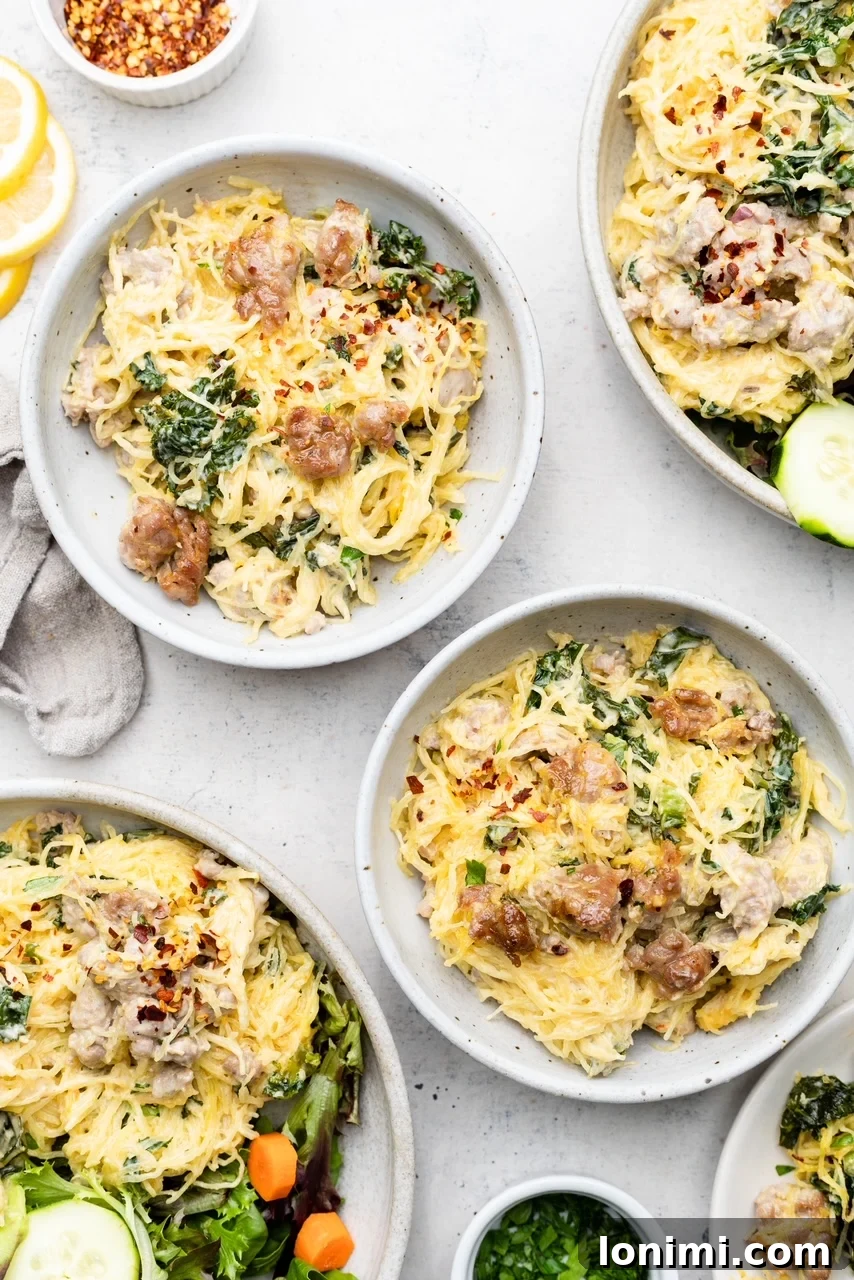
Key Ingredient Insights
Every ingredient plays a vital role in crafting this incredible casserole. Here’s a closer look at what you’ll need and how each component contributes to the dish’s flavor and texture. For the complete list of ingredients and precise measurements, please refer to the detailed recipe card below.
Spaghetti Squash Casserole Essentials
- Sausage: You have the flexibility to either craft your own delicious Italian sausage using ground pork and a blend of aromatic spices, or opt for a high-quality, store-bought Italian sausage. If choosing the latter, ensure it’s Whole30 compliant by checking labels for added sugars or undesirable ingredients. Homemade sausage allows for full control over the flavor profile, typically requiring fennel seed, ground sage, thyme, white pepper, cayenne pepper, garlic powder, and allspice for that authentic Italian zest. Using lean ground pork helps keep the casserole from becoming overly greasy.
- Kale: This vibrant leafy green not only adds a beautiful pop of color but also a wealth of nutrients and a slightly earthy flavor that complements the richness of the sauce. If kale isn’t your favorite, feel free to substitute it with fresh spinach for a milder taste or even chard or other sturdy greens. Simply ensure they are coarsely chopped and wilted into the sausage mixture.
- Spaghetti Squash: The star of the show! My preferred method for cutting spaghetti squash is horizontally, which is contrary to the common vertical cut. This technique results in longer, more spaghetti-like strands, enhancing the overall texture of the casserole. After cutting, simply scoop out the seeds and stringy bits before roasting. Choose a firm, unblemished squash for the best results.
Crafting the Creamy Dairy-Free Garlic Sauce
This sauce is the secret to the casserole’s irresistible creaminess and Tuscan flavor. It’s surprisingly simple to make and completely dairy-free.
- Cashews: Raw cashews are the foundation of our creamy sauce, providing a smooth, rich base when blended. If you’re using a high-speed blender (like a Vitamix or Blendtec), there’s typically no need to pre-soak them. However, if you have a standard blender, soaking the cashews in hot water for at least one hour (or boiling them for 15 minutes) will soften them significantly, ensuring an ultra-smooth, velvety sauce without any gritty texture.
- Garlic: Fresh garlic cloves are highly recommended here for their pungent, aromatic flavor, which is central to the “garlic sauce.” If fresh isn’t available, a jar of minced garlic can be used in a pinch, though the flavor may be slightly less intense.
- Coconut Milk: A can of full-fat, unsweetened coconut milk is essential for achieving the desired richness and creaminess. The fat content is key to mimicking a dairy-based sauce. Coconut milk often separates in the can, with the cream rising to the top, so be sure to whisk it thoroughly before measuring to ensure a consistent texture. Do not use light coconut milk or the carton variety, as they will not provide the same body.
- Lemon Juice: Freshly squeezed lemon juice brightens the entire sauce, cutting through the richness and adding a zesty, fresh dimension. It’s a crucial component that elevates the flavor. While bottled lemon juice can work, fresh is always superior for its vibrant taste.
- Red Pepper Flakes: These add a subtle warmth and a hint of spice, complementing the savory sausage and garlic. Adjust the quantity to your personal preference – use more for extra heat, or omit for a milder dish.
- Salt and Pepper: Essential for seasoning the sauce to perfection. Always taste and adjust as needed, ensuring the flavors are well-balanced.
Easy Step-by-Step Preparation Guide
Creating this Whole30 Tuscan Spaghetti Squash Casserole is a simple and rewarding process. Follow these detailed steps to achieve a perfectly balanced and delicious meal:
- Prepare for Roasting: Begin by preheating your oven to a robust 400°F (200°C). This ensures the spaghetti squash will roast beautifully and efficiently. Carefully cut your spaghetti squash in half. As mentioned, I prefer cutting it horizontally across its narrower circumference, rather than lengthwise. This unconventional method yields longer, more authentic “spaghetti-like” strands, which greatly enhances the eating experience of the casserole. Once cut, use a spoon to scoop out all the seeds and fibrous bits from both halves. Line a baking sheet with parchment paper for easy cleanup, then place the squash halves cut-side down on the prepared sheet. Roast the squash in the preheated oven for approximately 35-40 minutes. Cooking time can vary depending on the size of your squash, so keep an eye on it. You’ll know it’s perfectly tender when you can easily pierce the skin with a fork.
- Cook the Savory Sausage: While the spaghetti squash is roasting, heat a large sauté pan or skillet over medium-high heat on your stovetop. Add your chosen sausage (either homemade or store-bought Italian sausage) to the hot pan. Break it up with a spoon and stir, cooking for about 5-7 minutes, or until the sausage is thoroughly browned and cooked through, with no pink remaining. Once cooked, carefully drain any excess fat from the pan. This step is crucial for preventing the casserole from becoming greasy. Next, add the fresh kale to the pan with the cooked sausage. Sauté for an additional 1-2 minutes, just until the kale begins to wilt and become tender-crisp. Remove the pan from the heat and set it aside, ready for assembly.
- Blend the Creamy Dairy-Free Garlic Sauce: Now, it’s time to create that irresistible creamy sauce! In a high-speed blender, combine all of the ingredients for the dairy-free garlic sauce (cashews, garlic, water, full-fat coconut milk, lemon juice, salt, pepper, and red pepper flakes). Blend on high for a full 30 seconds, or until the sauce is incredibly smooth and creamy with no cashew chunks visible. As noted in the ingredient section, if you don’t have a high-speed blender, ensure your cashews were pre-soaked to achieve this silky texture.
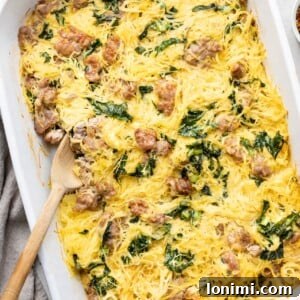
- Combine and Bake the Casserole: Once the spaghetti squash is roasted and tender, remove it from the oven. Using a fork, gently scrape the cooked flesh from the squash halves into the sauté pan containing the sausage and kale. The strands will naturally pull away, resembling spaghetti. Pour the freshly blended creamy dairy-free garlic sauce over the squash, sausage, and kale mixture in the pan. Mix everything together thoroughly, ensuring every strand of squash and every piece of sausage and kale is coated in the rich, creamy sauce. Transfer this entire mixture into a suitable baking dish (a 9×13 inch casserole dish works well). Place the baking dish back into the 400°F (200°C) oven and bake for another 15 minutes, or until the casserole is bubbling around the edges and heated through to perfection.
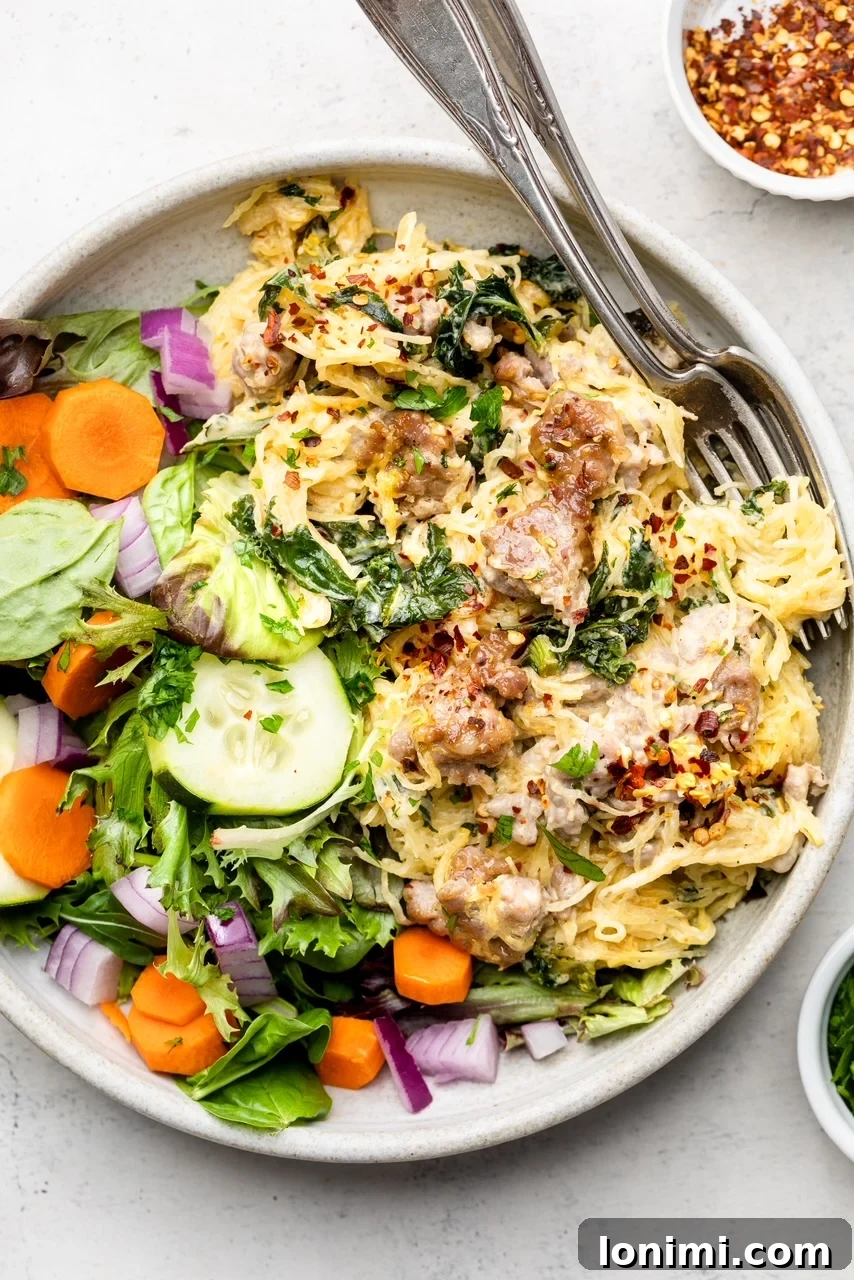
- Serve and Savor: Remove the casserole from the oven and let it rest for a few minutes before serving. This allows the flavors to meld and the casserole to set slightly. Scoop generous portions into bowls and enjoy this incredibly flavorful, healthy, and comforting Whole30 Tuscan Spaghetti Squash Casserole!
Mary’s Expert Tips & Tricks for Success
Here are some additional insights to help you make this Tuscan Spaghetti Squash Casserole truly exceptional and adapt it to your preferences:
- Protein Variations: While ground pork provides a classic Tuscan flavor, you can easily substitute it with other ground proteins. Ground chicken or ground turkey are excellent leaner alternatives that will still absorb the flavors beautifully. For a plant-based or vegan version (and if Whole30 is not a strict requirement for this specific meal), consider using a high-quality plant-based ground crumble or sautéed mushrooms and lentils seasoned with Italian herbs for a hearty vegetarian option.
- Customizing the Spice Level: This recipe offers a delightful hint of warmth from red pepper flakes. For those who love an extra kick, simply add an additional few dashes or up to a full teaspoon of red pepper flakes to the sauce. On the other hand, if you prefer a milder casserole, you can reduce the amount of crushed red pepper or omit it entirely. Always taste the sauce before mixing it with the squash to adjust the spice to your liking.
- Addressing Nut Allergies (Nut-Free Option): The cashews are a crucial component for achieving the ultra-creamy, dairy-free texture of the garlic sauce. Unfortunately, they are difficult to replace with a truly identical nut-free substitute that maintains the same consistency and mild flavor. While some readers might attempt a sunflower seed base (ensure they are raw and unsalted, and you may need to adjust the liquid), please note that this has not been tested and the flavor and texture will likely differ significantly. For a truly nut-free option, you might need to explore a different sauce base or accept a less creamy texture.
- Enhancing Flavor with Fresh Herbs: To further amplify the Tuscan profile, consider stirring in some fresh chopped basil, oregano, or parsley into the casserole mixture just before the final bake, or sprinkle them as a garnish upon serving. Fresh herbs add an incredible aromatic boost.
- Achieving Perfect Spaghetti Squash Texture: Don’t overcook your spaghetti squash, as it can become watery and mushy. It should be tender enough to shred easily with a fork but still retain a slight al dente bite. If your squash seems too wet after shredding, you can gently press out some excess moisture with a paper towel or clean kitchen cloth before adding it to the pan.
Storage and Meal Prep Advice
This casserole is fantastic for meal prep and leftovers, making healthy eating convenient throughout the week.
- Make Ahead Instructions: To save time on busy weeknights, you can prepare certain components of this casserole in advance. Roast the spaghetti squash according to steps 1 and 2 of the recipe. Once cooked and cooled, shred the squash and store it in an airtight container in the refrigerator for up to 3 days. Similarly, you can prepare the sausage and kale mixture (step 3) and store it separately. When you’re ready to complete the casserole, simply make the creamy garlic sauce, combine all prepared components, and proceed with the final baking step (step 5).
- Leftovers: Any leftover Tuscan Spaghetti Squash Casserole can be stored in an airtight container in the refrigerator for up to 5 days. It reheats beautifully and often tastes even better the next day as the flavors have more time to meld.
- Reheating: For best results, reheat individual portions in the microwave until warmed through. Alternatively, you can reheat it gently in a skillet on the stovetop over medium-low heat, stirring occasionally, or warm it in a covered oven-safe dish in the oven at 350°F (175°C) until heated through. Add a splash of broth or coconut milk if it seems a little dry.
- Freezing: This casserole freezes reasonably well. Allow the cooked casserole to cool completely, then transfer it to a freezer-safe airtight container or divide it into individual portions. It can be frozen for up to 2-3 months. Thaw overnight in the refrigerator before reheating. Note that the texture of the spaghetti squash might soften slightly after freezing and thawing.
Serving Suggestions
This Tuscan Spaghetti Squash Casserole is a complete meal on its own, but here are some ideas to complement it:
- Garnish with Freshness: A sprinkle of freshly chopped parsley or basil before serving adds a burst of color and aromatic freshness that brightens the rich flavors of the casserole.
- Optional Cheese Topping: While this is a dairy-free recipe, if you are not following a strict dairy-free or Whole30 diet, a generous sprinkle of grated Parmesan cheese or shredded mozzarella cheese can be added during the last 5-10 minutes of baking for a bubbly, cheesy top. For those maintaining dairy-free status, several excellent dairy-free cheese alternatives (parmesan or mozzarella style) are available and would work wonderfully.
- Simple Side Salad: A light, crisp green salad with a zesty vinaigrette makes a perfect accompaniment, offering a refreshing contrast to the hearty casserole.
- Roasted Vegetables: Serve alongside other roasted vegetables like asparagus, broccoli, or zucchini for an extra boost of nutrients and varied textures.
Common Questions About This Recipe
Spaghetti squash is widely celebrated as an excellent, low-carb substitute for traditional pasta. A whole spaghetti squash typically contains approximately 10 total grams of carbohydrates. What makes it particularly appealing for low-carb diets is its fiber content. With about 2 grams of dietary fiber per whole squash, the net carbs (total carbs minus fiber) for a whole spaghetti squash are only 8 grams! This makes it a fantastic choice for those monitoring their carbohydrate intake.
As written, this recipe is not vegan due to the inclusion of ground sausage, which is an animal protein. However, with a simple modification, it can easily be adapted to be vegan-friendly. To transform this into a delicious vegan casserole, simply remove the animal protein from the recipe. You can substitute the sausage with plant-based ground crumbles, sautéed mushrooms, cooked lentils, or a combination of these, seasoned with Italian spices to maintain a similar flavor profile. Ensure any plant-based substitutes are also Whole30 compliant if following that program.
Whole30 is a 30-day nutritional reset program that focuses on eliminating inflammatory foods like sugar, alcohol, grains, legumes, and dairy. The goal is to identify how these foods impact your body and to reset your metabolism and eating habits. Choosing Whole30, or recipes like this Tuscan Spaghetti Squash Casserole that adhere to its guidelines, can lead to improved energy, better digestion, reduced cravings, and a healthier relationship with food. This casserole specifically supports Whole30 by being dairy-free, gluten-free, and free of added sugars.
Absolutely! This casserole is quite versatile. While kale provides a great nutritional boost and classic Tuscan flavor, you can certainly incorporate or substitute other vegetables. Chopped bell peppers, zucchini, sun-dried tomatoes (ensure no added sugar or sulfites for Whole30), or even roasted broccoli florets would make excellent additions. Add them in with the kale or roast them alongside the spaghetti squash until tender-crisp.
A common issue with spaghetti squash casseroles can be excess moisture. This usually happens if the squash is slightly undercooked (and thus holds more water) or if it hasn’t been allowed to drain sufficiently after roasting. To prevent this, ensure your spaghetti squash is fully tender when roasted, and if you notice a lot of liquid when shredding it, gently press some of that moisture out using paper towels or a clean kitchen cloth before adding it to the pan with the other ingredients. Using full-fat coconut milk also helps thicken the sauce and prevent sogginess.
Discover More Easy Whole30 Casseroles…
Instant Pot Buffalo Chicken Casserole
Tuna Zoodle Casserole
Gluten-Free Broccoli Casserole
Roasted Veggie Breakfast Casserole
Love this recipe? Please consider leaving a 5-star rating in the recipe card below and sharing your thoughts in the comment section. You can also connect with me on Facebook, Pinterest or Instagram for more delicious recipes!
Tuscan Spaghetti Squash Casserole
Ingredients
Sausage (If making your own)
- 1 lb ground pork
- 1 tsp fennel seed
- 1 tsp salt
- 2 tsp ground sage
- 1 tsp thyme
- 1 tsp white pepper (black is fine if you don’t have it)
- ¼ tsp cayenne pepper
- ½ tsp garlic powder
- ¼ tsp allspice
Creamy Garlic Sauce
- 2 cloves garlic
- 1 cup raw cashews
- ¾ cup water
- ½ cup full-fat coconut milk (whisk well before measuring as it separates)
- ½ lemon, juiced
- 1 tsp salt
- ½ tsp red pepper flakes
- ¼ tsp pepper
Remaining Ingredients
- 1 large spaghetti squash
- 4 cups kale, stems removed, coarsely chopped
Instructions
-
Preheat oven to 400°F (200°C). Cut your spaghetti squash in half horizontally (this creates longer “spaghetti” strands!). Scoop out the seeds and lay both halves cut-side down on a parchment-lined baking sheet. Bake for 35-40 minutes, or until easily pierced with a fork.
-
Meanwhile, prepare the sausage: Heat a large sauté pan over medium-high heat. Add all sausage ingredients (or store-bought Italian sausage) and cook for 5-7 minutes, stirring until browned and cooked through. Drain any excess fat. Add the kale and cook for an additional 1-2 minutes until it begins to wilt. Set the pan aside.
-
Make the creamy garlic sauce: Combine all sauce ingredients in a high-speed blender and blend on high for 30 seconds, or until very creamy and smooth. (Cashews do not need to be soaked if using a high-speed blender).
-
Once the squash is cooked, remove it from the oven. Use a fork to scrape out the spaghetti-like strands into the pan with the sausage and kale. Pour the creamy garlic sauce over the mixture. Mix everything well to combine. Transfer the mixture to a casserole dish and bake at 400°F (200°C) for 15 minutes, or until the sides are bubbling and the casserole is warmed through. Serve hot and enjoy!
Notes
Mary’s Tips & Tricks
- Protein: You can use ground chicken or ground turkey instead of pork for a leaner option.
- More Spice: For extra heat, simply use an extra few dashes of red pepper flakes! To make it less spicy, omit the crushed red pepper or add slightly less.
- Nut-Free: The cashews are essential for the creamy, dairy-free garlic sauce. I have not tested this recipe with any nut-free substitutions, and results may vary significantly.
Storage Tips
- Make Ahead: Prepare the spaghetti squash (roast and shred) up to 3 days in advance and store in an airtight container in the refrigerator. Cook the sausage and kale mixture and store separately. Combine and bake when ready to serve.
- Leftovers: Store leftovers in an airtight container in the refrigerator for up to 5 days. Reheat in the microwave, in a skillet on the stovetop, or in the oven.
- Freezing: This casserole freezes well for up to 2-3 months. Thaw completely before reheating.
Serving Tips
- This is a dairy-free recipe. If desired, you can top it with a sprinkle of Parmesan cheese or mozzarella cheese (or dairy-free alternatives if preferred) during the last few minutes of baking.
- Serve with a simple green salad for a complete meal.
Nutrition
Carbohydrates: 36g |
Protein: 31g |
Fat: 46g |
Saturated Fat: 17g |
Cholesterol: 82mg |
Sodium: 1308mg |
Potassium: 1242mg |
Fiber: 6g |
Sugar: 9g |
Vitamin A: 7149IU |
Vitamin C: 96mg |
Calcium: 210mg |
Iron: 6mg
All nutrition facts are an estimate and automatically calculated. While I fact-check them using MyFitnessPal, please note that they may not always be 100% accurate and depend on ingredients used. For the most accurate grams per serving size, weigh your total and divide by the number of servings.