HomeOld School Italian RecipesPasta e Ceci (Italian Pasta and Chickpea Soup)
Pasta e Ceci (Italian Pasta and Chickpea Soup)
Pasta e ceci is a hearty Italian pasta and chickpea soup with a rich tomato base, rosemary, and tender kale for a cozy, flavorful meal.
- Prep15 min
- Cook45 min
- Total1 hr
- Serves6 servings
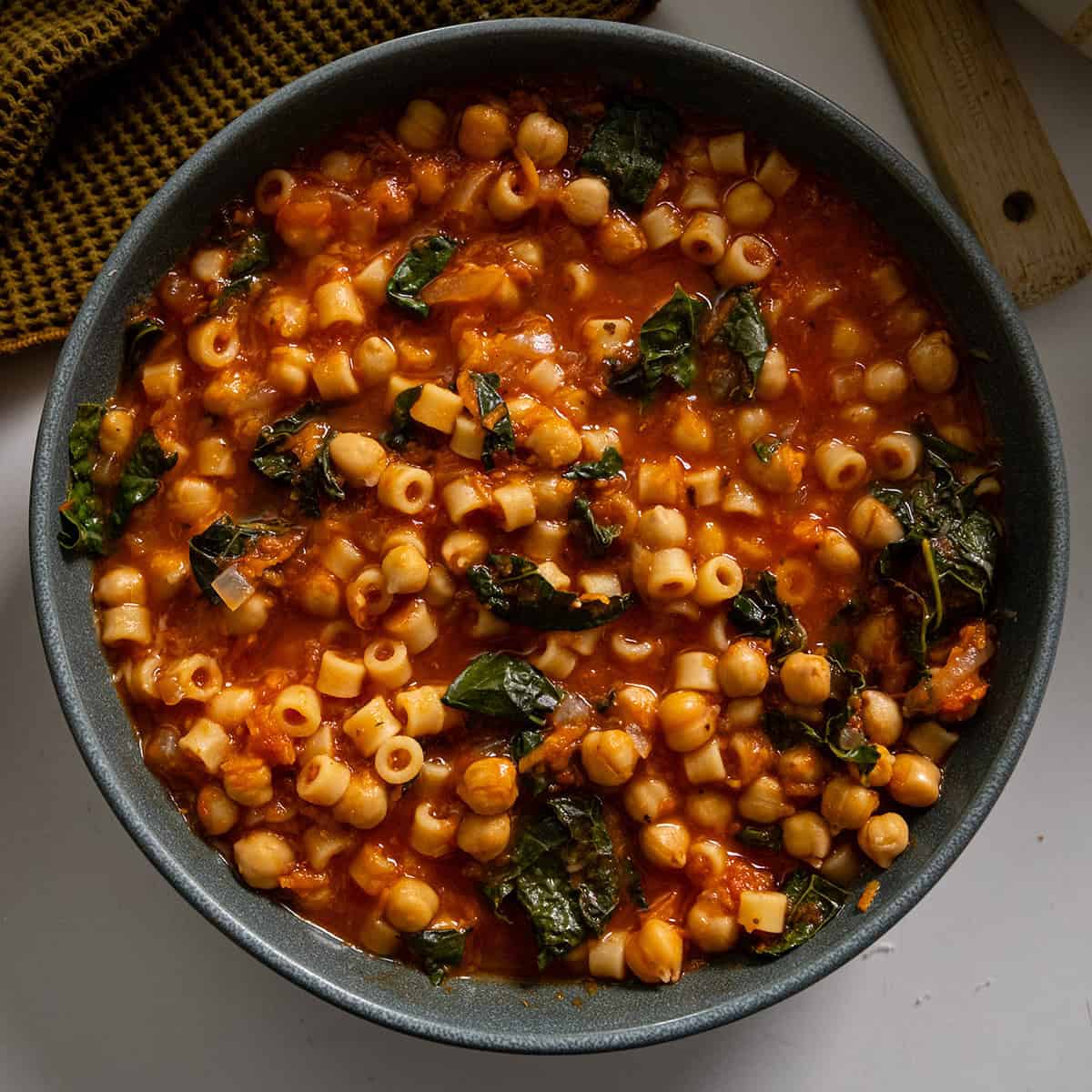
My Pasta e Ceci falls somewhere between a soup and a stew. I personally call it a stewy-soup. Each layer builds flavor from finely grated carrots that melt into the tomato base to ditalini cooked directly in the broth for a thicker, stew-like texture.
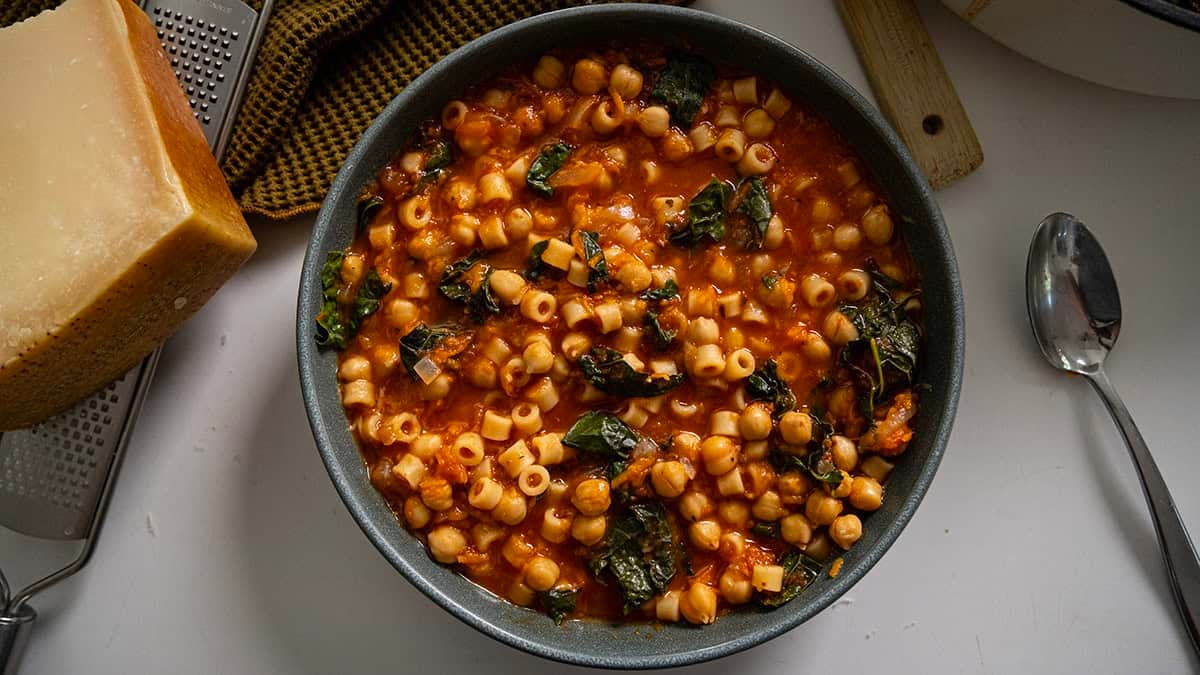
Pasta e Ceci is a godsend for my family. My wife and I love it; the finely grated carrots sneak extra vegetables into the kids' dinner, and the thick texture makes it easy for my little one to pick up the pasta with her fingers.
A Quick Look at the Recipe
- ✅Recipe Name: Pasta e Ceci
- ⏲️Ready in: 60 minutes
- 👪Makes: 6 servings
- 📋Main ingredients: Ditalini, chickpeas, crushed tomatoes, and lacinato kale.
- ⭐Why You'll Love This Recipe: Simple ingredients are cooked in layers to build a rich, flavorful tomato broth that the chickpeas and pasta soak right up!
Why This Recipe
- The carrots melt into the soup: Finely grated carrots soften into the tomato base instead of leaving chunks behind, adding sweetness while keeping the soup creamy.
- A good Italian knows you always need to cook tomatoes first to build flavor: Simmering the crushed tomatoes before adding the stock cooks away their raw flavor and creates a deeper, more concentrated tomato base.
- The pasta cooks right in the soup: This is my go-to method in soups like Classic Pasta Fagioli and Italian Wedding Soup. The pasta releases starch to thicken the broth while absorbing the tomato, rosemary, and Parmesan flavor as it cooks.
Ingredient Notes and Substitutions
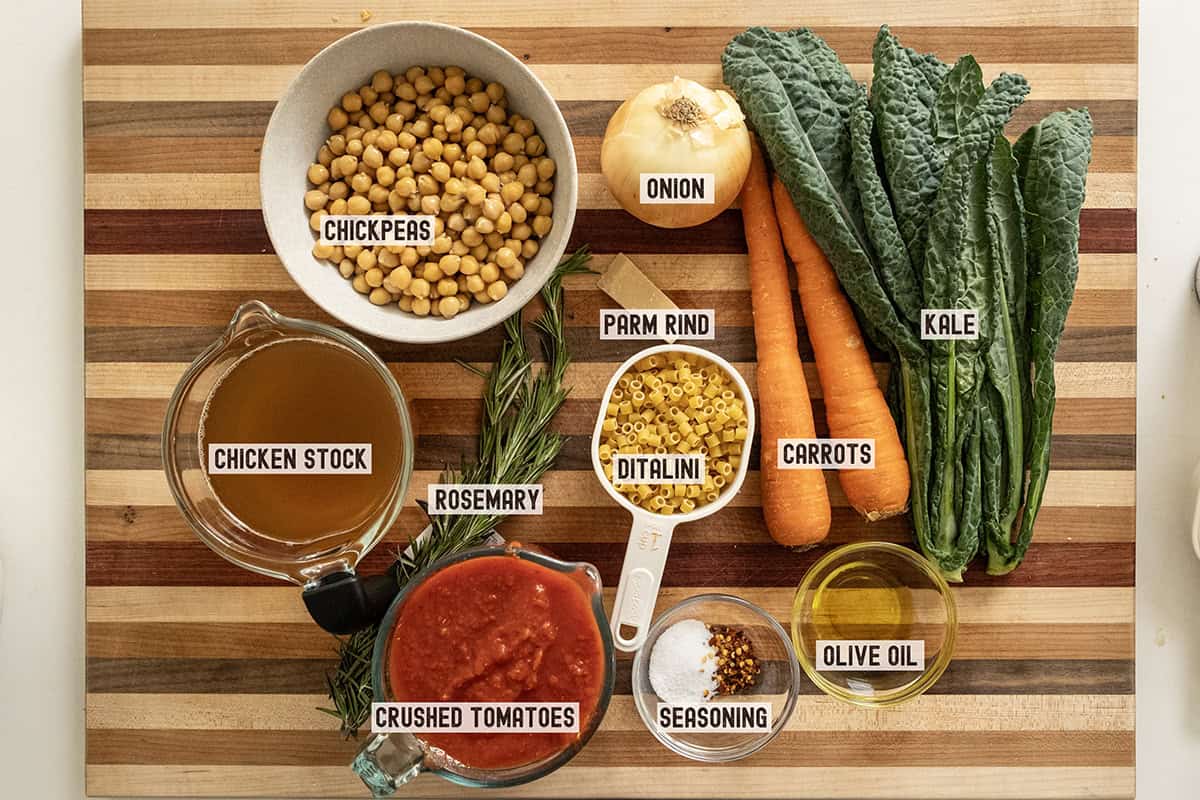
- Chickpeas- Chickpeas hold their shape really well in this dish and give the soup a firmer bite than softer beans like cannellini or kidney beans. If you like bean-and-pasta soups, try Classic Pasta Fagioli or Classic Italian Minestrone Soup.
- Lacinato Kale- You can substitute escarole or spinach, but I like lacinato kale because it keeps a little texture even after it wilts into the soup. If you have extra, try our Italian Lacinato Kale Recipe (Tuscan).
- Crushed tomatoes- I use crushed tomatoes over tomato puree or whole plum tomatoes. Crushed tomatoes are sort of the "just right" texture in this Goldilocks scenario because whole plum tomatoes are too rustic for this dish and the puree is too creamy.
- Rosemary- Rosemary makes this dish so unique because it kind of swerves from that traditional Italian flavor. It gives the soup a woodsy, savory flavor that works especially well with chickpeas, tomato, and Parmesan.
- Ditalini- This is my go-to pasta for soups because the small shape fits perfectly on a spoon and cooks evenly right in the broth.
*Please see the recipe card below for more information on the ingredients.
How to Make Pasta e Ceci (Italian chickpea and pasta stew)
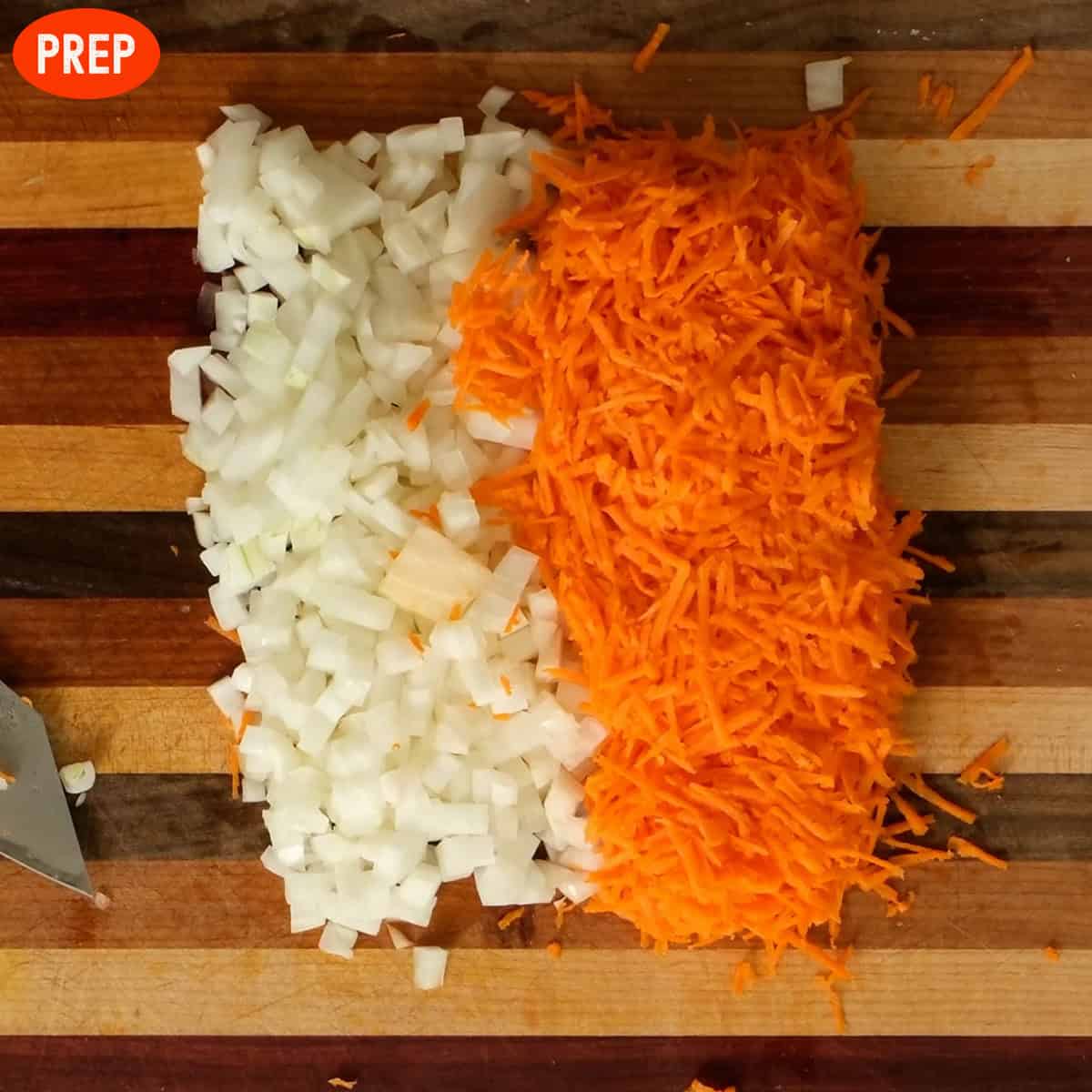
Prep the onions by finely chopping them. Grate the carrots using the fine holes of a box grater rather than chopping them. They'll almost resemble a pulp. During the 8-10 minute sauté, they soften into the onions and eventually disappear into the tomato broth, leaving behind a mild sweet flavor without the crunchy texture.
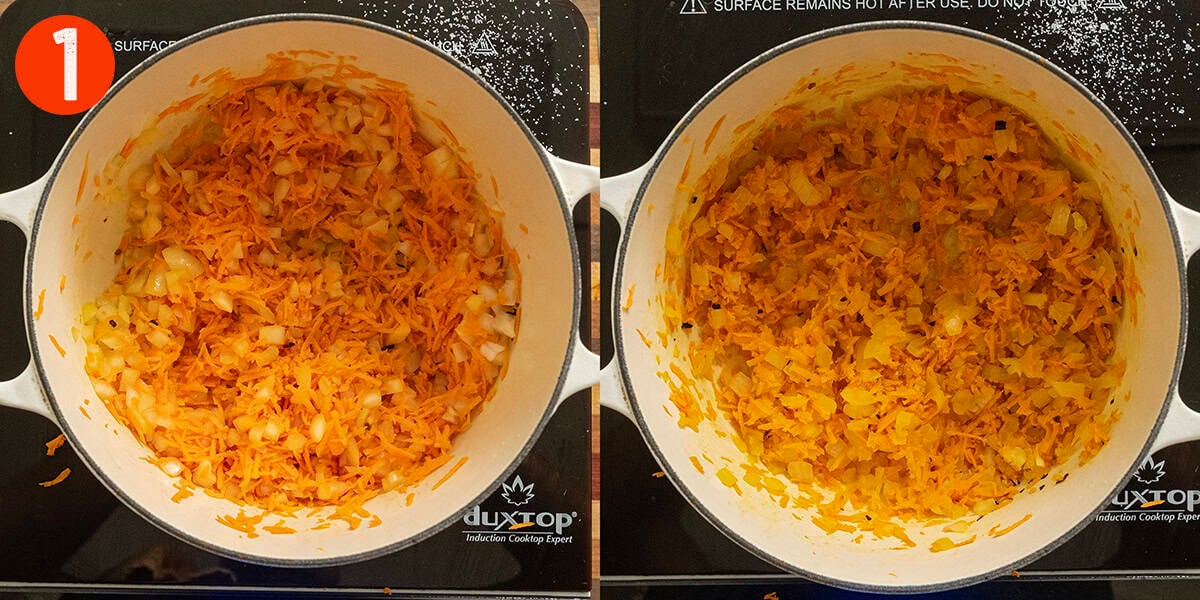
Step 1: Heat 2 tablespoon of olive oil over medium heat. Stir in the crushed red pepper, carrots, and onions and sauté for 8-10 minutes until the onions become translucent and the carrots soften. The volume of the vegetables should noticeably decrease. Season with ½ teaspoon of salt.
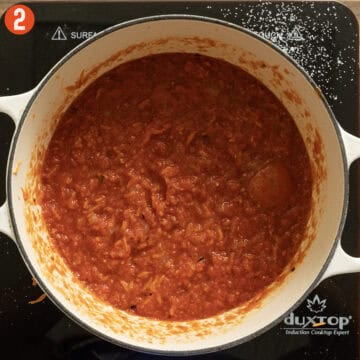
Step 2: Pour in the crushed tomatoes and simmer for 10 minutes, until the tomatoes begin to thicken. Simmering the tomatoes before adding the stock will help us layer in the flavor and seasoning at each step. Season with ½ teaspoon salt.
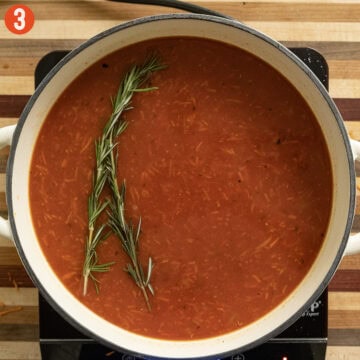
Step 3: Pour in the stock and combine well with the tomatoes. Raise the heat to bring to a boil. Add in the rosemary sprigs and parmesan rind, if using.
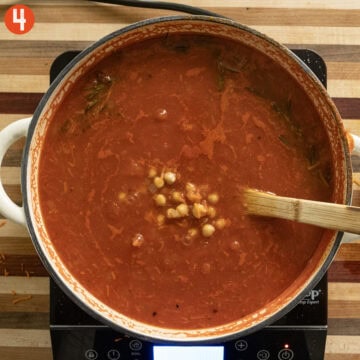
Step 4: Once the stock is boiling, add in the beans and pasta along with ¼ teaspoon salt. Lower the heat to medium to maintain a gentle simmer for 10-15 minutes until the pasta is al dente. Stir every 1-2 minutes to avoid the pasta sticking to the bottom of the pan.
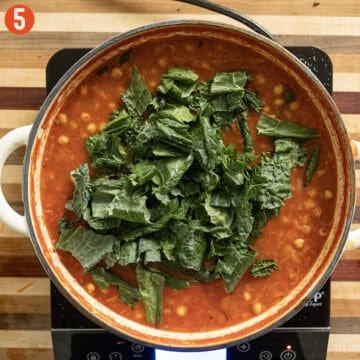
Step 5: When the pasta is al dente, remove the parmesan rind and rosemary sprigs. Turn off the heat and add the kale on top of the soup and cover the pot for 3 minutes. Once wilted, stir the kale into the soup.
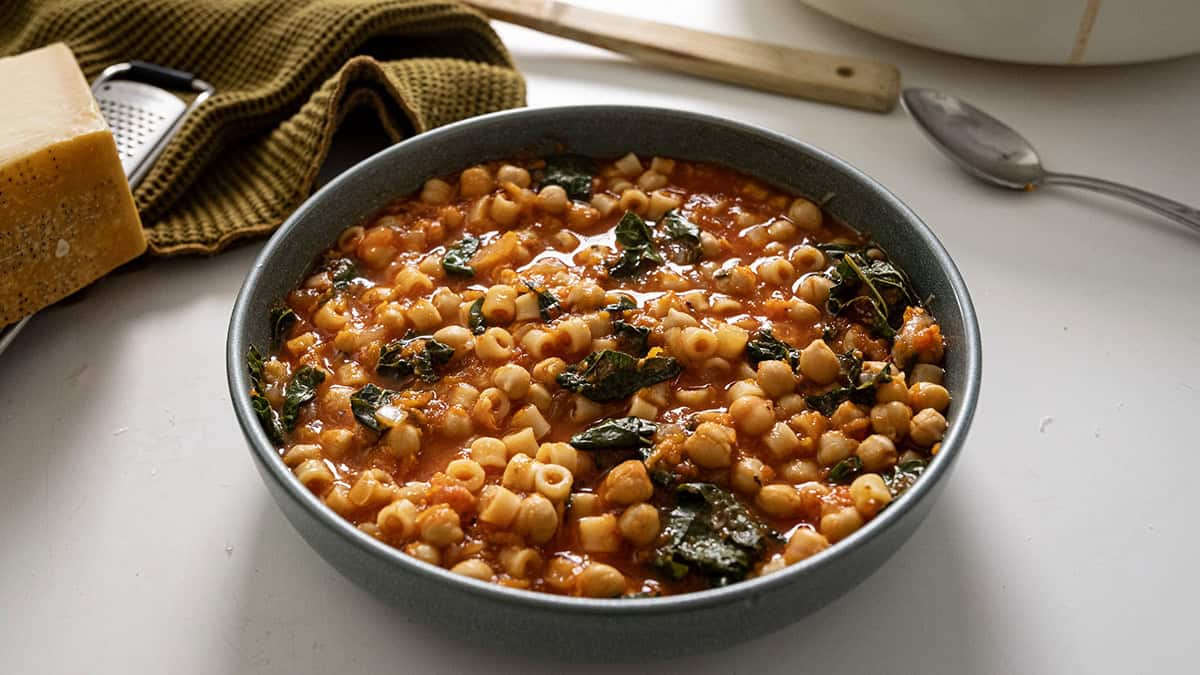
Serve immediately because the pasta will eventually soak up more broth and continue to soften. Top with Parmigiano Reggiano and serve with crusty Italian bread or Cast Iron Focaccia Bread to make sure you soak up every last drop!
Pro-Tips
- Grate the carrots as small as possible. You want their natural sweetness without chunks of carrot in the finished soup. Finely grated carrots soften right into the tomato base as they cook.
- Cook the crushed tomatoes first. Simmering the tomatoes before adding the stock concentrates their flavor and cooks away some of that raw tomato taste. It also gives you another chance to season the soup in layers.
- Add a parm rind. Parmesan rinds are packed with naturally occurring free glutamates. What the hell does that mean? It means it's made of the same stuff that MSG is. These add that savory umami flavor with no extra work!
- Stir the pasta often. Pasta cooked in soup is more likely to settle and stick than pasta boiling in a big pot of water. Stir every 2 minutes, scraping across the bottom of the pot so it cooks evenly.
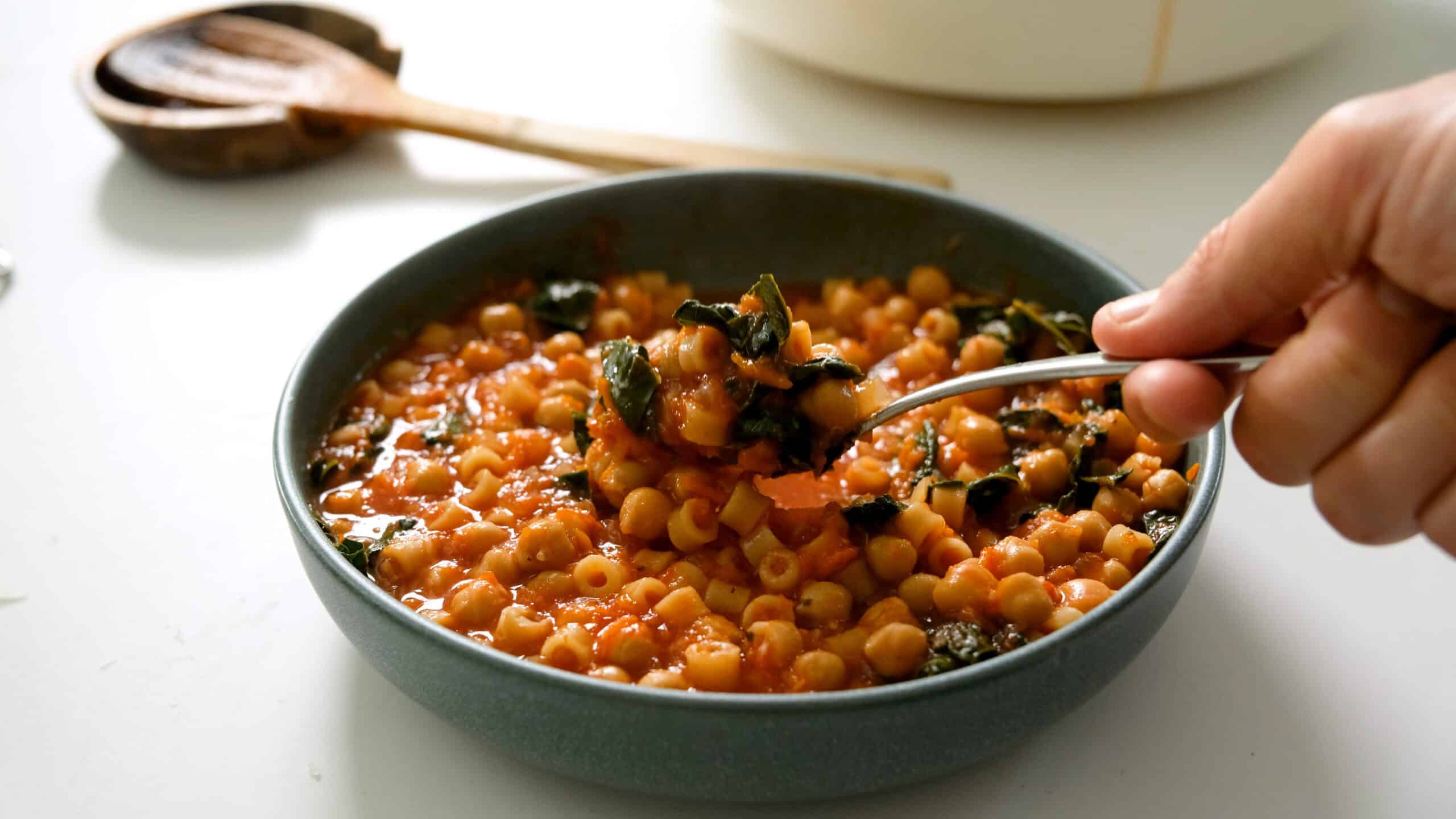
- Cook the pasta in the soup. Some people cook the pasta separately to make leftovers easier, but I want the best possible soup right now. Cooking the pasta directly in the broth releases starch and gives pasta e ceci its thick, stew-like texture. The spoonful below shows the consistency you're looking for-thick enough to cling to the pasta and chickpeas, but still loose enough to spoon. Keep in mind it will continue to thicken as it rests.
FAQs about Pasta e Ceci
Do I need to blend the chickpeas in pasta e ceci?No, you do not. But you can. There are plenty of versions of pasta e ceci that do this. It's a way to make it creamy. I prefer to cook the pasta in the soup and let the starch release to give the soup its signature stew-like texture.
Why do you cook the pasta directly in the soup?Cooking the pasta in the soup releases the starch from the pasta directly into the soup. This gives the pasta its glossy and stew-like texture.
How do I store and reheat pasta e ceci without the pasta getting mushy?The short answer is you don't. The way I make pasta e ceci is best served fresh. But that doesn't mean I don't use the leftovers. Store it in an airtight container for up to 3 days. Reheat on the stovetop, adding chicken stock a little at a time until the soup reaches the consistency you like.
Is pasta e ceci a soup or a stew?It can be either depending on how it's prepared. My version falls somewhere in between-a stewy soup with enough broth to spoon but thick enough to cling to the pasta and chickpeas.
What to serve with Pasta e Ceci
Pasta e ceci is perfect for a cozy weekend lunch with a sandwich or simple salad on the side.
Sandwiches: This one goes best with grilled cheeses like Gruyere Grilled Cheese or Eggplant Caprese Grilled Cheese.
Salads: I like to use up the rest of my kale and serve it with Kale and Cannellini Bean Salad, but it also goes well with an Italian Radicchio Salad with chickpeas or a romaine salad with Traditional Caesar Dressing and Homemade Italian Parmesan Croutons.
More of My Favorite Italian Bean Dishes!
 Italian Rice and Beans (Riso e Fagioli)
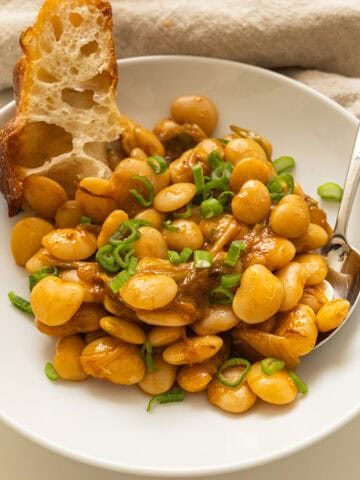 Stewed Italian Broad Beans (Fava Beans)
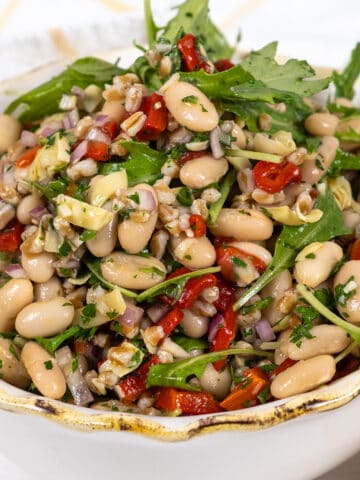 Summer Farro Salad with Cannellini Beans
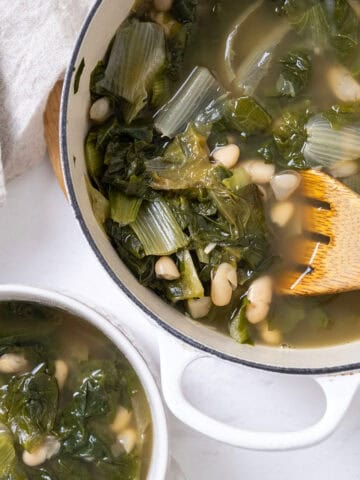 Escarole and Bean Soup
Ingredients
Equipment 1 Large Dutch Oven, 1 strainer
Steps
- 1
Prep the onions by finely chopping. Grate the carrots through the smallest hole on the box grater. You want them as small as possible so they basically melt right into the soup.
- 2
Heat 2 tablespoon of olive oil over medium heat. Stir in the crushed red pepper, carrots, and onions and sauté for 8-10 minutes until the onion becomes translucent and the carrots soften. The volume of the vegetables should noticeably decrease. Season with ½ teaspoon of salt.
- 3
Pour in the crushed tomatoes and simmer for 10 minutes, until the tomatoes begin to thicken. Simmering the tomatoes before adding the stock will help us layer in the flavor and seasoning at each step. Season with ½ teaspoon salt.
- 4
Pour in the stock and combine well with the tomatoes. Raise the heat to bring to a boil. Add in the rosemary sprigs and parmesan rind, if using.
- 5
Once the stock is boiling, add in the beans and pasta along with ¼ teaspoon salt. Lower the heat to medium to maintain a gentle simmer for 10-15 minutes until the pasta is al dente. Stir every 1-2 minutes to avoid the pasta sticking to the bottom of the pan.
- 6
When the pasta is al dente, remove the parmesan rind and rosemary sprigs. Turn off the heat and add the kale on top of the soup and cover the pot for 3 minutes. Once wilted, stir the kale into the soup.
- 7
Serve immediately because the pasta will eventually soak up more broth and continue to soften. Top with Parmigiano Reggiano.
Notes
Notes
Nutrition
- Calories191 kcal
- Carbs28 g
- Protein6 g
- Fat6 g
- Saturated fat1 g
- Sodium718 mg
- Fiber2 g
- Sugar4 g
- Cholesterol2 mg
Nutrition is an estimate for one serving.
More recipes to try next
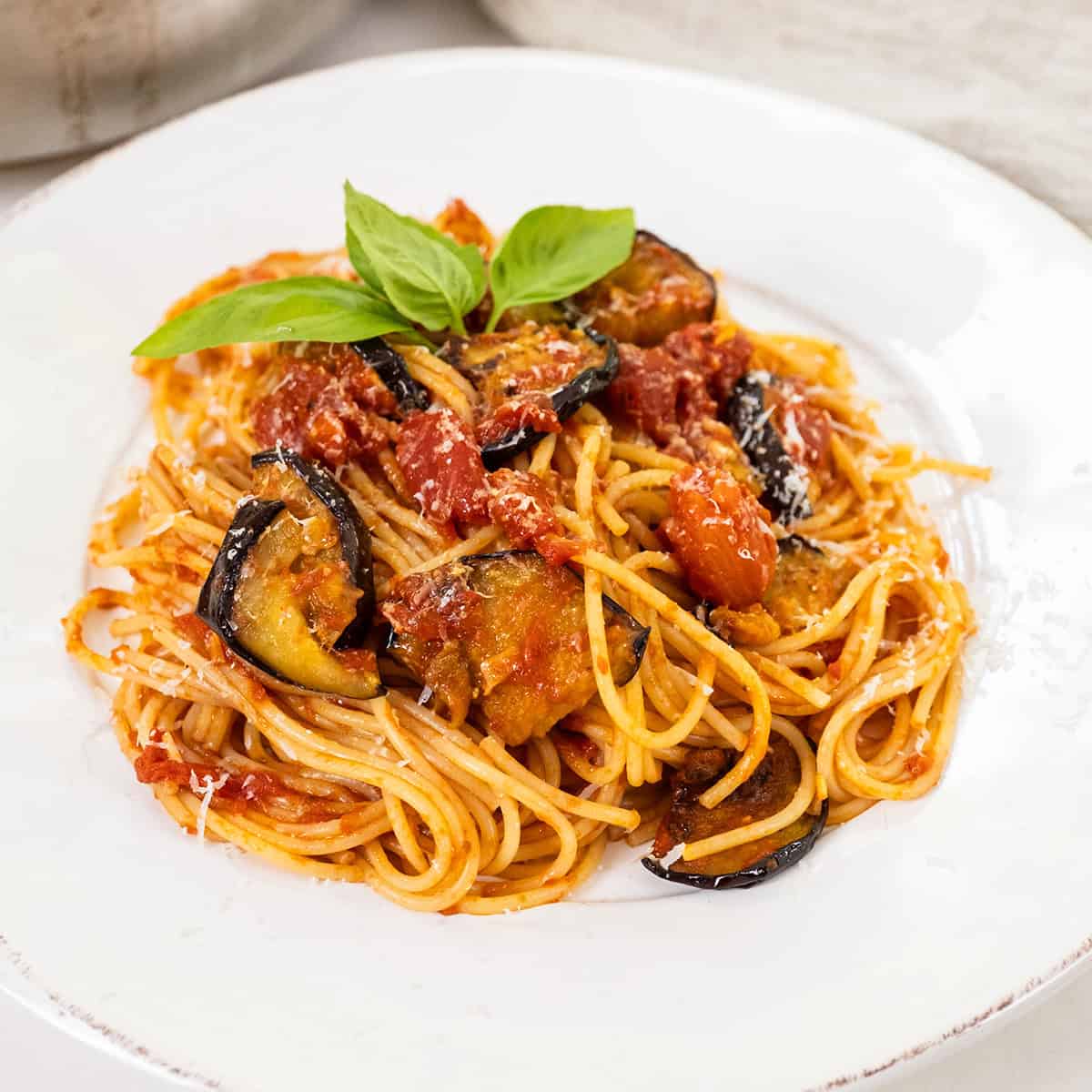 Old School Italian RecipesPasta alla Norma (A Sicilian Dish)
 Handhelds and SandwichesPepperoni Bread (Stromboli)
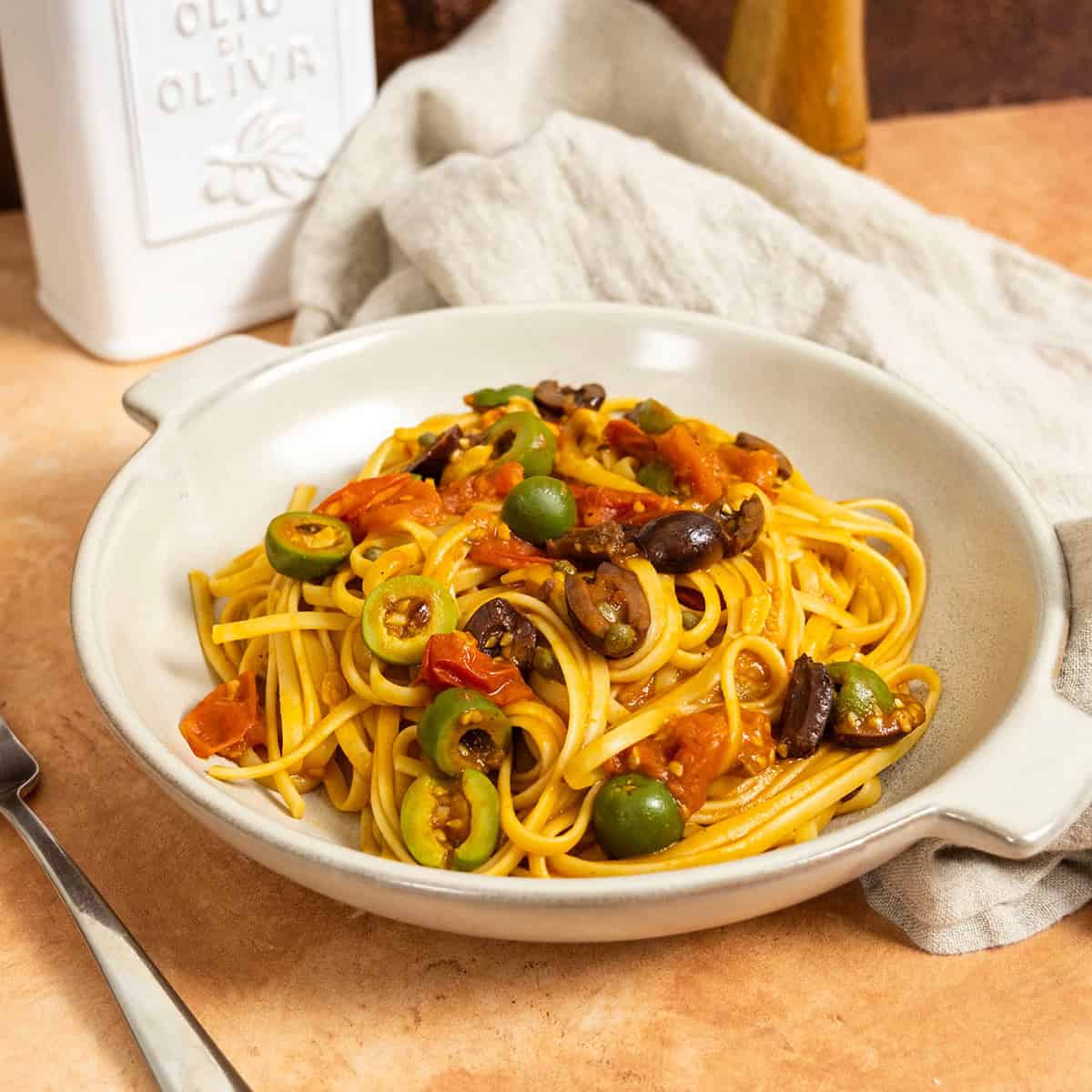 Old School Italian RecipesClassic Linguine Alla Puttanesca
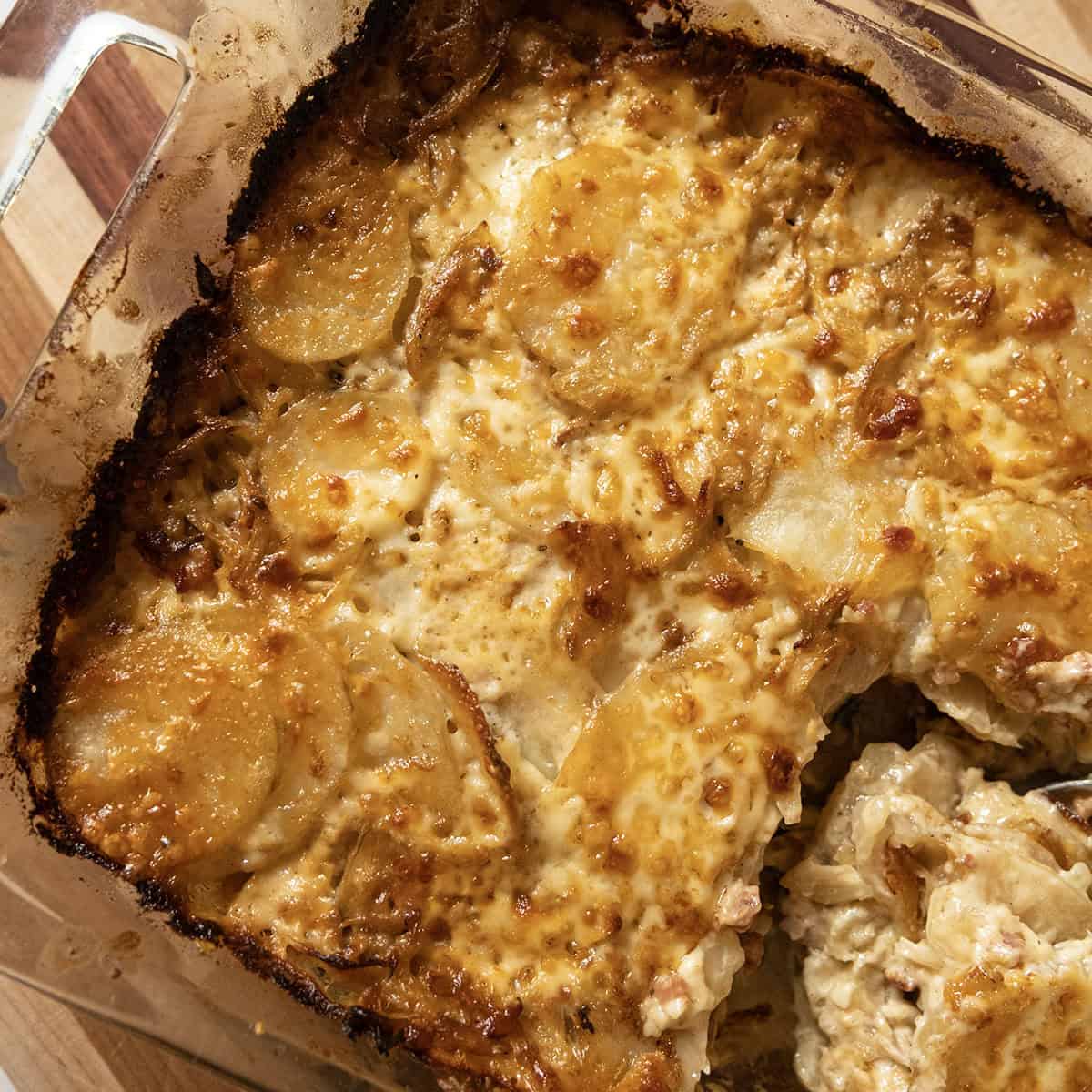 Italian Vegetable RecipesFennel and Potato Au Gratin
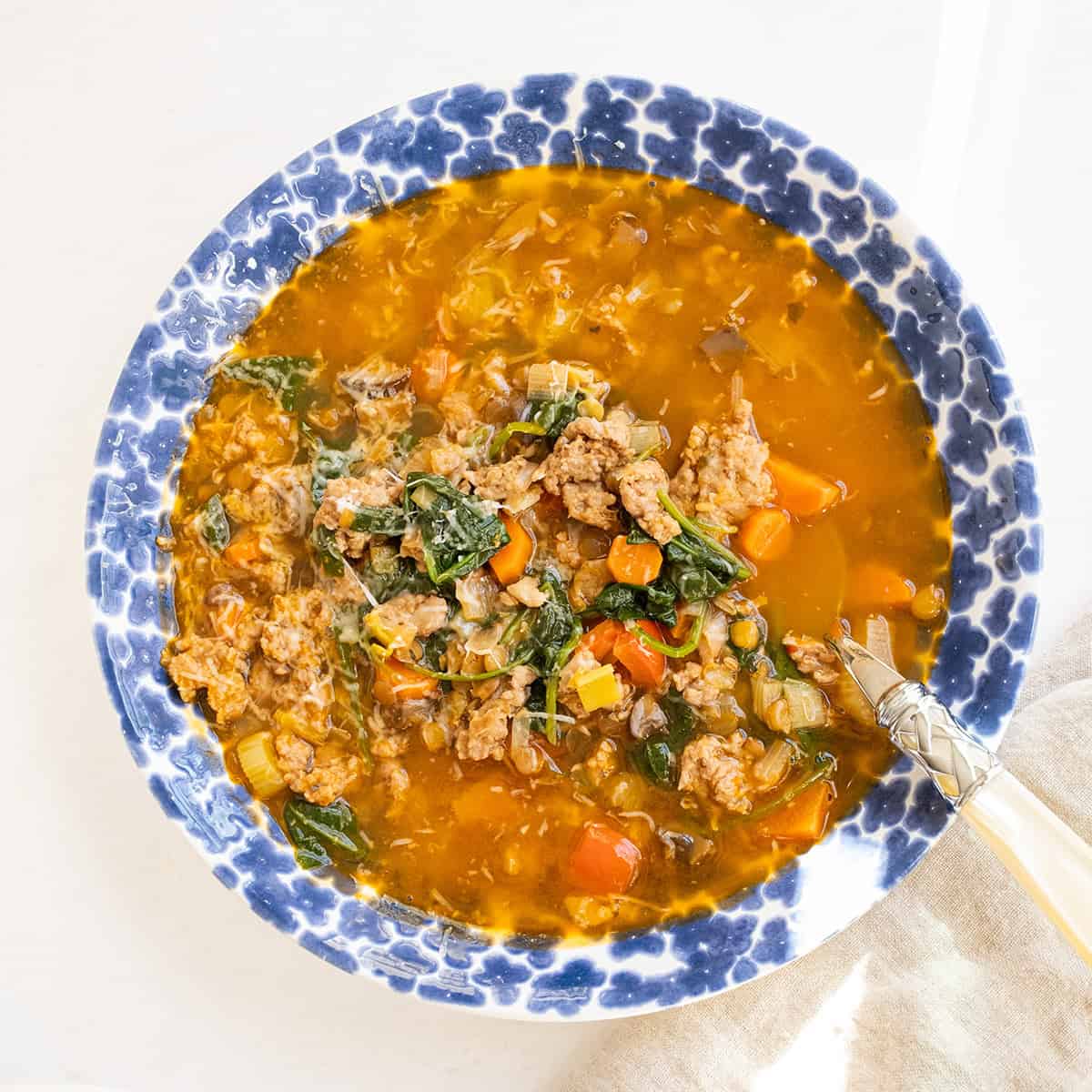 Italian Pork RecipesSausage and Lentil Soup
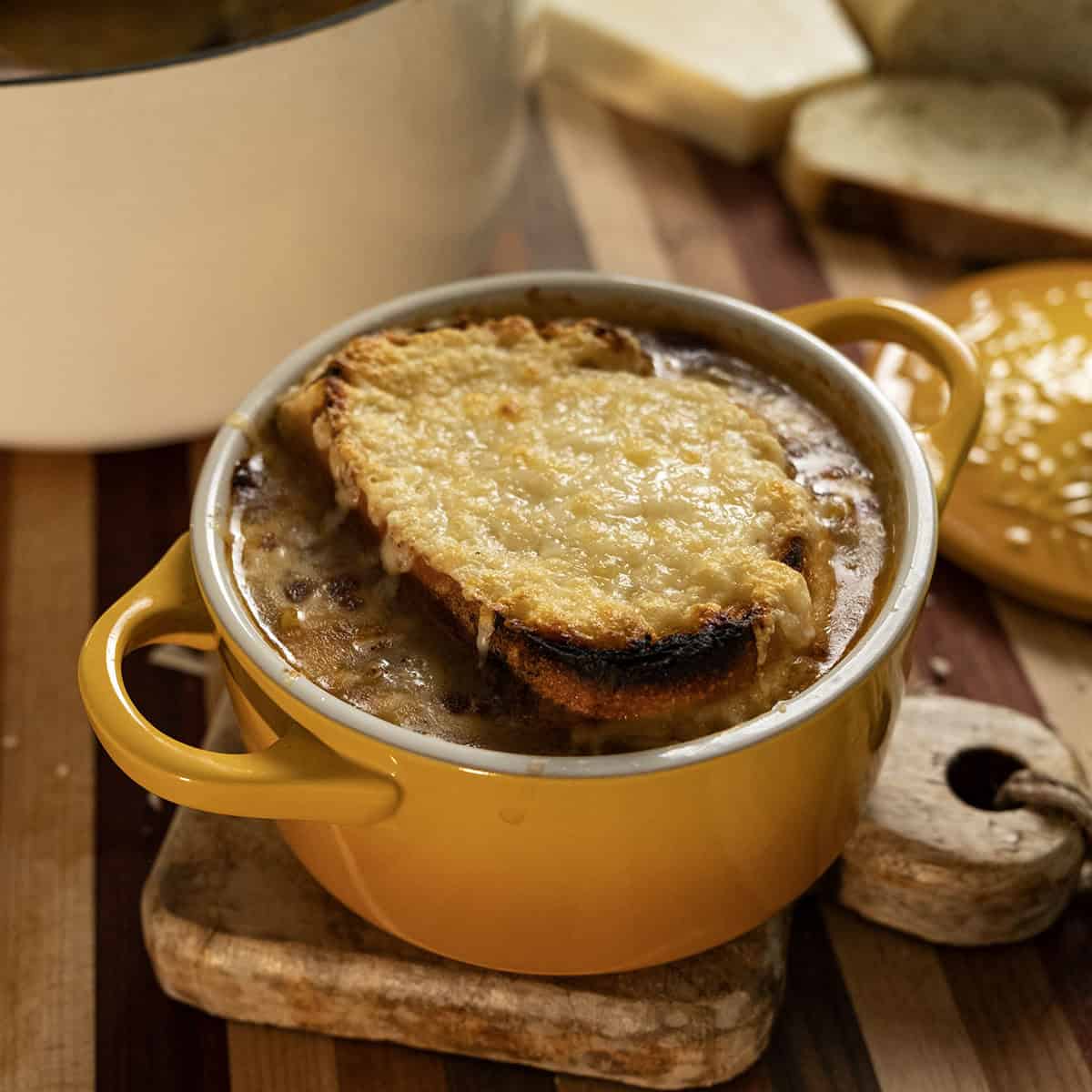 Old School Italian RecipesLicurdia (Calabrian Onion Soup)
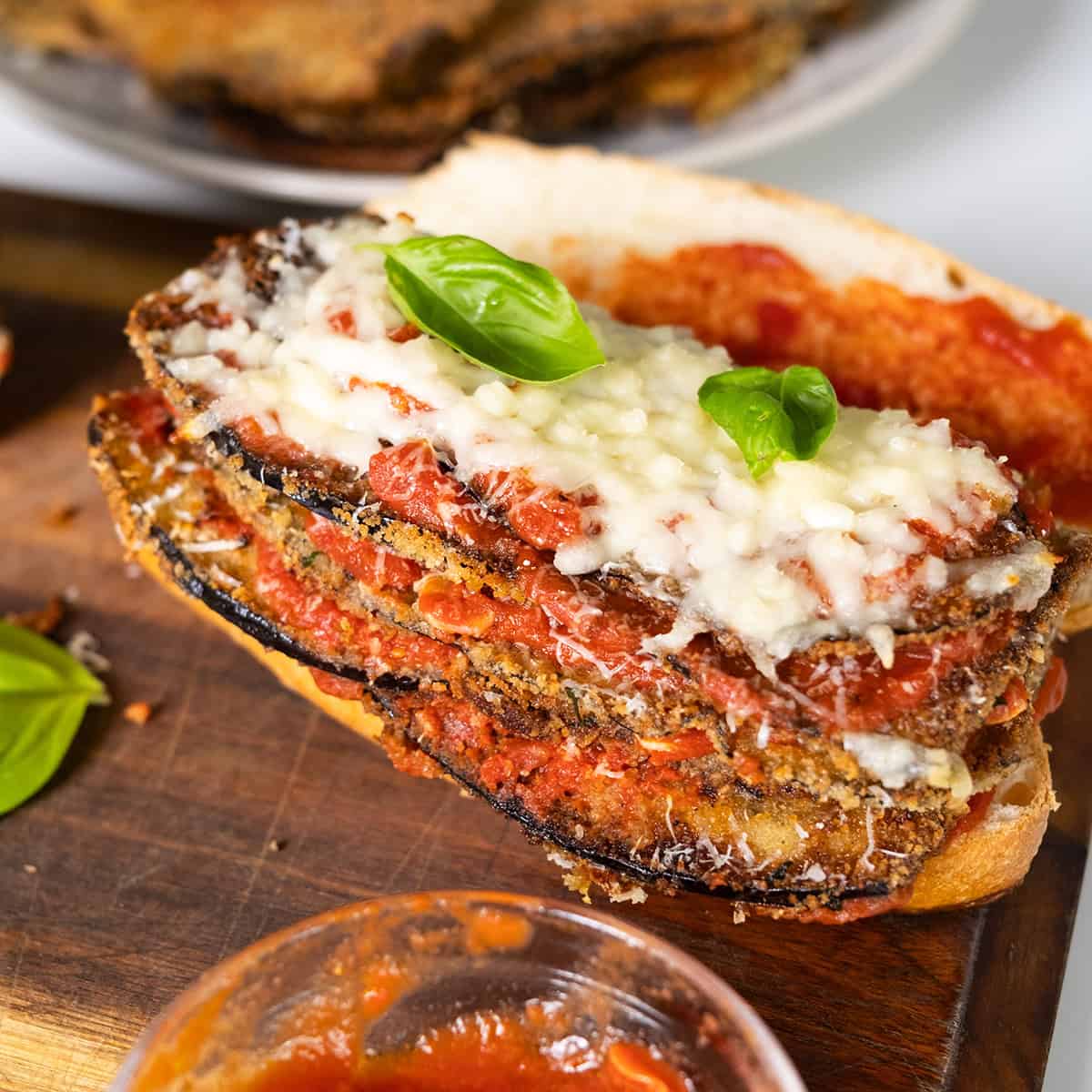 Italian Vegetable RecipesEggplant Parm Sandwich
 Winter RecipesBarley Lentil Soup