HomeOld School Italian RecipesAuthentic Italian Porchetta
Authentic Italian Porchetta
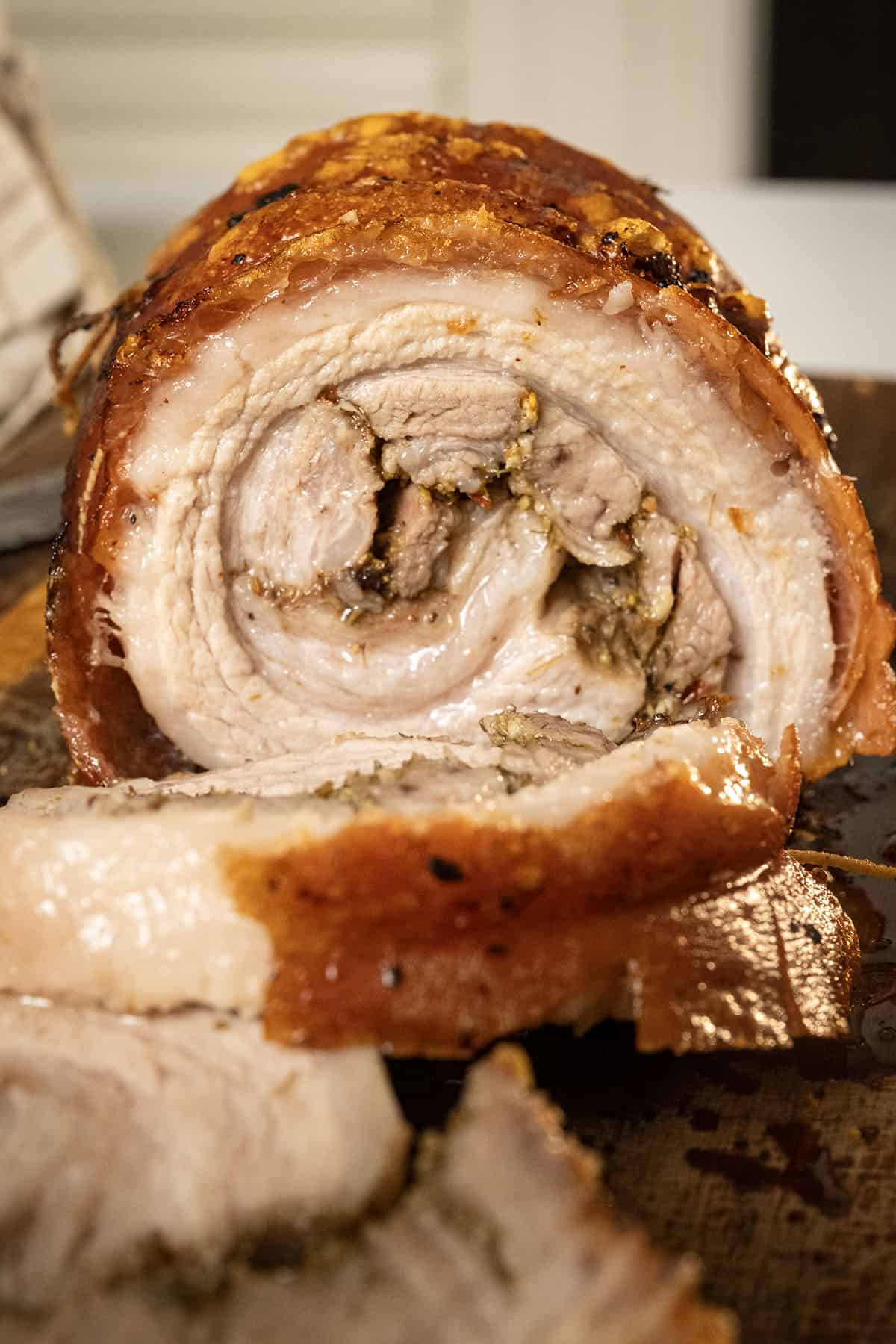
An authentic Italian Porchetta, roasted over several hours for a crispy and incredibly tender pork roast to serve or have on a sandwich!
- Prep30 min
- Cook5 hr
- Total5 hr 30 min
- Serves15 servings
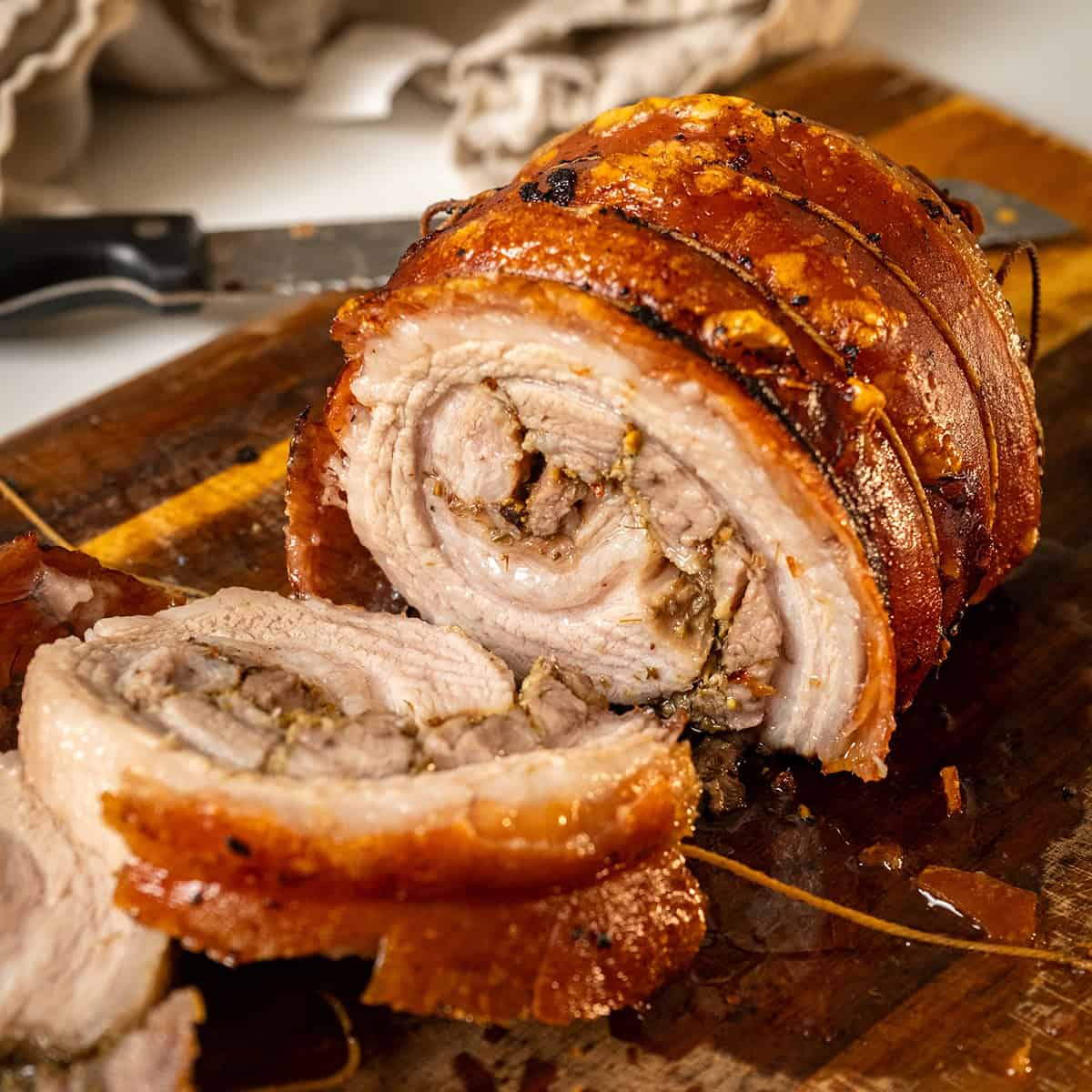
Perfect for a big family meal, Authentic Italian Porchetta is a delicious roast with rich, tender, and juicy meat and a crispy exterior of pork skin. Porchetta is classically served as a roast or on Italian bread, topped with crunchy skin.
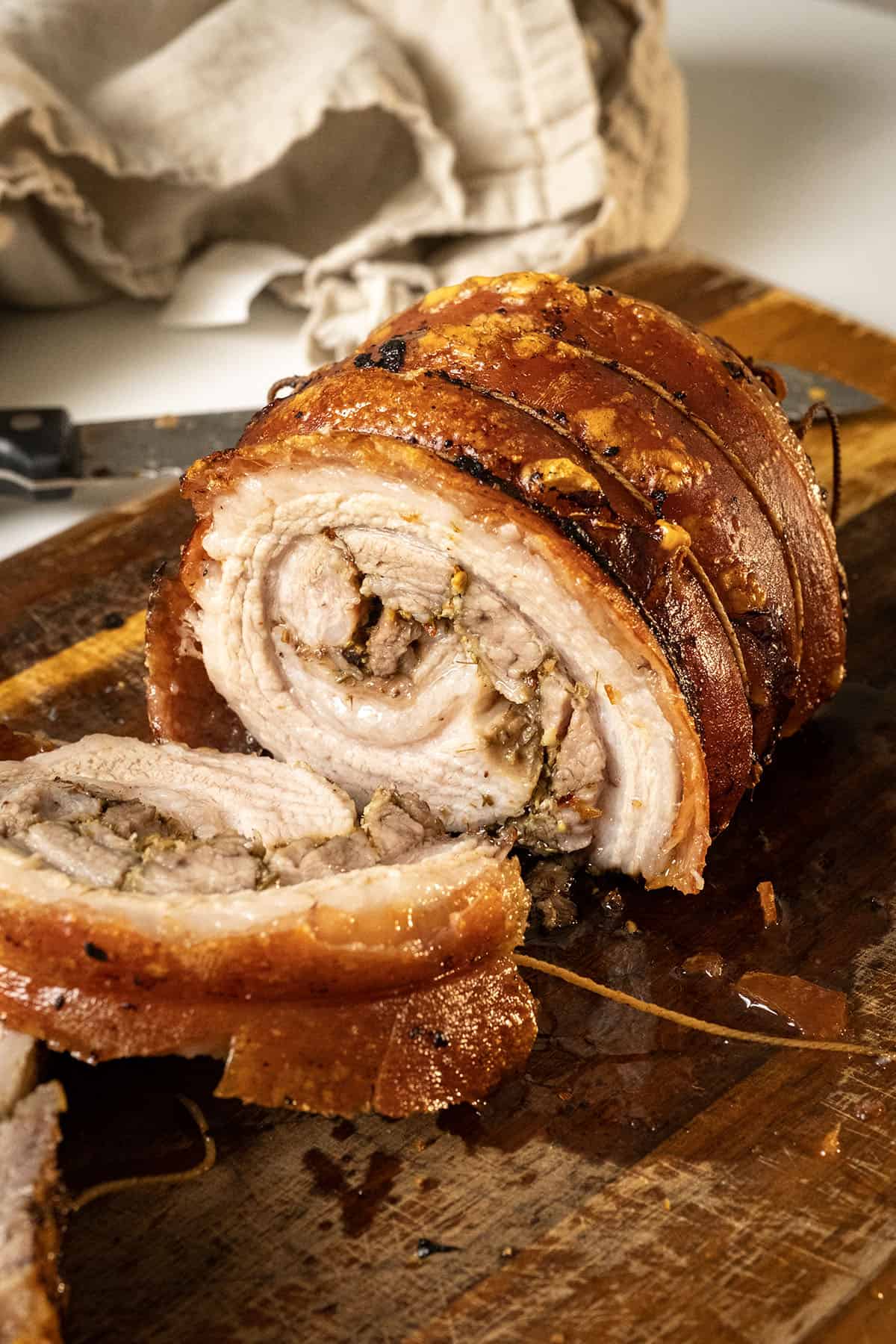
Love serving your whole family a meal? Serve this authentic Italian porchetta with an Italian Cabbage Recipeor Italian Stuffed Shells with Meat Sauce and Ricotta
[feast_advanced_jump_to]What is Porchetta
A Classic Italian Porchetta is pork belly tightly wrapped and seasoned with fennel pollen. It's slow-roasted at a low temperature over a longer period of time and then finished at a high temperature to crisp up the skin.
The slow roasting or braising of meals like Authentic Bologneseor Italian Short Ribs can take a long time to cook, but yield really soft and tender meats that can be achieved in a short period of time.
Slow roasting the porchetta allows the fat to render before the meat gets overcooked, similar to Italian Pork Roast. The beautiful thing about pork belly is that it's almost impossible to overcook when rolled like this.
Pork Belly vs. Pork Belly and Tenderloin
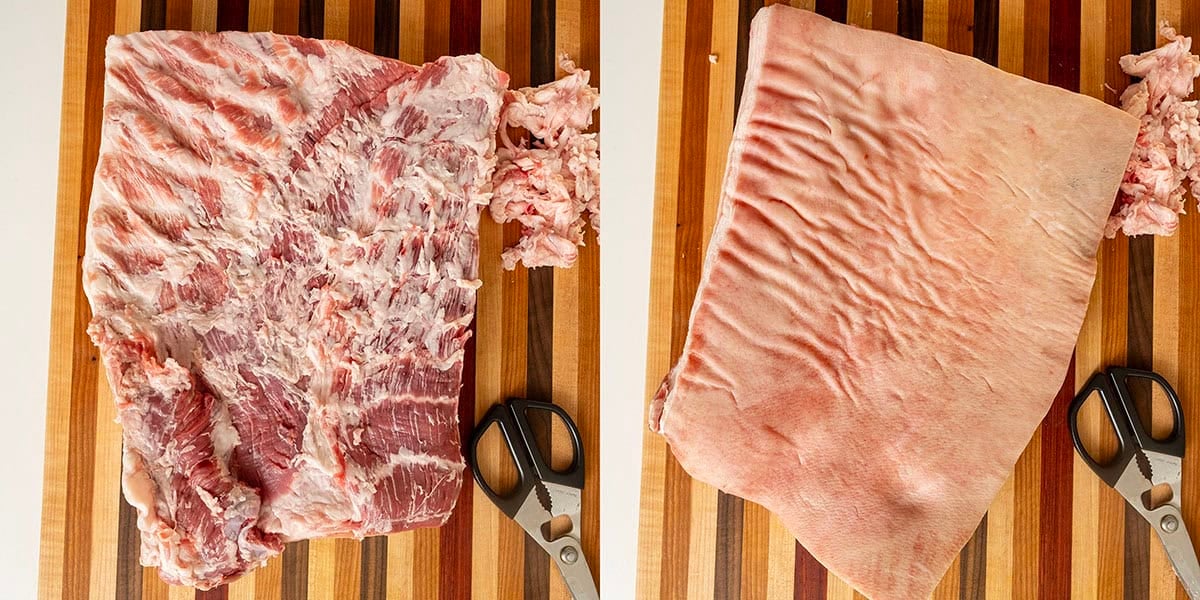
Some recipes for porchetta will call for pork belly and pork tenderloin, while others will just call for pork belly. Depending on the size of the tenderloin, it may be okay to include a tenderloin. Sometimes the tenderloin can become tough, especially when reheating porchetta.
Pork belly, on its own, is the perfect meat for porchetta. It's mostly fat, so when you cook it for a long time, it is extra tender and juicy because the fat will render over time. The crispy skin on the outside of the pork belly keeps the juices in while also hardening into a crackly and crispy outside that complements the tender inside!
Ingredient Notes and Substitutions
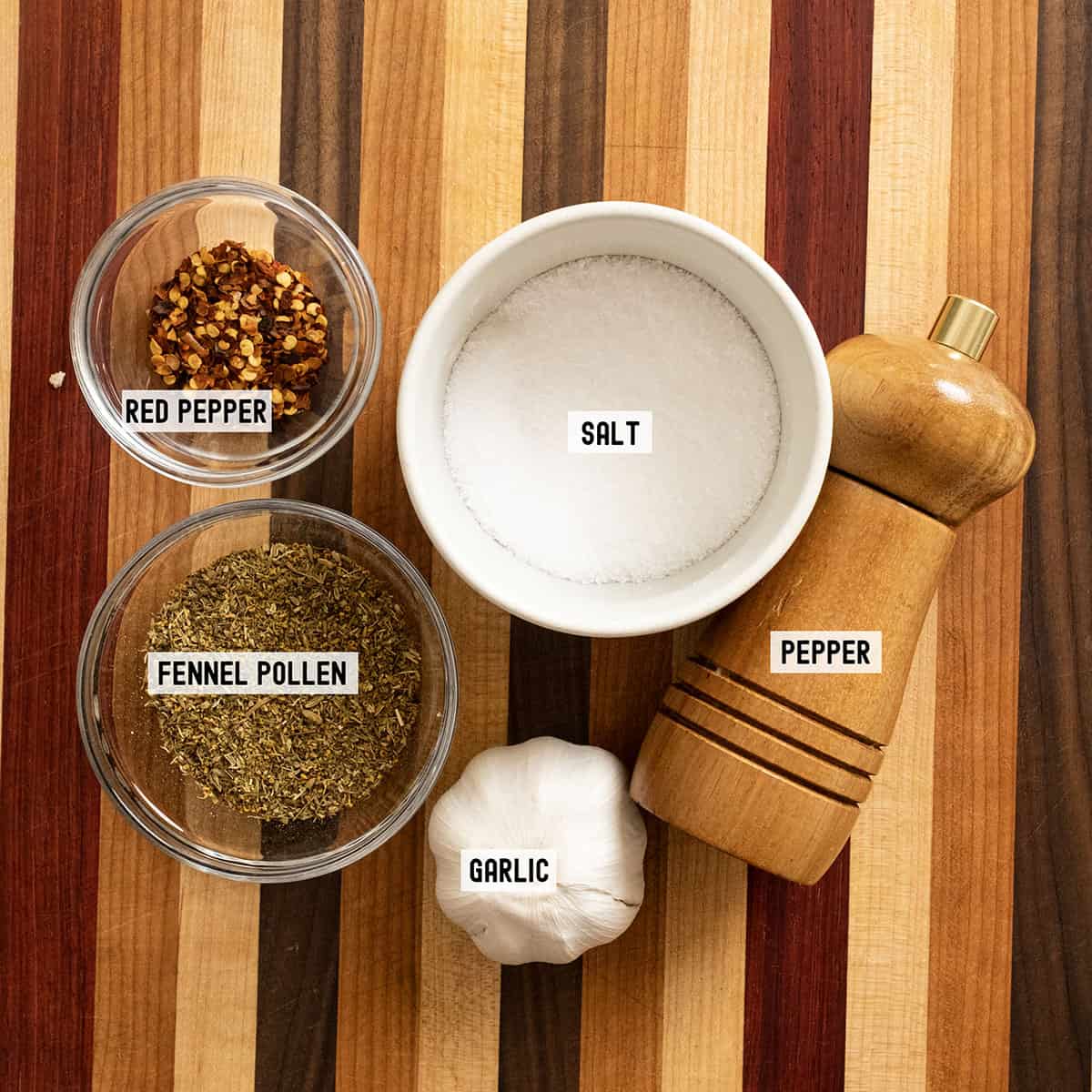
- Fennel Pollen. Fennel pollen is harvested from the small flowers of fennel plants. It's a little pricey, but you can get it at a reasonable price if you purchase it in large quantities, like the brand I show below.
- Garlic. Some recipes won't call for fresh garlic, but it is a welcome addition to the tender and delicious meat.
- Salt. Season generously with salt. Salt will help release all of the wonderful flavor from this delicious cut of meat.
- Red Pepper. I like to add a little bit of spice with crushed red pepper, but this one can be left out if you prefer zero spice.
*Please see the recipe card below for more information on the ingredients.
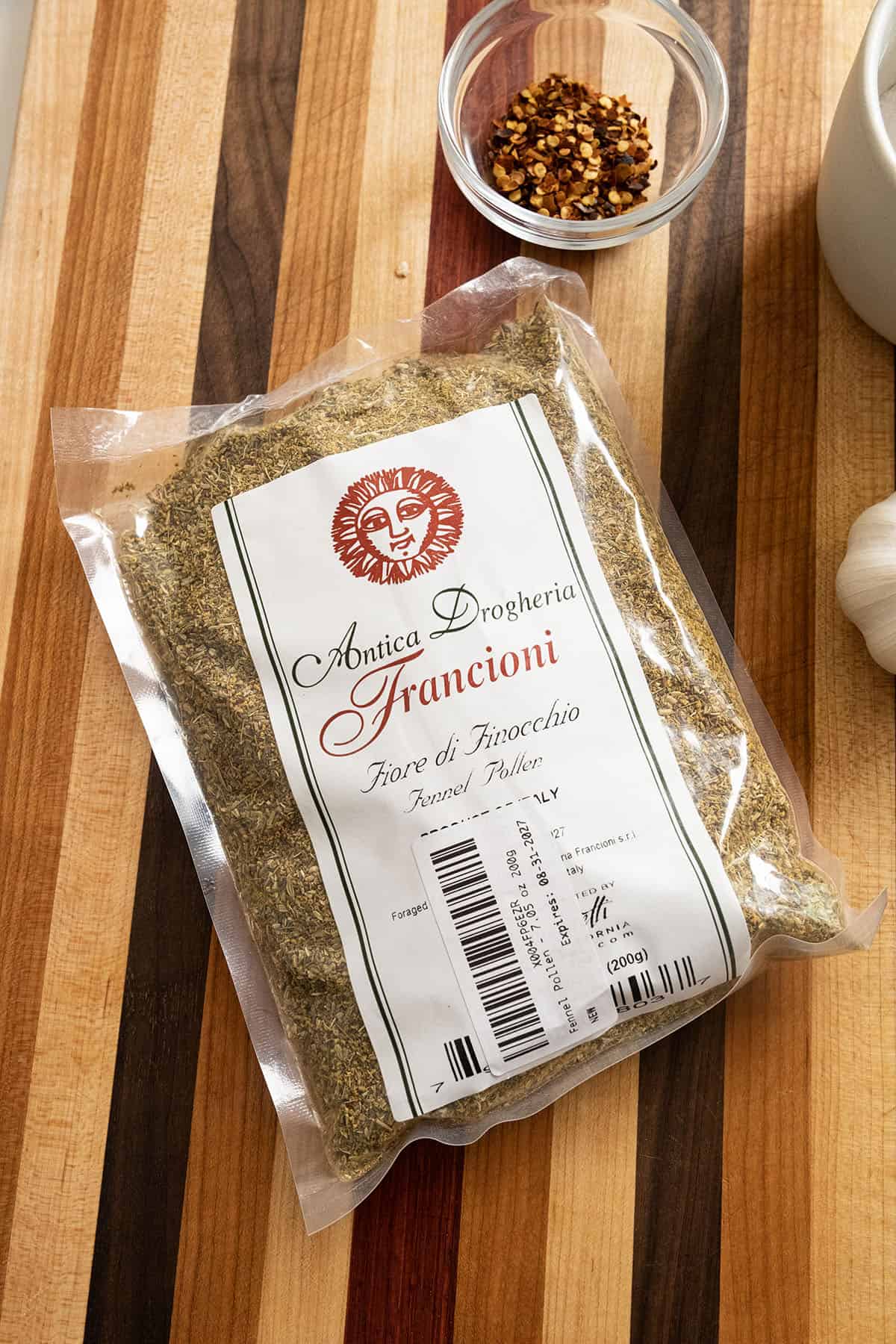
How to Make Authentic Italian Porchetta
Follow the numbered instructions below for instructions on how to make porchetta.
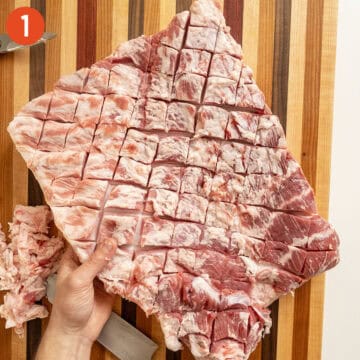
Step 1: Lay your pork belly out on a cutting board, skin side down. Cut slices into the surface of the meat, 1 inch apart. Repeat in the opposite direction, creating a diamond pattern.
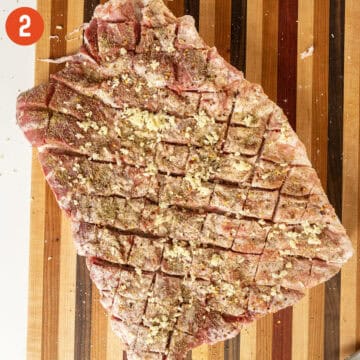
Step 2: Season this side of the pork belly with black pepper, garlic, fennel pollen, crushed red pepper, and 2 tablespoon of salt. Use your fingers to rub the seasoning into the grooves of the cuts you have made.
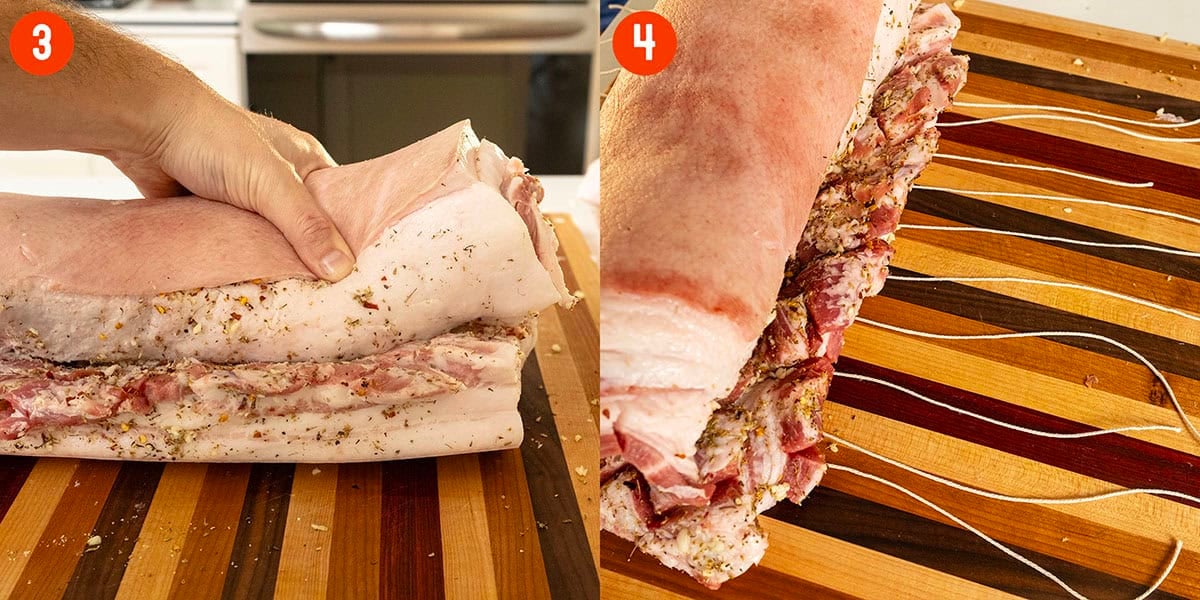
Step 3: With the muscle striations running side to side, roll the pork belly into a tight roll, starting with the longer side of the belly. (Trim any pork skin that may end up inside the roll)
Step 4: Cut about 12-15 pieces of twine, around 18 inches long, and place them under the pork belly.
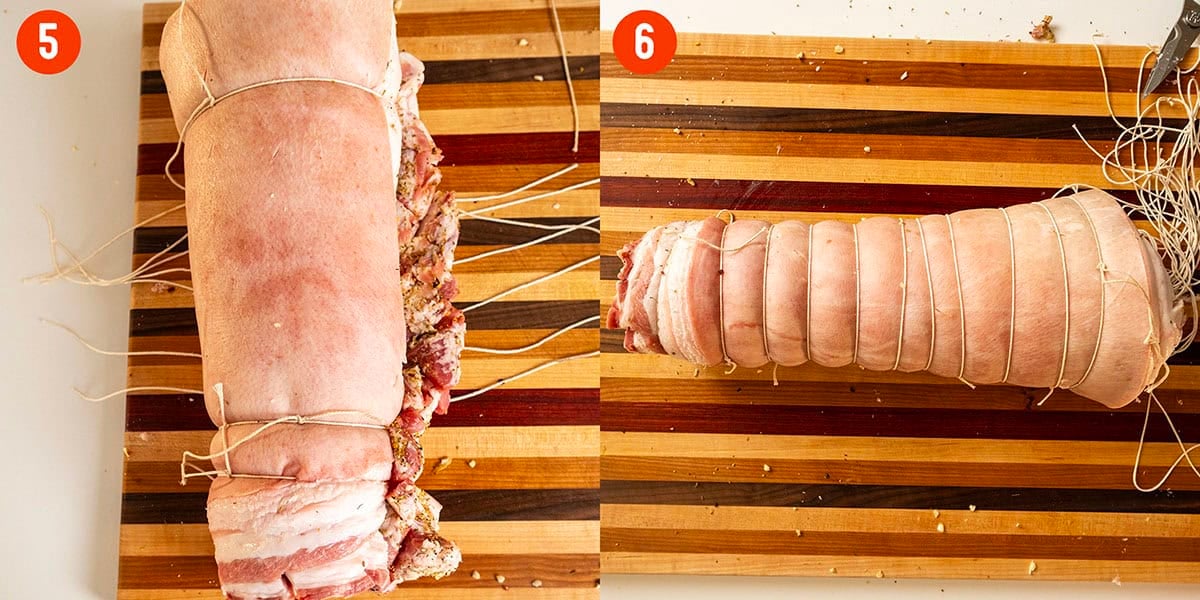
Step 5: Starting from the outside moving in, tie the twine around the porchetta roll, keeping the roll as tight as possible. Work your way from both outside edges in.
Pro Tip: Once tied tightly, you can either cut the porchetta in half or leave it as is. Cutting it into a 5 lb roll dramatically lowers cook time. You can then cook both rolls, side-by-side, or freeze one.
Step 6: Season the outside of the pork skin with 1-2 tablespoon of salt. Then place on a wire rack on a baking sheet in the refrigerator, uncovered, for 24 hours.
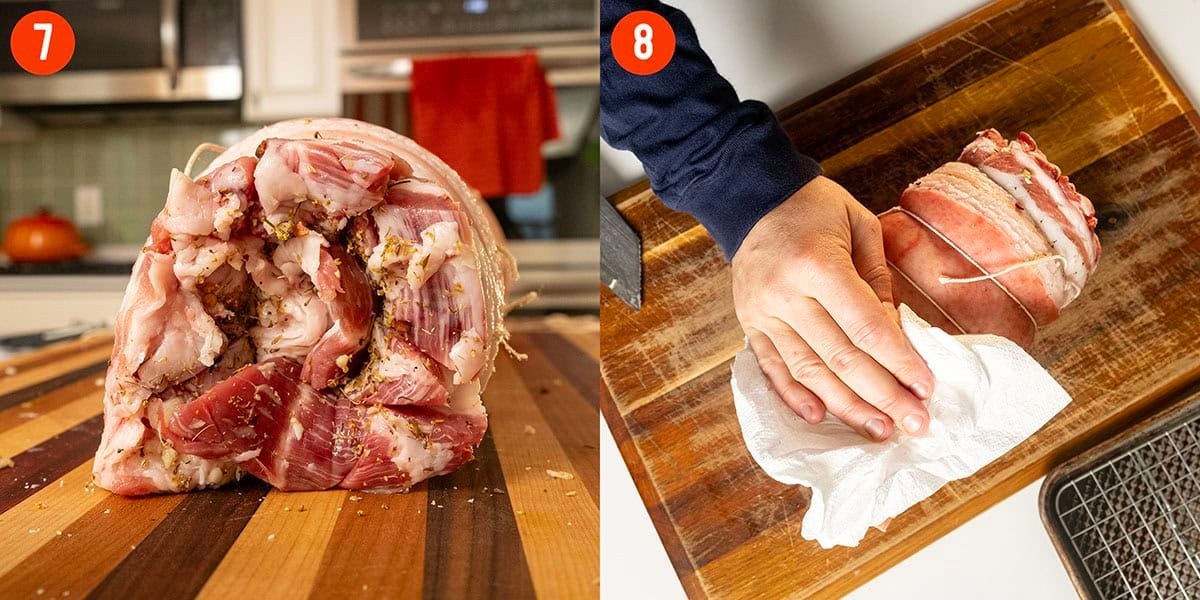
Step 7: Remove the porchetta from the fridge an hour before cooking. Preheat the oven to 300℉.
Step 8: Pat the porchetta down with a paper towel to remove any and all moisture from the skin.
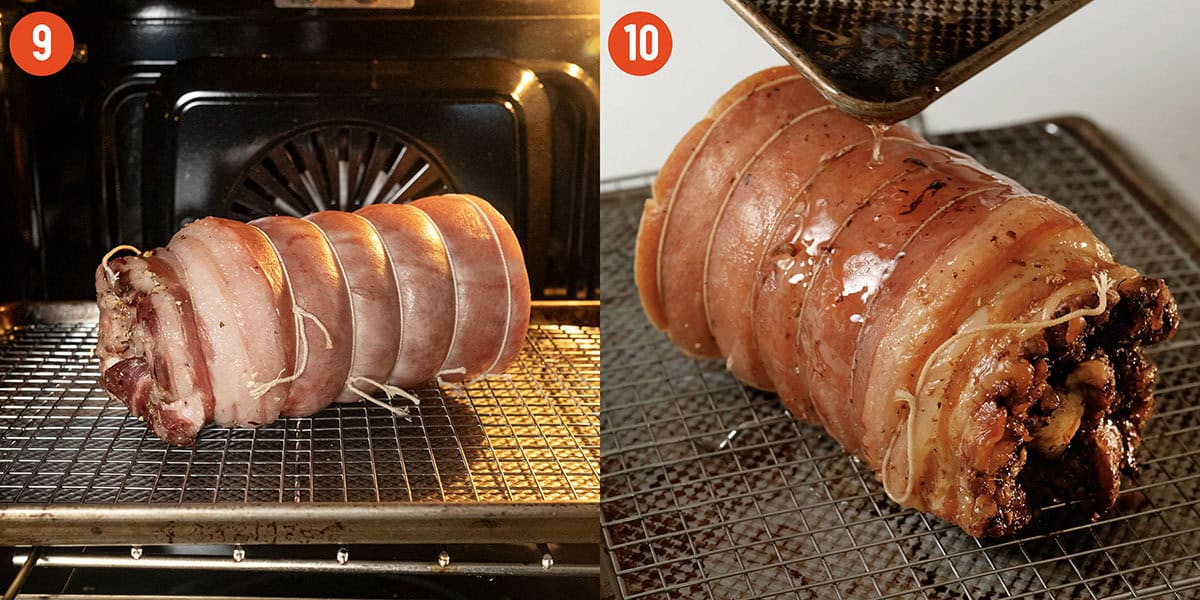
Step 9: Place the porchetta into the oven on the baking sheet with the wire rack, seam side down. Bake for about 3 hours at 300 ℉. Bake for 1 hour untouched.
Step 10: After 1 hour, start basting the porchetta every half hour with the drippings from the porchetta.
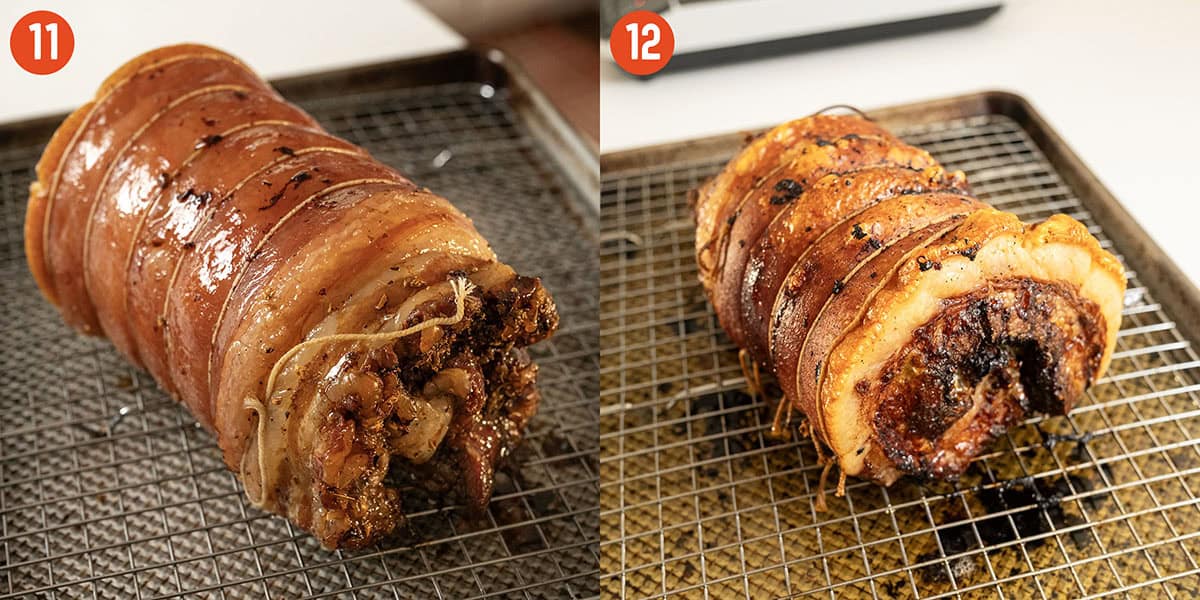
Step 11: After about 3 hours, the temperature of the porchetta should have reached at least 160℉. Place a knife through the center of the porchetta. It should enter and exit with minimal resistance.
Step 12: If it's tender, raise the temperature of the oven to 450℉. Bake in the oven for another 10-15 minutes until the skin is bubbling and crackling.
Step 13: Remove from the oven and rest for 30 minutes. Use a serrated knife to cut ½ to 1-inch slices of porchetta.
Enjoy porchetta on its own or with vegetable sides like Italian Lacinato Kale Recipe (Tuscan)and Fennel and Potato Au Gratin. If this looks great but you want a smaller roulade, try our Rolled Stuffed Turkey Breast.
How to Serve Porchetta
Authentic porchetta is typically served on its own as a roast or on a sandwich with minimal add-ons, similar to an Italian Beef Sandwich. The flavor from the pork belly alone is enough with the combination of fat and meat, along with the crispy texture of the bubbled and cracked pork skin.
If serving as a roast on its own, serve with simple sides like Crispy Garlic Parmesan Potatoes, Garlic Parmesan Mashed Potatoes, or 15-Minute Spaghetti with Garlic and Oil.
You can also add vegetable sides like BEST Garlic Parmesan Green Beans, Maple Bacon Brussels Sprouts, orItalian Radicchio Salad.
On a sandwich, no cheese is needed, but Sauteed Rapini with Garlic, could be a delicious addition to Italian porchetta.
Pro-Tips
- Choose a reliable butcher. Pork belly does all the work. It's minimally seasoned, and making sure to source a great piece of meat is really important. If you tell them you're making porchetta, they will help you prep it.
- Use fennel pollen, not fennel. Fennel pollen is really soft and will almost melt into the meat, whereas actual fennel seeds will be noticeable while eating the porchetta.
- Leave the skin uncut. This allows the fat within to render really slowly and become tender. By basting the skin every 30-60 minutes, it will still get that crackly texture.
- The temperature of pork belly is not hugely important. Even if it reaches 160 degrees F early, it doesn't mean you should immediately pull it out. The fat needs to render, and you should be able to stick a butter knife into the roll very easily (not through the skin).
- Let the porchetta rest for 30 minutes before cutting.
- Don't add sauces. I know your first thought is going to be, "how can I make this more saucy?" Trust me when I say, it is more than enough rich to be served right on some Italian bread as is.
Recipe FAQs
Does porchetta have pork belly and pork tenderloin?It depends, but sometimes yes and sometimes no. You can make a porchetta with a pork belly attached to a small tenderloin. But if the tenderloin is too thick, it may dry out after cooking for too long, even with all the fat. I prefer an all-pork belly porchetta.
Can I make a smaller porchetta?You can make a large porchetta and then cut it in half or thirds, freezing what you don't want. If you try to roll anything smaller than 7 lbs, it's likely you won't be able to roll it closed.
My porchetta doesn't seem done after 3 hours. What should I do?Keep cooking until it's done. Test it every 30 minutes to see if you can easily pass a butterknife into the center of the porchetta. A larger porchetta may take longer.
How do you get the porchetta to roll tightly?Roll the pork belly manually as tightly as you can. Then start with one side and use twine to tie it tight. Then switch to the other side and tie it as tight as possible. Keep alternating sides until you get to the middle.
Does it have to have skin on?Short answer, yes. Without the skin, you won't get the quintessential crunchy crackly skin of a porchetta.
Saving and Reheating Porchetta
- To save porchetta, place it in an airtight container or wrap it tightly with saran wrap and refrigerate. You can refrigerate for up to four days.
- To reheat, place slices of porchetta on a baking sheet with parchment paper. Heat oven to 375 degrees F and bake for 10-15 minutes.
More Italian Classics
 Authentic Italian Baked Ziti
 Authentic Veal Marsala
 Classic Creamy Polenta
 Authentic Italian Lasagna
Ingredients
Equipment 1 cutting board, 1 wire rack, 1 rimmed baking sheet, cooking twine
Steps
- 1
Lay your pork belly out on a cutting board, skin side down. Cut slices into the surface of the meat, 1 inch apart. Repeat in the opposite direction, creating a diamond pattern. (See above for images)
- 2
Season this side of the pork belly with black pepper, garlic, fennel pollen, crushed red pepper, and 2 tablespoon of salt. Use your fingers to rub the seasoning into the grooves of the cuts you have made.
- 3
With the muscle striations running side to side, roll the pork belly into a tight roll, starting with the longer side of the belly. (Trim any pork skin that may end up inside of the roll)
- 4
Cut about 12-15 pieces of twine around 18 inches long. Starting from the outside moving in, tie the twine around the porchetta roll, keeping the roll as tight as possible. Work your way from both outside edges in.
- 5
Once tied tightly, you can either cut the porchetta in half, or leave it as is. Cutting it into a 5 lb roll dramatically lowers cook time. You can then cook both rolls or freeze one.
- 6
Season the outside of the pork skin with 1 tablespoon of salt. Then place on a wire rack on a baking sheet in the refrigerator uncovered for 24 hours.
- 7
Remove the porchetta from the fridge an hour before cooking. Preheat the oven to 300℉. Pat the porchetta down with a paper towel to remove any and all moisture from the skin.
- 8
Place the porchetta into the oven on the baking sheet with the wire rack, seam side down. Bake for about 3 hours at 300 ℉. Bake for 1 hour untouched. After 1 hour, start basting the porchetta every half hour with the drippings from the porchetta.
- 9
After about 3 hours, the temperature of the porchetta should have reached at least 160℉. Place a knife through the center of the porchetta. It should enter and exit with minimal resistance.
- 10
If it's tender, raise the temperature of the oven to 450℉. Bake in the oven for another 10-15 minutes until the skin is bubbling and crackling.
- 11
Remove from the oven and rest for 30 minutes. Use a serrated knife to cut 1-inch slices of porchetta. Serve as a roast or on a sandwich.
Notes
Notes
Nutrition
- Calories1586 kcal
- Carbs4 g
- Protein28 g
- Fat160 g
- Saturated fat58 g
- Sodium2199 mg
- Fiber0.2 g
- Sugar0.1 g
- Cholesterol218 mg
Nutrition is an estimate for one serving.
More recipes to try next
 Italian Seafood RecipesBaked Red Snapper (Under 30 minutes)
 Italian Spring RecipesPERFECT Cast Iron Boneless Pork Chops
 Old School Italian RecipesRestaurant Style Chicken Saltimbocca
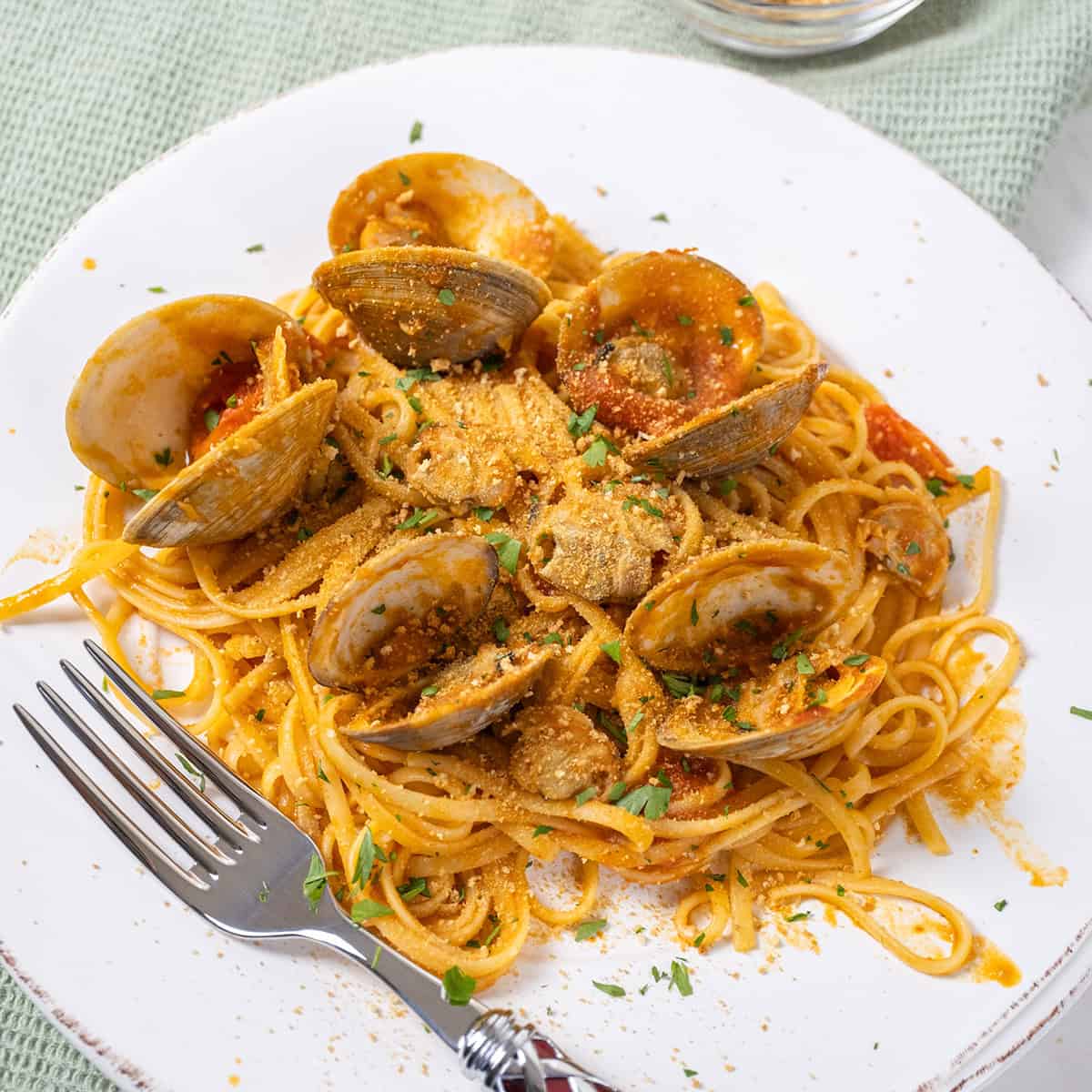 Old School Italian RecipesLinguine with Red Clam Sauce
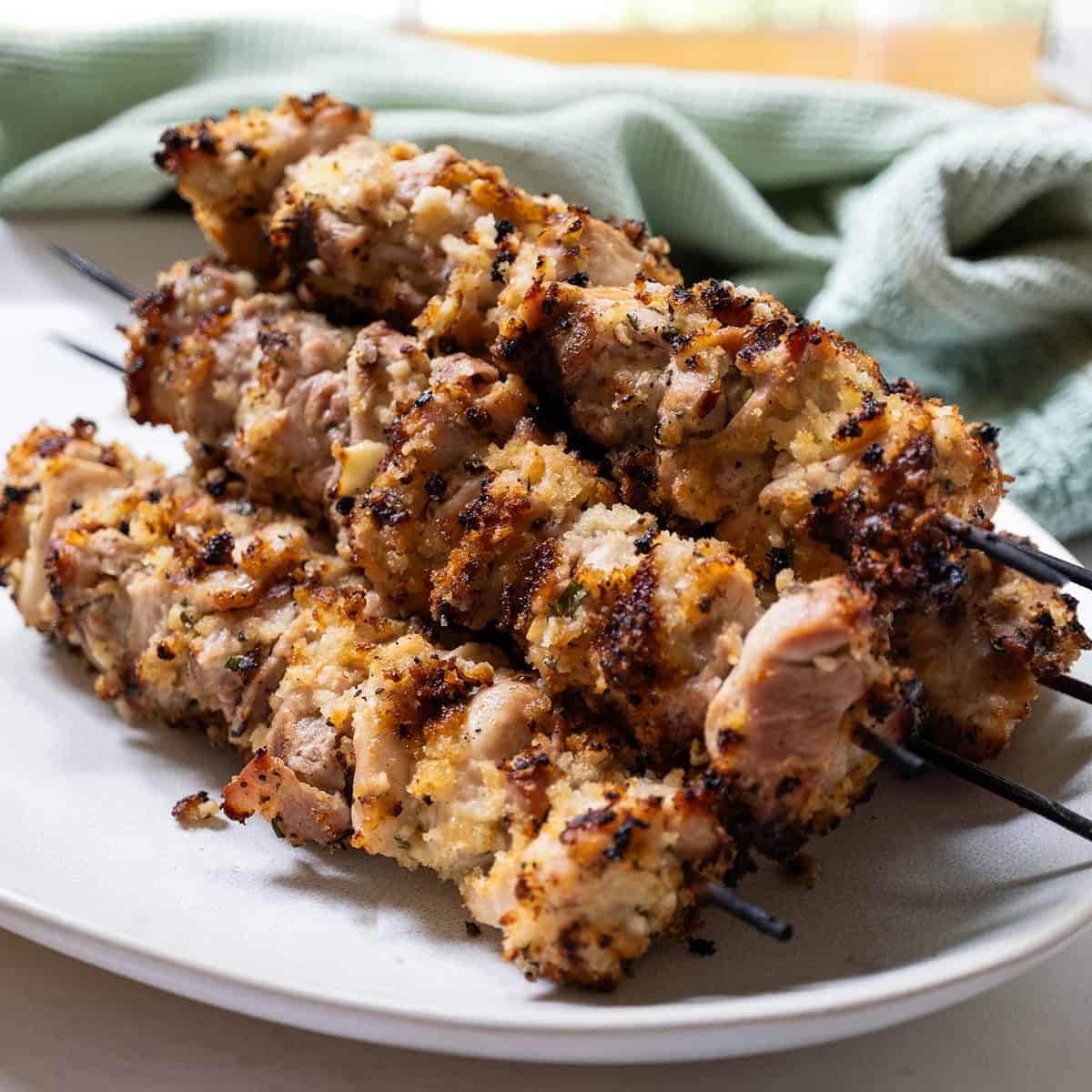 Old School Italian RecipesChicken Spiedini
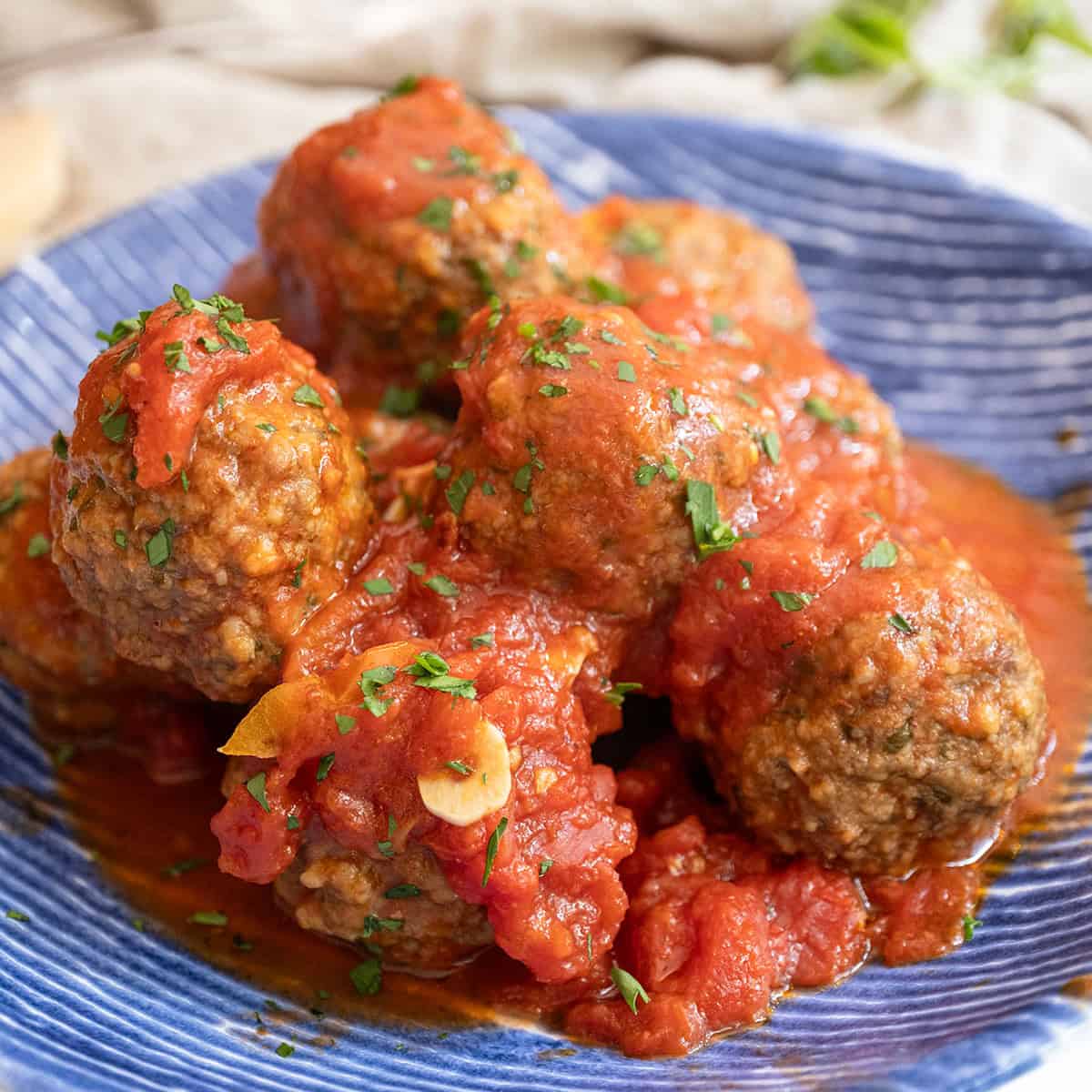 Old School Italian RecipesClassic Italian Fried Meatballs
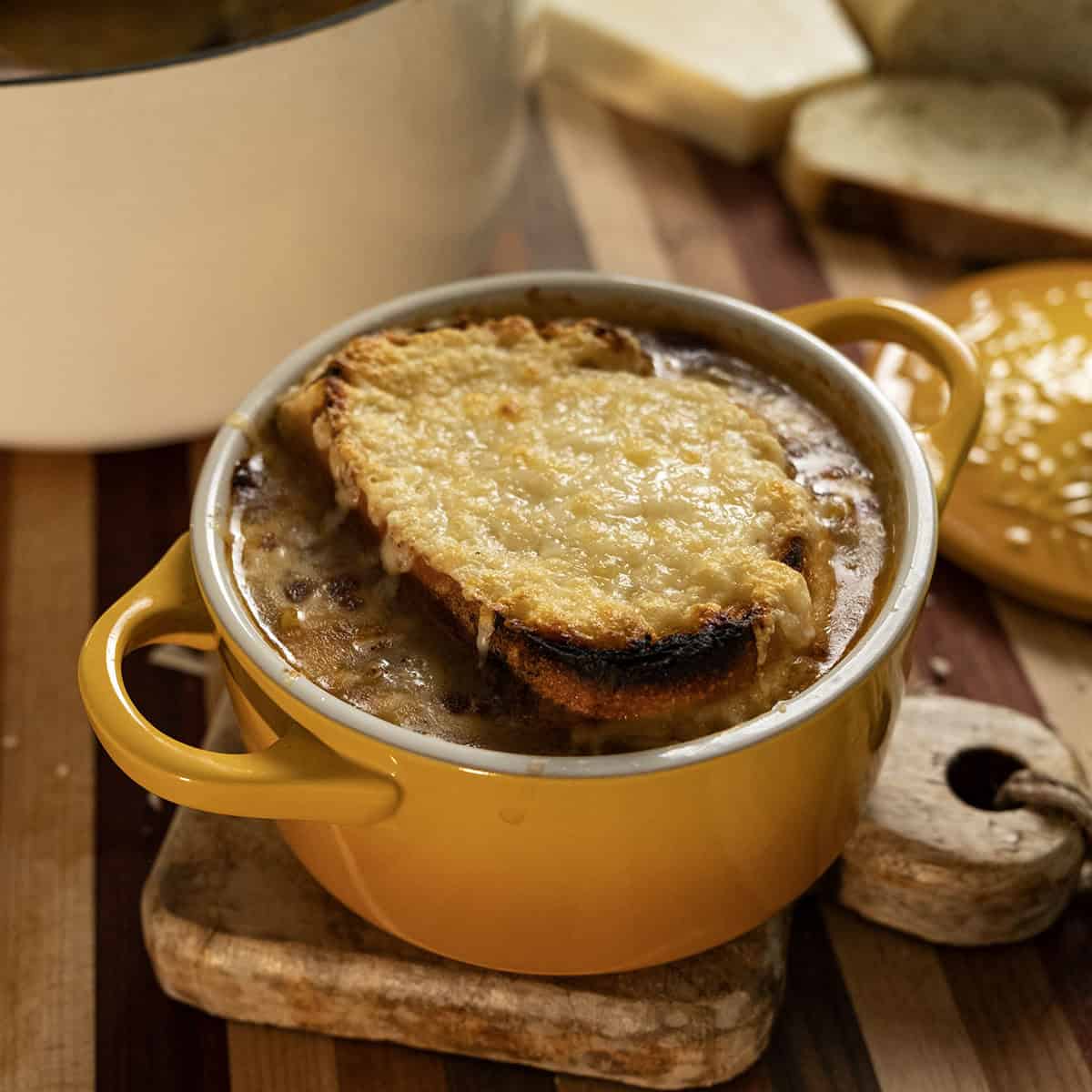 Old School Italian RecipesLicurdia (Calabrian Onion Soup)
 Italian Spring RecipesArtichoke Pesto Pasta