
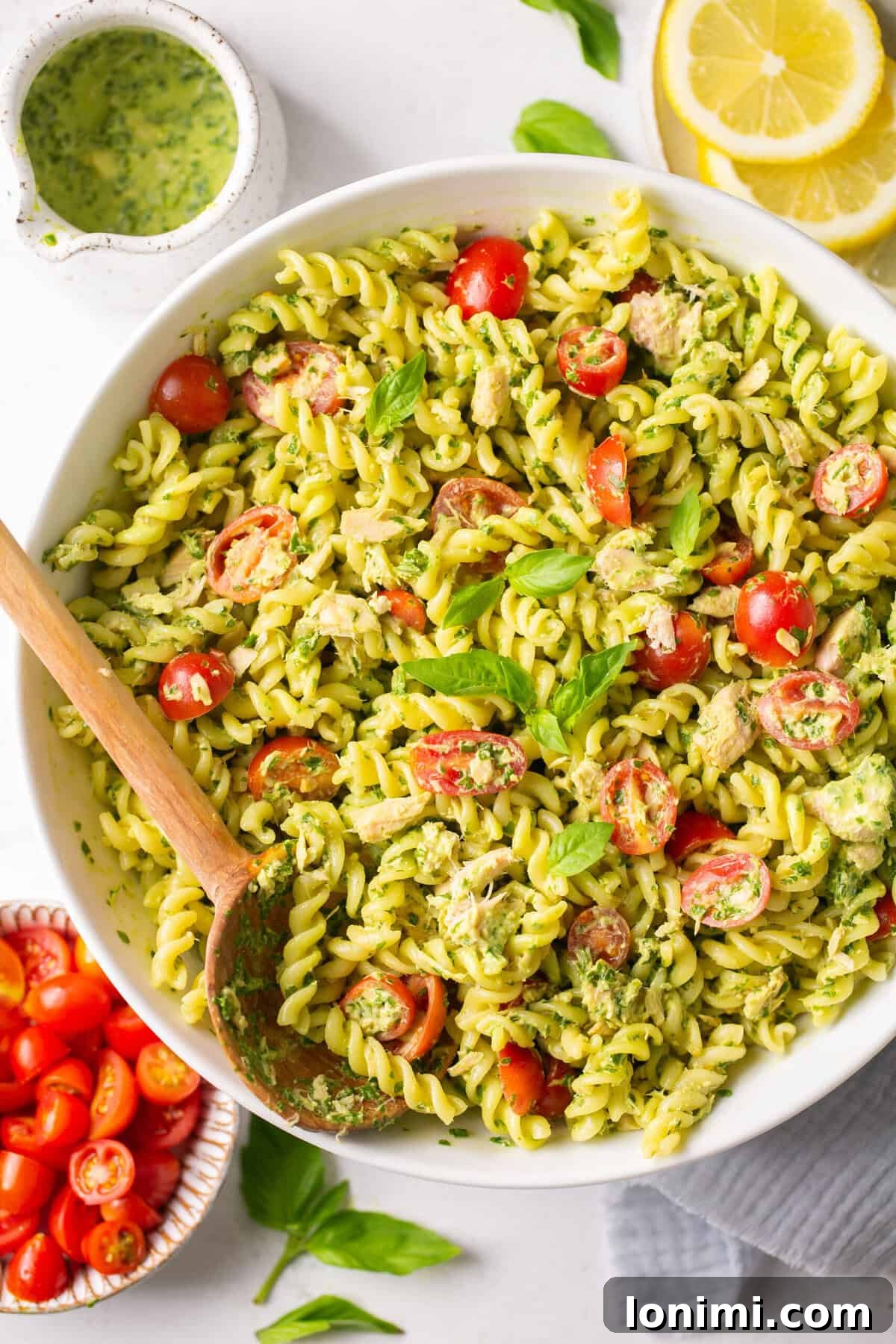
This homemade, creamy tuna pesto pasta recipe is the ultimate solution for a quick, delicious, and nutritious meal. Crafted for simplicity and maximum flavor, this versatile dish can be enjoyed hot for a cozy dinner or chilled as a refreshing pasta salad. Ready in just 20 minutes, it’s packed with protein and wholesome ingredients, making it an ideal choice for busy weeknights, meal prep, or effortless entertaining. Discover how this delightful gluten-free tuna pesto pasta can become your new go-to recipe.
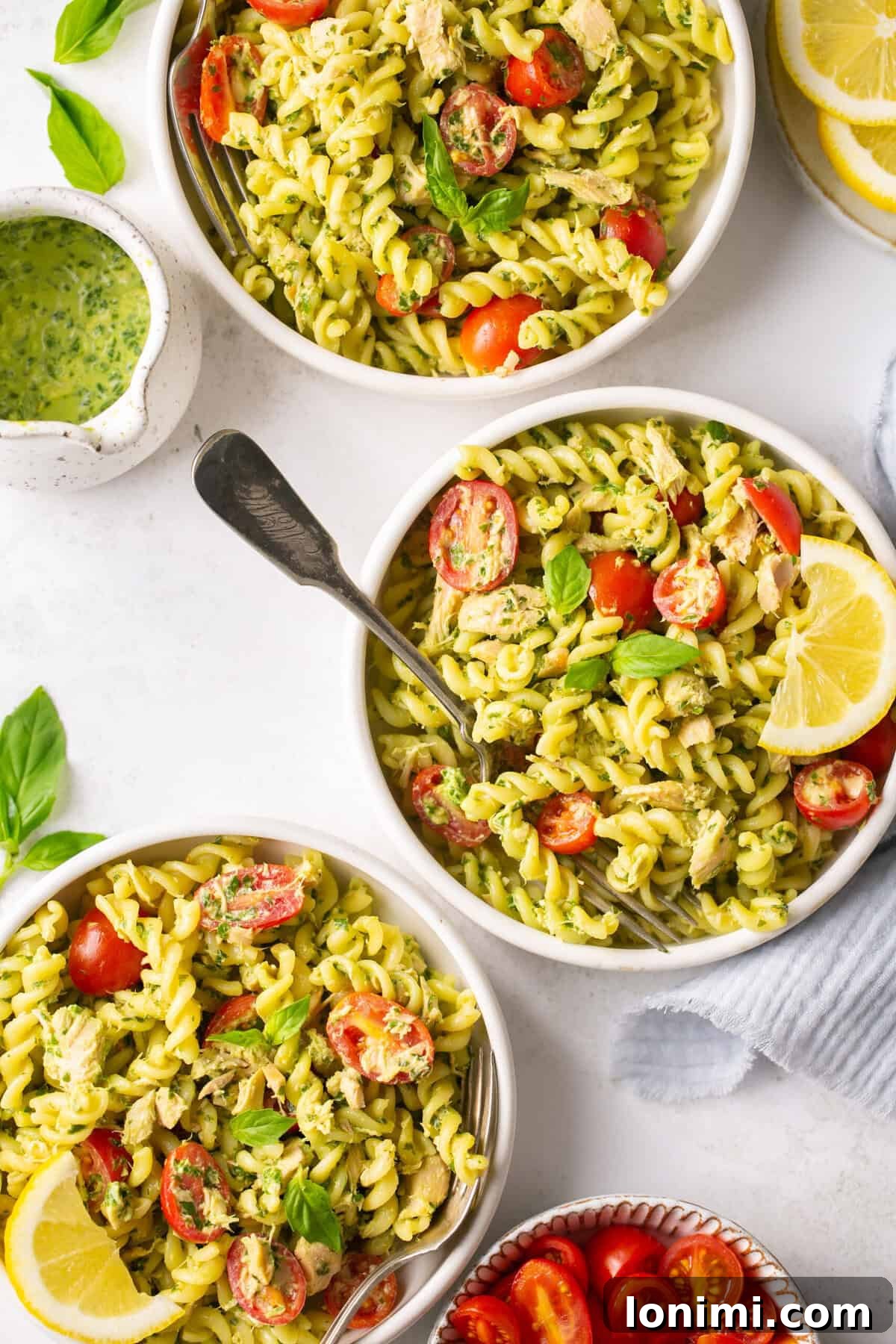
Why You’ll Adore This Tuna Pesto Pasta
Imagine a meal that effortlessly combines rich flavors with incredible ease and healthy benefits. This creamy tuna pesto pasta is precisely that. It brings together the lusciousness of homemade pesto, the satisfying texture of gluten-free pasta, the robust flavor of chunky tuna, the fresh burst of sweet tomatoes, and the subtle crunch of walnuts. Each forkful is a symphony of tastes, making it a standout dish that’s perfect for any occasion, from a simple family dinner to a casual gathering.
What truly sets this recipe apart is its incredible speed and simplicity. In a mere 20 minutes, you can transform basic pantry staples into a protein-rich meal that satisfies both your taste buds and your body. It’s a lifesaver on those hectic evenings when time is of the essence but you still crave something homemade and wholesome. The beauty of this dish also lies in its adaptability; serve it warm as a hearty main course or chilled as a vibrant, light pasta salad, making it a fantastic addition to picnics, potlucks, or packed lunches.
Beyond its convenience, this tuna pesto pasta is a celebration of fresh, clean eating. By using simple, healthy ingredients, you’re not just preparing a meal; you’re nurturing your body with essential nutrients. The vibrant green pesto, rich in fresh basil, combined with lean tuna and fresh vegetables, creates a balanced plate that’s both delicious and incredibly good for you. This isn’t just a recipe; it’s a testament to how quick and easy healthy eating can be, ensuring your entire family will ask for it again and again.
Essential Ingredients for Your Perfect Pesto Pasta
Crafting a truly exceptional tuna pesto pasta begins with selecting the right ingredients. Each component plays a vital role in achieving that perfect balance of flavor, texture, and nutritional value. Here’s a detailed look at what you’ll need and why certain choices can elevate your dish.
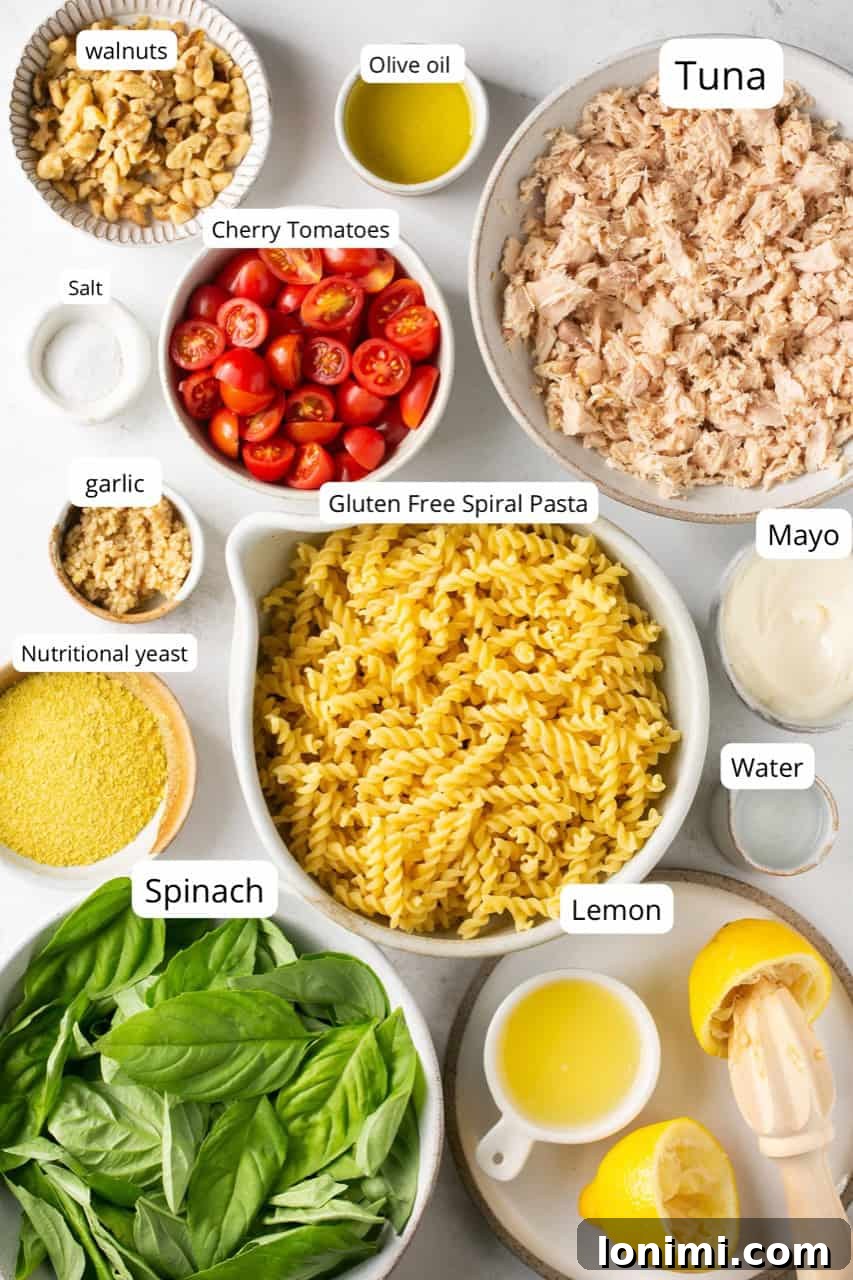
- Chunk Light Tuna: The star protein of this dish! For the best flavor and quality, I highly recommend Wild Planet canned tuna. Their commitment to sustainable fishing practices means you’re getting not only delicious but also responsibly sourced fish. You can often find their albacore, skipjack, or yellowfin varieties at most grocery stores and even some larger retailers like Costco. If you’re particularly mindful of mercury levels, Safe Catch is another excellent brand known for rigorously testing each tuna for mercury content, offering peace of mind. Using chunk light tuna ensures a satisfying texture that holds up well in the pasta.
- Jovial Foods Fusilli Pasta: My go-to for gluten-free pasta. Jovial Foods consistently delivers a pasta that cooks beautifully and maintains a pleasant texture, unlike some gluten-free alternatives that can become mushy. However, feel free to use your personal favorite gluten-free brand and shape. For an extra protein boost, Banza pasta (made from chickpeas) is an excellent choice that works wonderfully in this recipe and adds to its already impressive nutritional profile.
- Mayo: This is key to achieving the creamy texture of the pesto. I prefer using avocado oil mayo from brands like Sir Kensington’s or Primal Kitchen, as they offer a cleaner ingredient list and a richer flavor compared to traditional mayonnaises. If you follow a vegan diet or have egg sensitivities, a high-quality vegan mayo can be substituted without compromising the creaminess of the dish.
- Pesto: While this recipe includes instructions for making a simple, incredibly fresh homemade creamy basil pesto, don’t hesitate to use your favorite store-bought pesto sauce if you’re short on time. There are many excellent quality jarred pestos available today that can still make this dish shine. However, the homemade version truly elevates the flavors and is surprisingly quick to whip up.
- Nutritional Yeast: This deactivated yeast is a vegan secret weapon for adding a “cheesy,” umami flavor. It’s a fantastic substitute for parmesan cheese, especially for those who are dairy-free or vegan, providing a similar savory depth without the dairy. If you tolerate dairy, freshly grated parmesan cheese can be used in its place to achieve a more traditional pesto taste.
- Cherry Tomatoes: These sweet and juicy gems, halved, add a burst of freshness and color to the dish. Their small size makes them perfect for incorporating throughout the pasta. Grape tomatoes or any other small, flavorful tomato variety you enjoy would also work beautifully. For an even deeper flavor, consider roasting the tomatoes slightly before adding them.
- Lemon: Fresh lemon juice is crucial for brightening the flavors of the pesto and tuna. The acidity cuts through the richness of the mayo and pesto, adding a zesty finish. While bottled lemon juice can be used in a pinch, fresh juice offers a far superior taste.
- Garlic Cloves: Fresh garlic is non-negotiable for a vibrant pesto. Its pungent aroma and flavor form the backbone of the sauce. If you’re in a hurry, jarred minced garlic can be used, but fresh cloves, finely minced or crushed, will always yield the best results.
- Olive Oil: A good quality extra virgin olive oil is essential for the pesto, contributing to its smooth texture and rich flavor. If you prefer or have it on hand, avocado oil is another excellent choice that offers similar health benefits and a mild flavor profile.
- Salt: A fundamental seasoning that enhances all the other flavors. Adjust to your personal taste.
Crafting Your Tuna Pesto Pasta: Step by Step
This recipe is designed for maximum efficiency without compromising on flavor. Follow these simple steps to bring your creamy tuna pesto pasta to life in under 20 minutes.
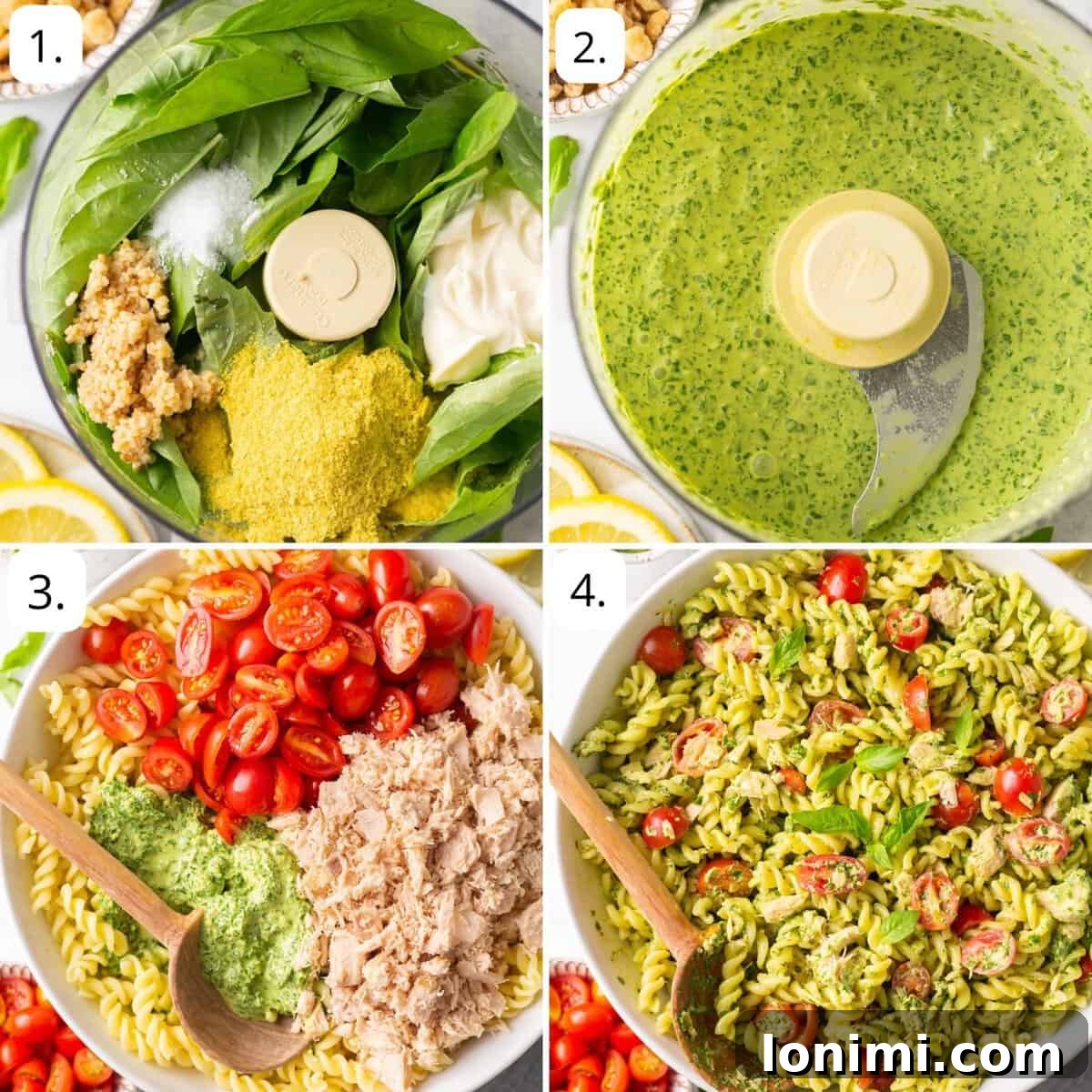
- Cook the Pasta: Begin by cooking your chosen pasta according to the package directions. Use a large pot of generously salted boiling water. Al dente is generally preferred for pasta salads to prevent it from becoming mushy when mixed with the sauce. Once cooked, drain the pasta thoroughly and set it aside to cool slightly while you prepare the pesto.
- Prepare the Creamy Pesto: In a food processor, combine the fresh basil, chopped walnuts, peeled garlic cloves, fresh lemon juice, nutritional yeast, salt, olive oil, mayo, and water. Pulse these ingredients a few times until the mixture is almost smooth but still retains a slight chunky texture. This ensures a delightful mouthfeel and allows the individual flavors to shine. Scrape down the sides of the food processor as needed to ensure everything is well combined.
- Assemble the Dish: Transfer the cooked pasta to a large mixing bowl. Add the halved cherry tomatoes, the drained and flaked chunk light tuna, and your freshly made creamy pesto. Toss everything together thoroughly until the pasta, tuna, and tomatoes are evenly coated with the rich, aromatic pesto sauce. Serve immediately and enjoy hot, or chill it in the refrigerator for a refreshing cold pasta salad.
Mary’s Expert Tips & Tricks for Perfect Pesto Pasta
Elevate your tuna pesto pasta with these clever tips and customizable variations. These insights will help you adapt the recipe to your preferences and ensure a consistently delicious result every time.
- Protein Power-Up: While tuna is fantastic, this recipe is incredibly flexible. Feel free to substitute the tuna with chopped cooked chicken (rotisserie chicken works great for speed) or even canned chicken for another quick option. For a vegetarian version, you can simply omit the tuna altogether and perhaps add some roasted chickpeas or white beans for plant-based protein.
- Nut-Free Pesto Alternative: If you or someone you’re cooking for has a nut allergy, or you simply prefer a different flavor profile, you can easily make this pesto nut-free. Substitute the walnuts with an equal amount of sunflower seeds. They provide a similar texture and a lovely, mild nutty flavor without the allergens. Toasted pine nuts are also a classic pesto ingredient if nuts aren’t an issue.
- The Secret to Extra Creaminess: Don’t toss all that starchy pasta water! Saving a small amount (about ½ cup) before draining your pasta can be a game-changer. A tablespoon or two of this reserved water, added to the pesto or when tossing the pasta, helps emulsify the sauce and creates an incredibly smooth, creamy consistency without adding any dairy. It’s a chef’s trick for making sauces cling beautifully to pasta.
- Pasta Variety: This recipe calls for gluten-free pasta, which works wonderfully. However, if gluten intolerance isn’t a concern, feel free to use your favorite regular pasta type and shape. Penne, rotini, farfalle, or even spaghetti can all be fantastic choices. Just ensure you cook it according to the package instructions for optimal texture.
- Tuna Packed in Oil vs. Water: You can use canned tuna packed in either water or olive oil. If using tuna packed in water, ensure it’s thoroughly drained. If using tuna packed in olive oil, you might want to slightly reduce the amount of olive oil added to the pesto to prevent the dish from becoming overly oily. The oil from the tuna can add a wonderful richness, so taste as you go!
- Herb Variations: While basil is traditional, experiment with other fresh herbs. A mix of basil and parsley, or a touch of mint, can add interesting layers of flavor to your homemade pesto.
- Spice It Up: For those who enjoy a little heat, a pinch of red pepper flakes added to the pesto mixture can provide a subtle warmth and kick.
- Vegetable Additions: Beyond cherry tomatoes, consider stirring in other finely chopped vegetables like diced cucumber, bell peppers, or even blanched green beans for added texture and nutrients.
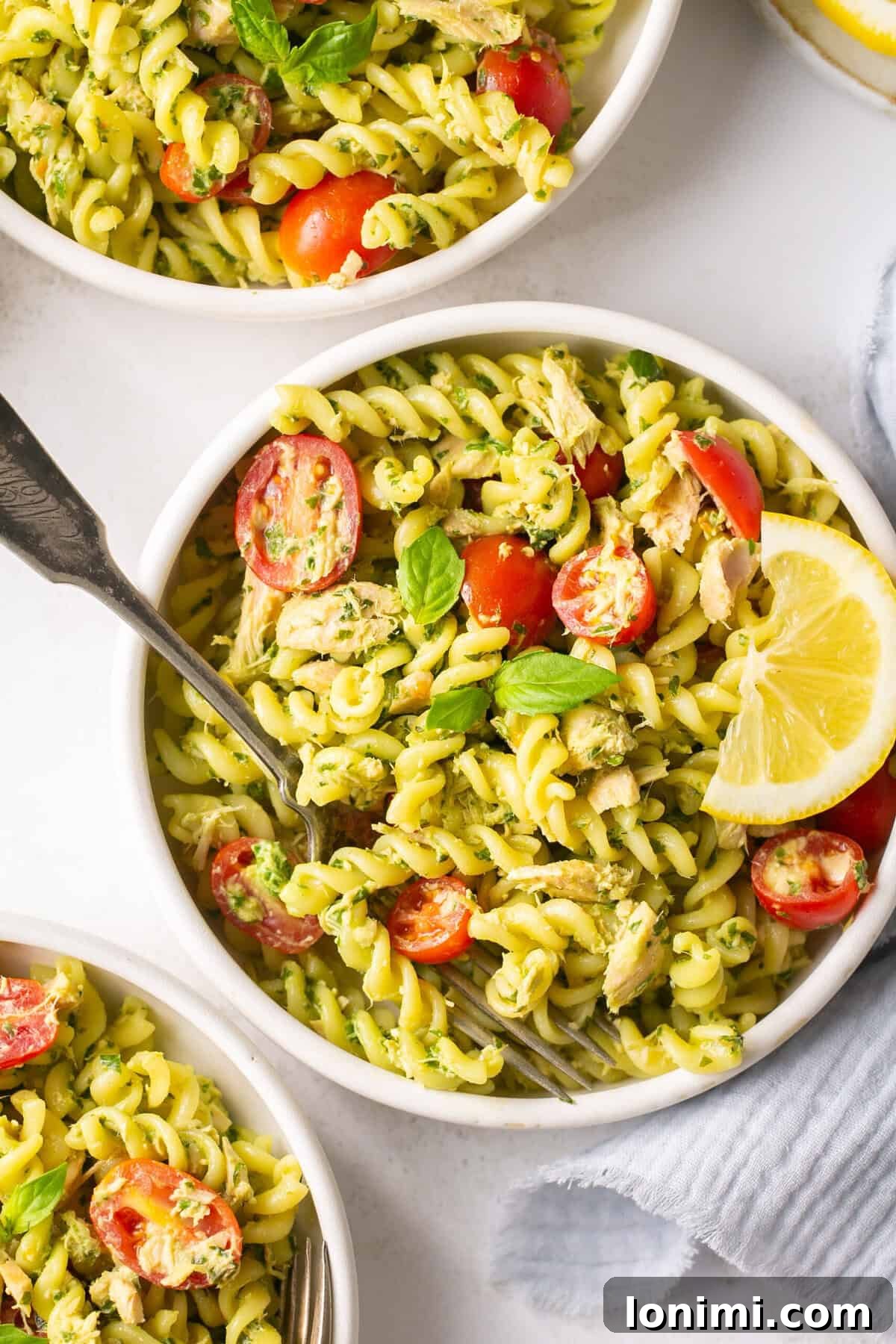
Serving Suggestions for Tuna Pesto Pasta
The versatility of this tuna pesto pasta makes it a joy to serve. Here are a few ideas to make your meal even more delightful:
- Hot & Hearty Dinner: Serve the pasta immediately after tossing, while it’s still warm. Pair it with a simple side salad dressed with a light vinaigrette and some crusty gluten-free bread for a complete and satisfying meal. If you’re not dairy-free, a sprinkle of freshly grated Parmesan cheese over each serving is a wonderful touch that enhances the savory notes.
- Chilled Pasta Salad: This dish truly shines when served cold as a refreshing pasta salad. It’s perfect for summer BBQs, picnics, potlucks, or as a make-ahead lunch. The flavors meld beautifully as it chills. Consider garnishing with extra fresh basil leaves or a few lemon wedges for an appealing presentation.
- Light Lunch: Enjoy a smaller portion as a wholesome and protein-packed lunch. It’s excellent for meal prepping, as it holds up well in the refrigerator.
- Additions: For an extra touch, top with toasted pine nuts, a drizzle of balsamic glaze, or some crumbled feta (if dairy is tolerated) for an added layer of flavor and texture.
Storage Tips for Optimal Freshness
Planning ahead is easy with this recipe! Proper storage ensures your tuna pesto pasta stays delicious for days:
- Refrigerator Storage: Store any leftover tuna pesto pasta in an airtight container in the refrigerator for up to 4 days. This makes it an excellent option for meal prepping throughout the week.
- Serving Leftovers: The pasta can be enjoyed straight from the refrigerator, cold as a refreshing salad. If you prefer it warm, you can gently reheat individual portions in a microwave or on the stovetop over low heat, adding a splash of water or olive oil if it seems dry. Always give it a good stir before serving to redistribute the flavors and sauce.
- Freezing: While the pasta itself can be frozen, the creamy pesto with mayo might separate upon thawing, affecting the texture. Tuna also sometimes changes texture when frozen. Therefore, freezing this particular prepared dish is not recommended for optimal quality. It’s best enjoyed fresh or refrigerated within 4 days.
Frequently Asked Questions About Tuna Pesto Pasta
Absolutely! One serving of this tuna pesto pasta is approximately 406 calories and provides an impressive 19 grams of protein. Compared to many other pasta dishes that can be heavy on refined carbs and fats, this recipe offers a balanced profile with lean protein, healthy fats from olive oil and walnuts, and nutrient-rich vegetables. It’s a wholesome and satisfying choice that supports a healthy lifestyle.
The creamy basil pesto in this recipe is incredibly versatile and shouldn’t be limited to just pasta! It makes for amazing tuna sandwiches: simply omit the pasta, add another can or two of tuna (depending on your desired ratio), and serve on your favorite gluten-free bread or piled high on a bed of fresh greens for a delicious pesto tuna salad. It’s also fantastic as a spread for wraps, a dollop over grilled chicken or fish, a topping for baked potatoes, or even mixed into scrambled eggs for a flavorful breakfast. Don’t be afraid to experiment!
Yes, absolutely! This recipe uses nutritional yeast as a dairy-free substitute for a “cheesy” flavor. However, if you are not dairy-free and prefer the classic taste of parmesan, you can certainly substitute it. Feel free to use freshly grated Parmesan cheese in place of the nutritional yeast in the pesto recipe, or simply sprinkle some over the top of your finished dish for an extra layer of savory deliciousness.
Yes, this tuna pesto pasta is an excellent choice for meal prepping! It holds up very well in the refrigerator for up to 4 days, making it perfect for preparing on a Sunday and enjoying throughout the week. Its deliciousness whether served hot or cold adds to its convenience for packed lunches or quick dinners. Just remember to give it a good stir before eating!
While this recipe uses tuna and mayo, which are not vegan, you can easily adapt it! Substitute the tuna with chickpeas, white beans, or a plant-based ‘tuna’ alternative. Replace regular mayo with a high-quality vegan mayonnaise. Ensure your pasta is indeed vegan (most dry pastas are, but always check). With these simple swaps, you can enjoy a delicious vegan pesto pasta!
More Delicious Gluten-Free Pasta Recipes to Explore
If you loved this easy and flavorful dish, you’ll be thrilled to discover more gluten-free pasta recipes that are equally satisfying and simple to prepare. Expand your repertoire with these fantastic options:
Instant Pot Taco Pasta
Sausage Broccolini Pasta
Dairy-Free Cajun Pasta
Baked Feta Shrimp Pasta
Healthy Tuna Pasta Salad
Buffalo Tuna Pasta Salad
Love this recipe? Please leave a 5-star 🌟🌟🌟🌟🌟 rating in the recipe card below & a review in the comment section. Or, follow me on Facebook, Pinterest or Instagram today!
Gluten Free Tuna Pesto Pasta
Equipment
-
food processor
Ingredients
- 2 cups fresh basil, packed
- ¼ cup chopped walnuts, sub sunflower seeds for nut free!
- 3 cloves garlic
- juice from 1 lemon
- 3 tbsp nutritional yeast, feel free to sub parmesan if dairy is tolerated
- ½ tsp salt
- 2 tbsp olive oil
- ¼ cup mayo
- 2 tbsp water
- 1 cup cherry tomatoes, halved
- 12 oz box of Jovial Foods Fusilli, or gluten free pasta of choice
- 2 cans chunk light tuna, drained and mashed up with a fork
Instructions
-
Cook the pasta according to package directions, then drain and set aside.
-
Combine the basil, walnuts, garlic, lemon juice, nutritional yeast, salt, olive oil, mayo, and water in a food processor. Pulse a few times until ALMOST smooth but still a little chunky.
-
Add the cooked pasta, tomatoes, tuna, and creamy pesto to a large bowl and toss to combine. Serve and enjoy (hot OR cold as a pasta salad)!
Notes
Mary’s Tips & Tricks
- Protein: Feel free to substitute chopped cooked (or canned) chicken instead of tuna, or omit the tuna completely.
- Nut-Free Pesto: If you prefer not to use walnuts, feel free to sub in sunflowers seeds!
- Pasta Water: Saving a little bit of the starchy pasta water adds a really nice creaminess to the dish. Use this if you’re looking for extra creaminess without any dairy!
- Alternative Pasta: If you’re not gluten intolerant, feel free to swap the gluten-free pasta for your favorite pasta type and shape. Cook according to the package instructions for best results.
- Tuna: You can use canned tuna packed in water or olive oil. Adjust the additional oil according to which type you use!
Serving Tips
- Serve hot as a delicious pasta dinner or cold as a pasta salad! If you’re okay with dairy, sprinkle some freshly grated parmesan cheese over the top of each serving.
Storage Tips
- Store your tuna pesto pasta in an airtight container in the refrigerator for up to 4 days and serve warm or cold. Give it a good stir before serving!
Nutrition
Carbohydrates: 45g |
Protein: 19g |
Fat: 17g |
Saturated Fat: 3g |
Polyunsaturated Fat: 7g |
Monounsaturated Fat: 5g |
Trans Fat: 1g |
Cholesterol: 24mg |
Sodium: 412mg |
Potassium: 282mg |
Fiber: 3g |
Sugar: 1g |
Vitamin A: 583IU |
Vitamin C: 8mg |
Calcium: 36mg |
Iron: 3mg
All nutrition facts are an estimate and automatically calculated. While I fact check them using My Fitness Pal, please note that they may not always be 100% accurate and depend on ingredients used. Weigh your total and divide by the number of servings for the most accurate grams per serving size.
This post was originally published on June 8, 2022 and updated on March 22, 2023.